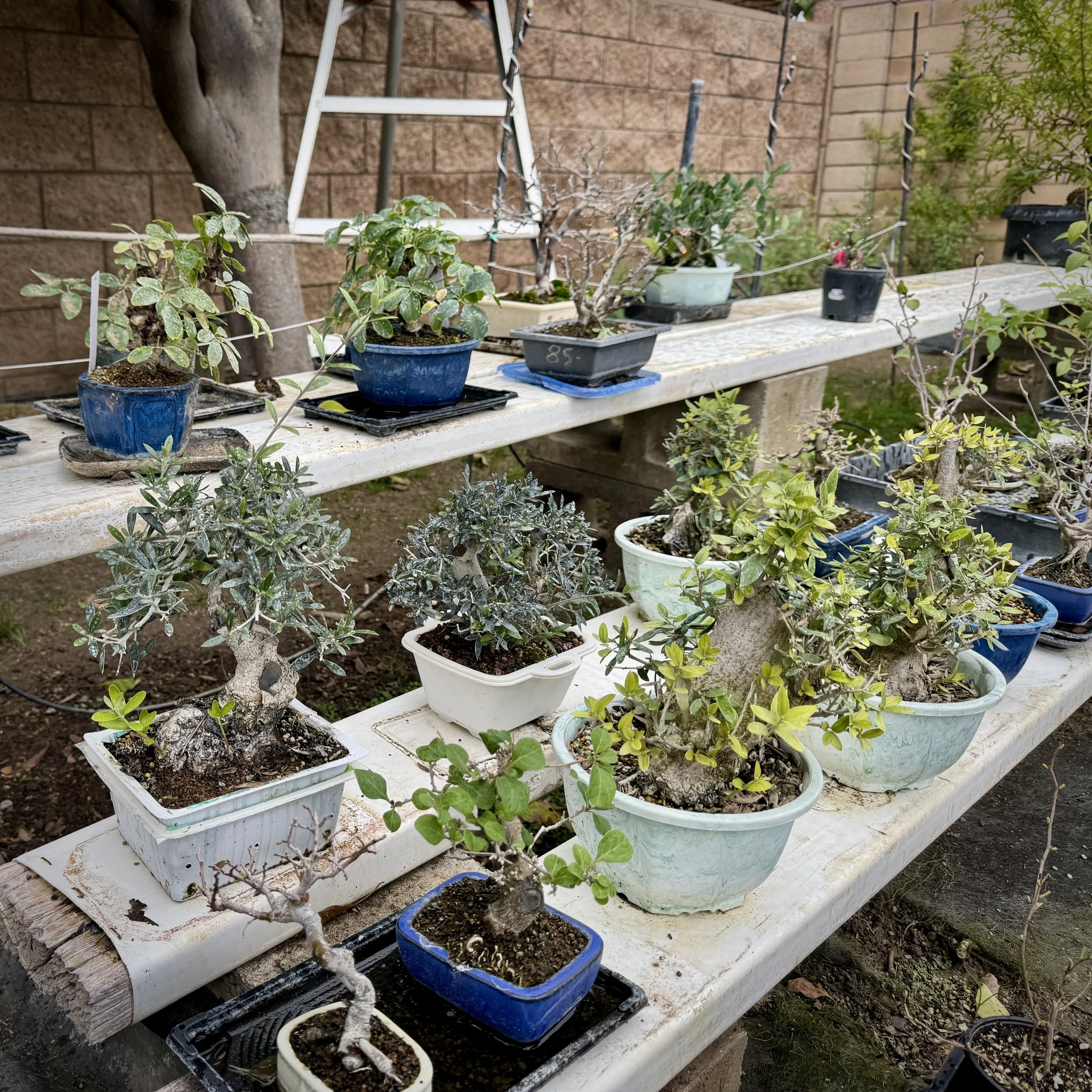
⛩️ Tak Shimazu, Riverside CA
Tak Shimazu was at the 2024 GSBF Rendezvous. Club-mates bought some Shohin material from him, and I was encouraged to drop by his garden when “nearby” for the holidays.
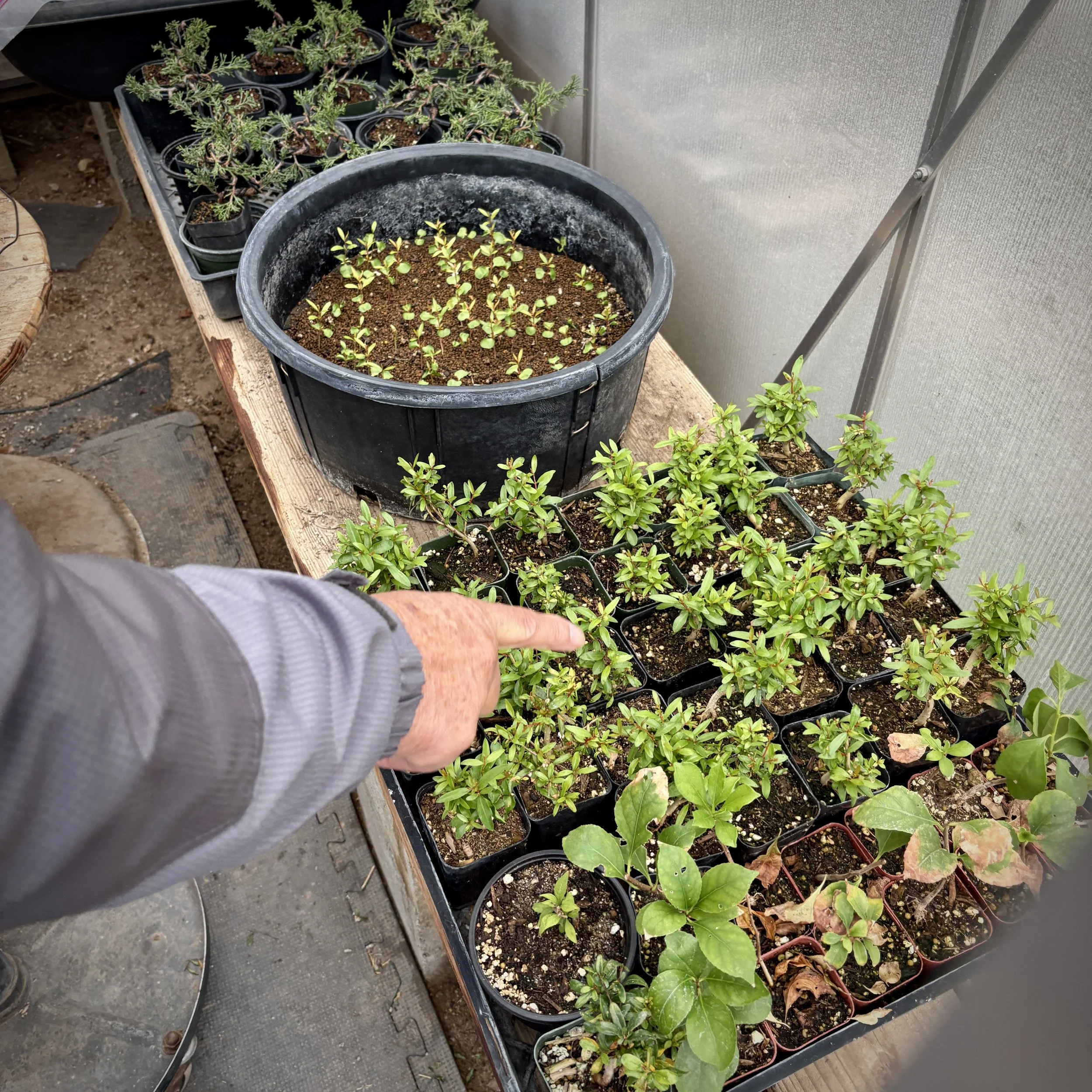
He was a kind and talented bonsai grower. He allowed me to photograph his trees. I was inspired by his propagation and development of Shohin material, and purchased a few trees.
Mr. Shimazu grew up in Kumamoto, Japan, before immigrating to the US. In Japan, he was the only person in his family passionate about bonsai and was an informal student of Mr. Sasaki, visiting and helping out at Mr. Sasaki’s garden. Later, Mr. Shimazu studied with Kunio Kobayashi (mastering JBP).
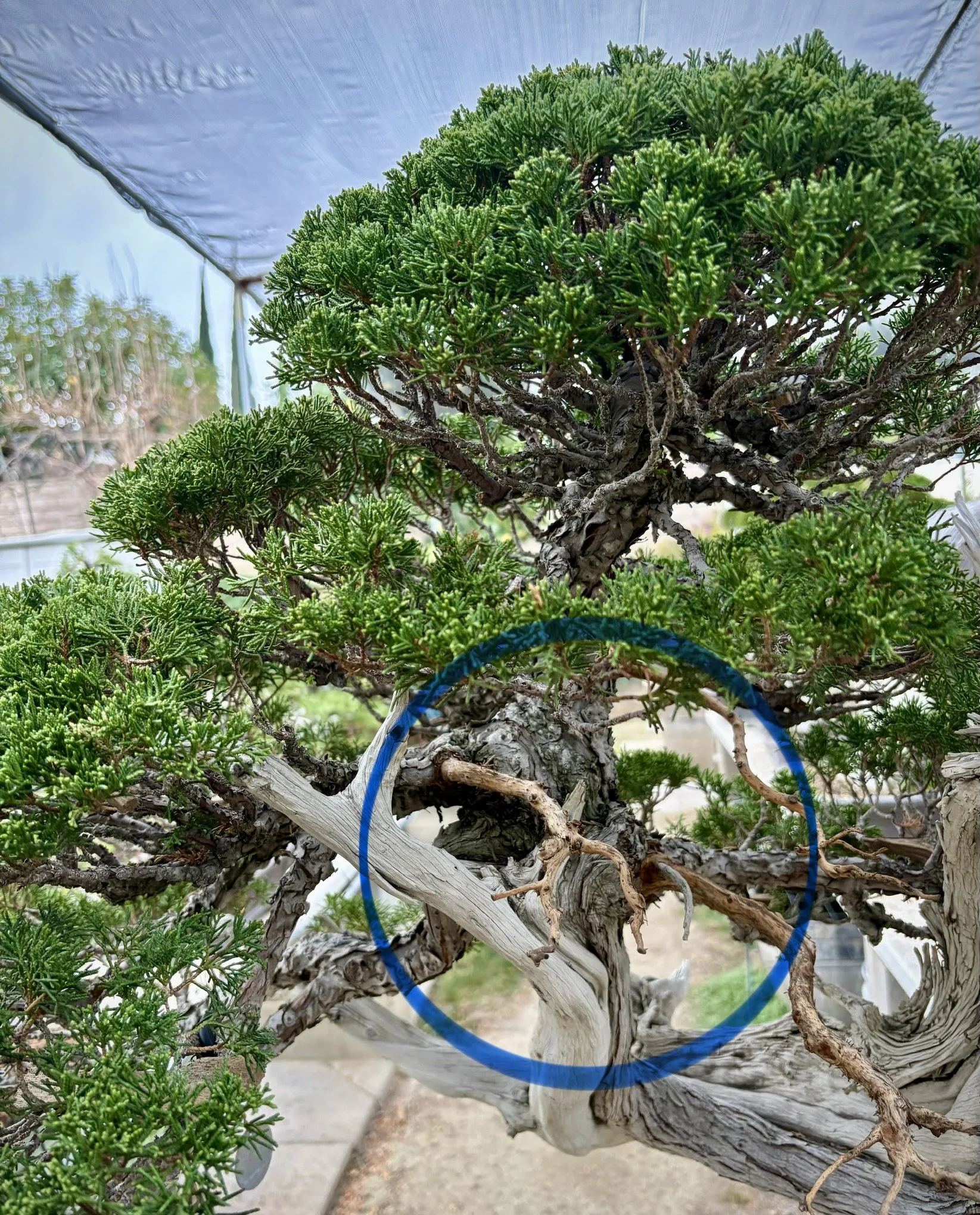
Internationally awarded California Juniper. Itoigawa grafted foliage around 15 yrs ago.
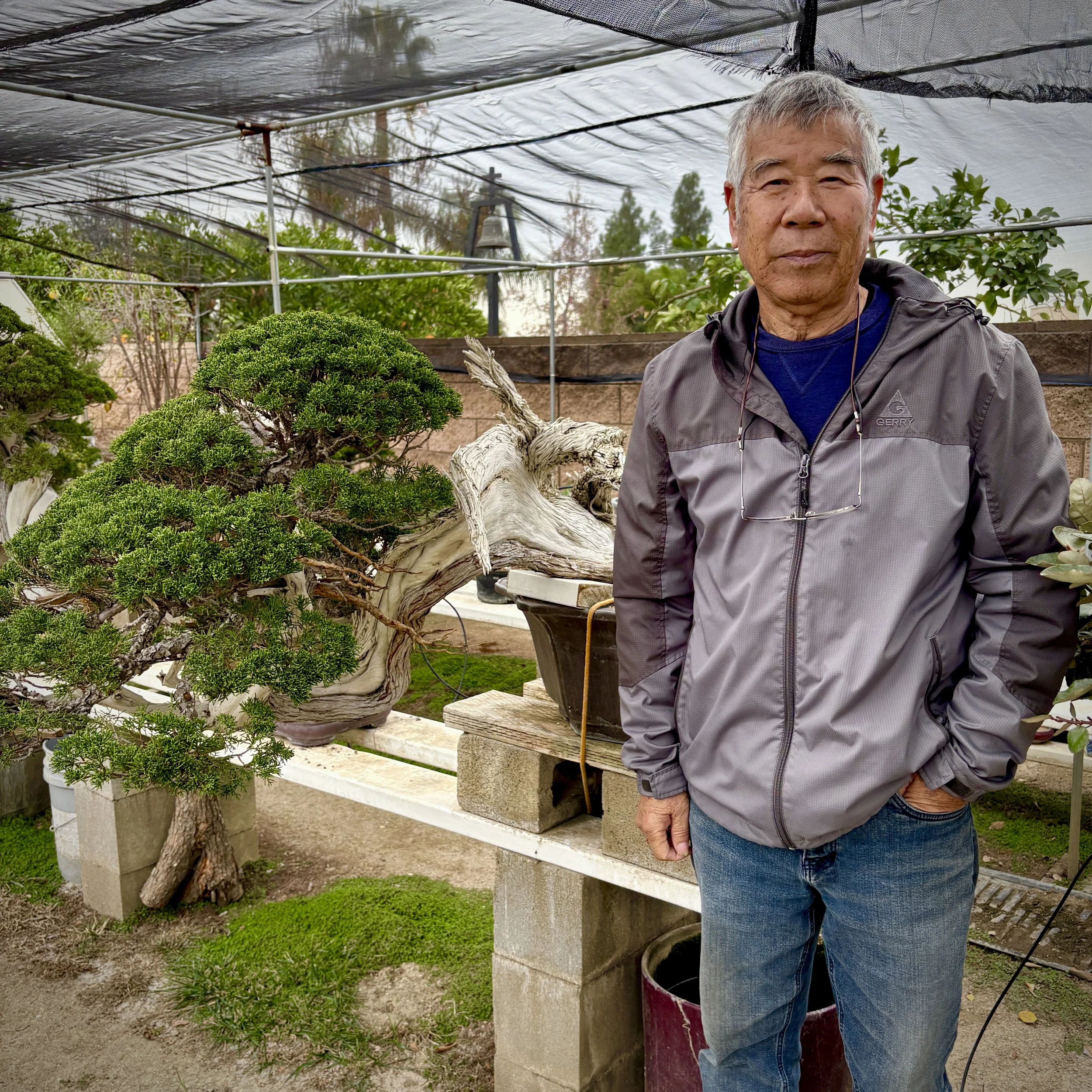
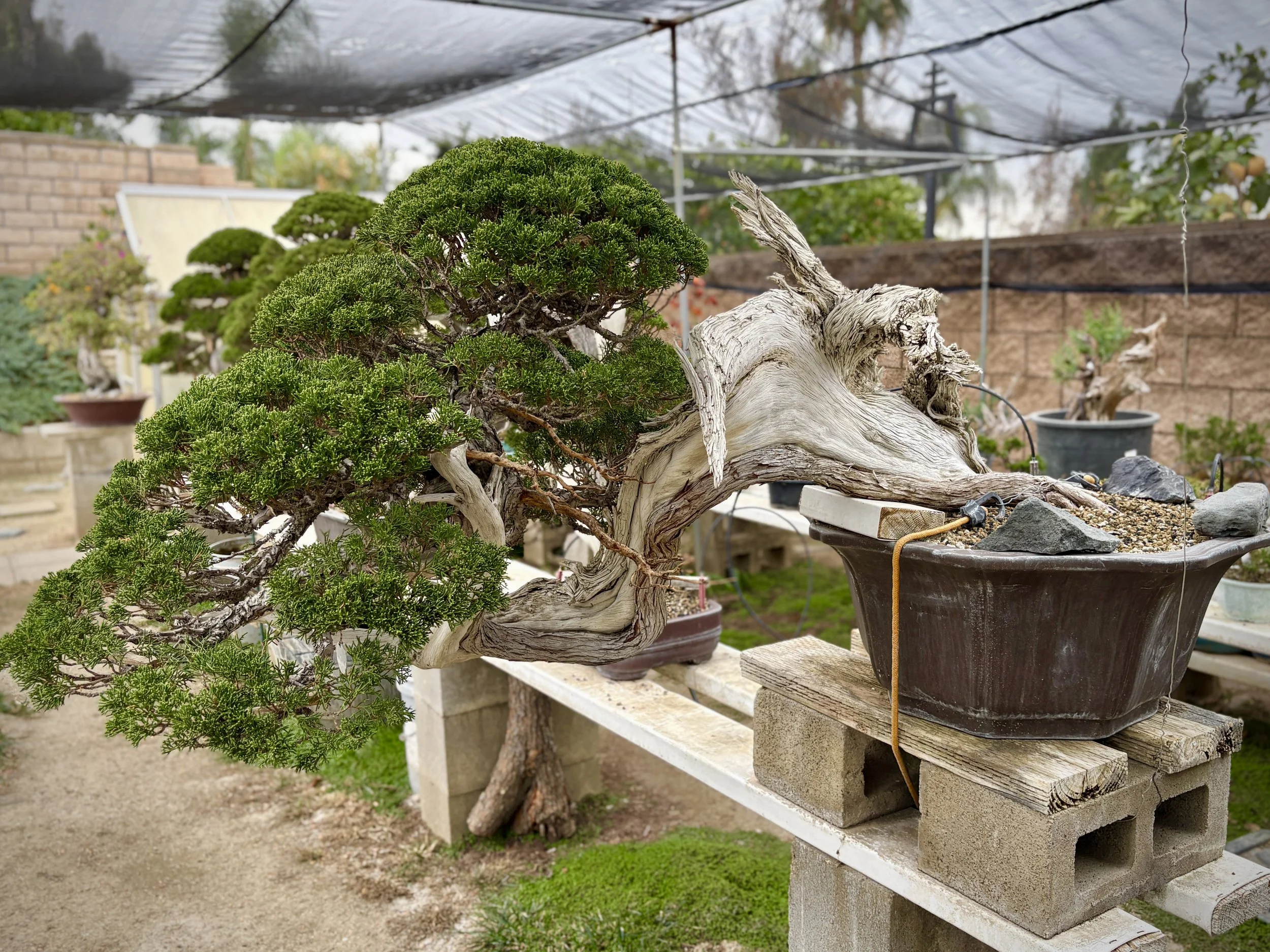
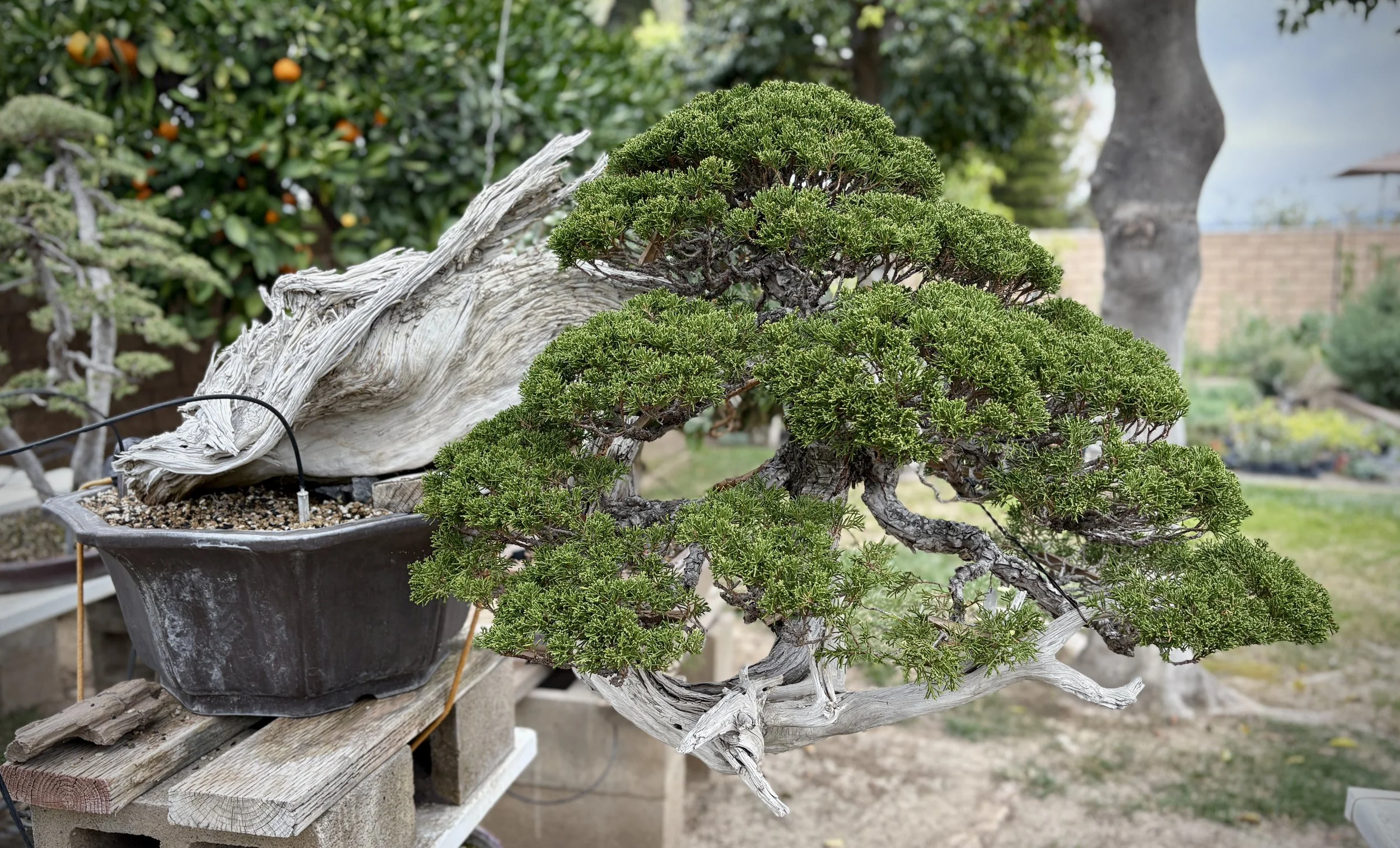
Grafted
Collecting California Junipers and aftercare:
For collected California Junipers, his aftercare is unique or something to glean. Since this tree grows lower and often only sees rain in the winter, he does not water the soil for the first 4-5 months. Instead, he covers the soil with plastic and waters the foliage only. Enough moisture will feed root development. I believe he also bags the tree for humidity control—but I should verify that with him.
He pots in 100% pumice, but leaves the original soil in the lower part of the pot and bonsai soil on top. Future repotting he finds the lower roots and original soil having dies off and new roots growing into the bonsai soil.
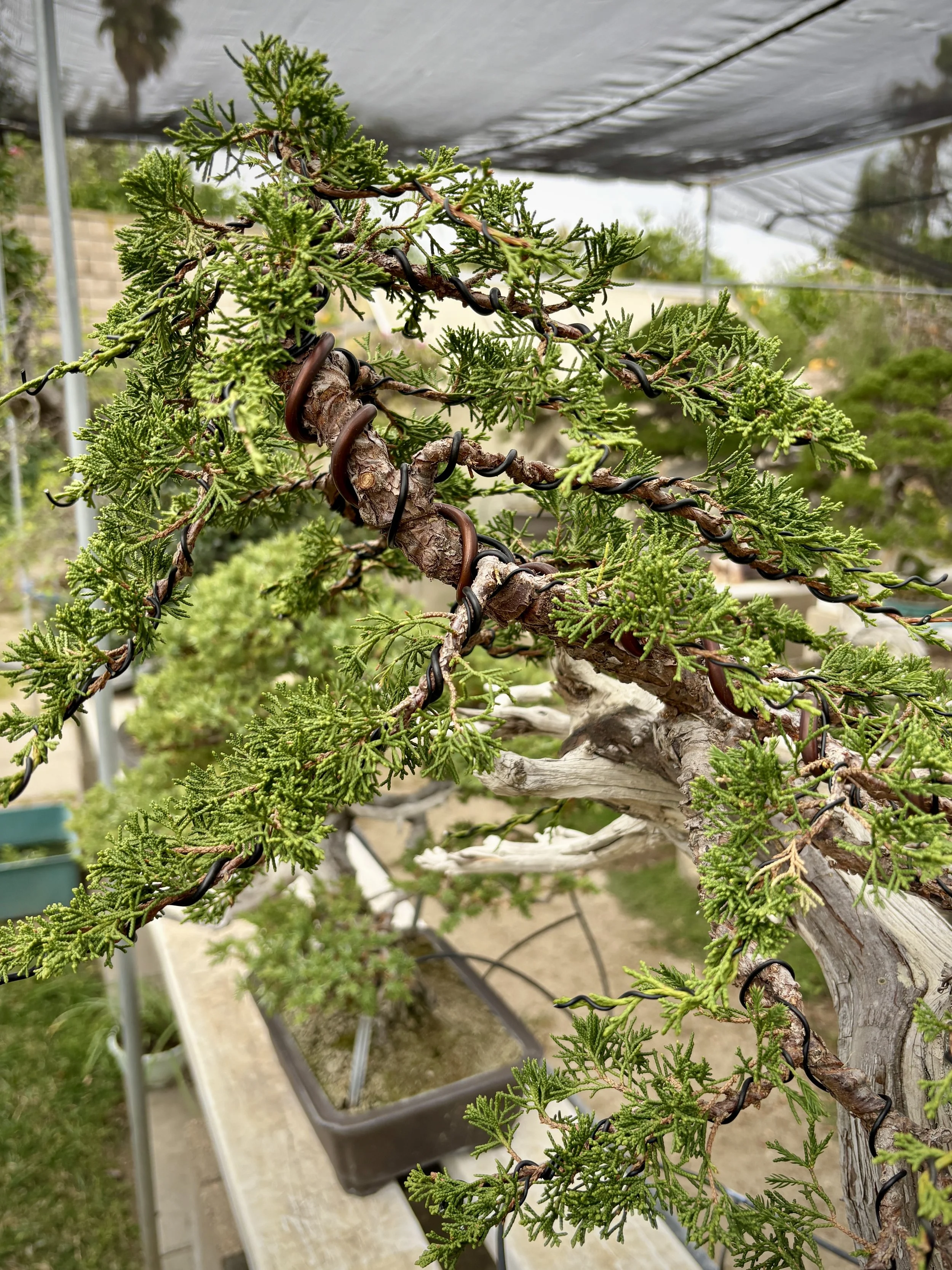
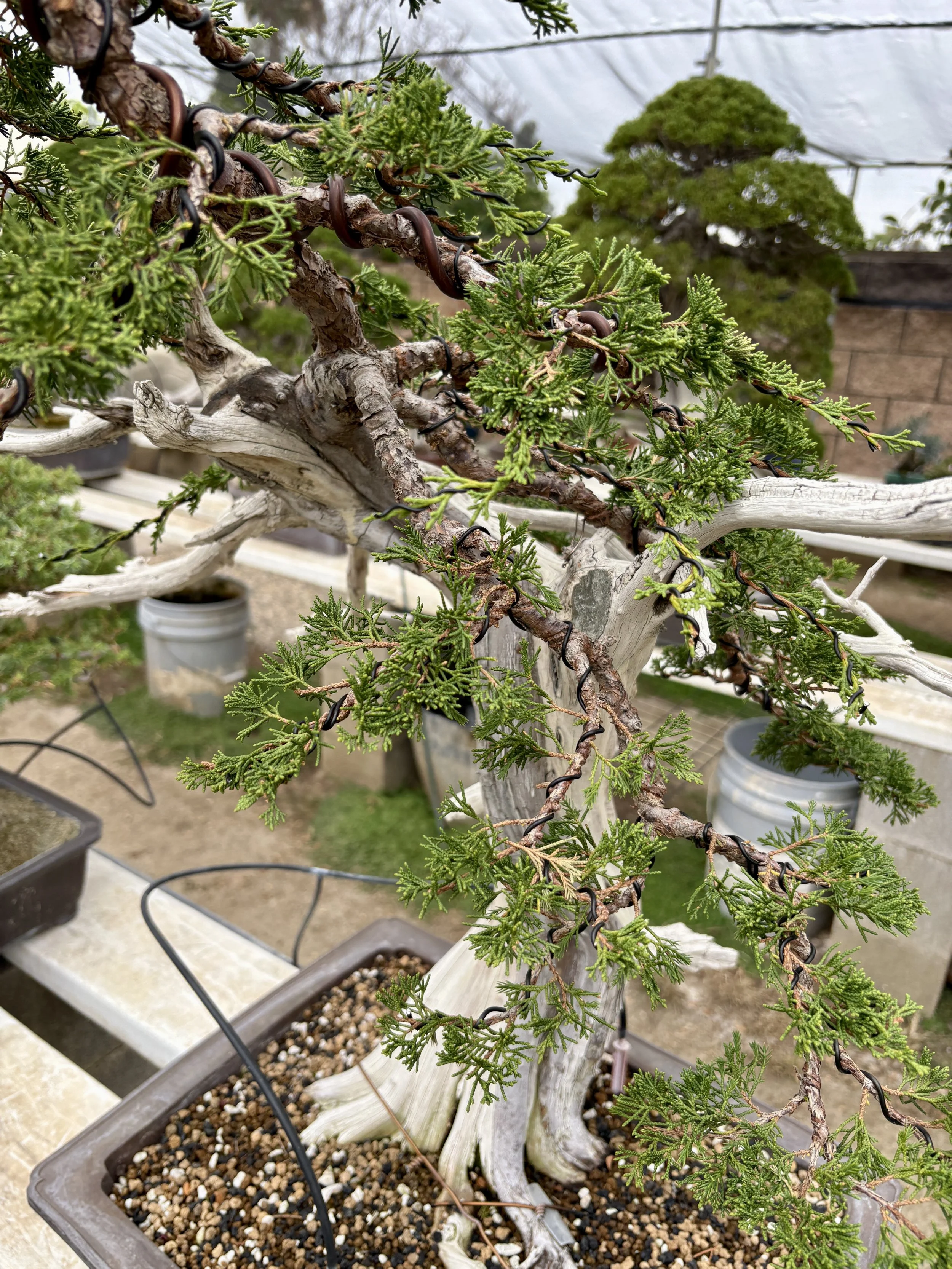
A few angles of the “board” deadwood.
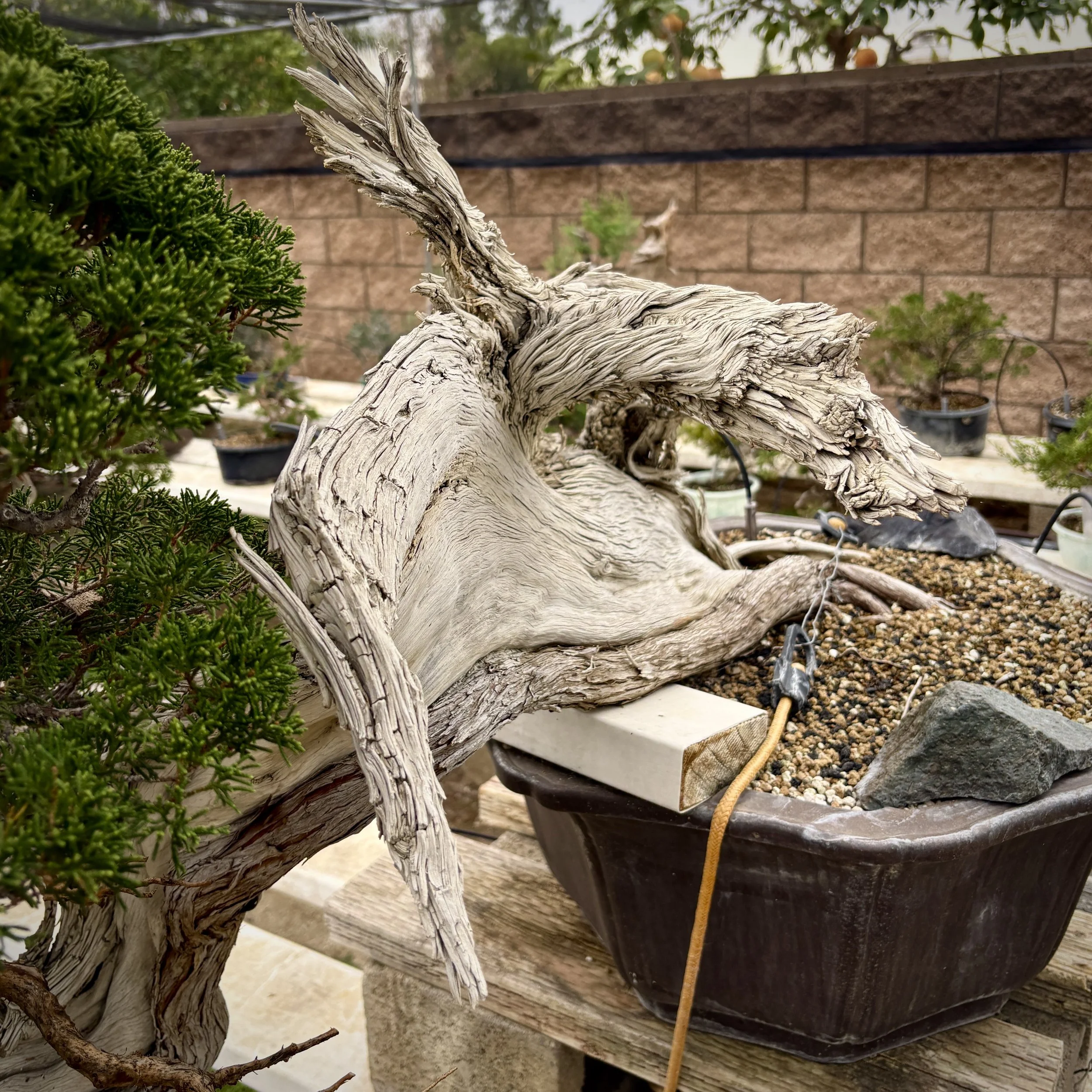
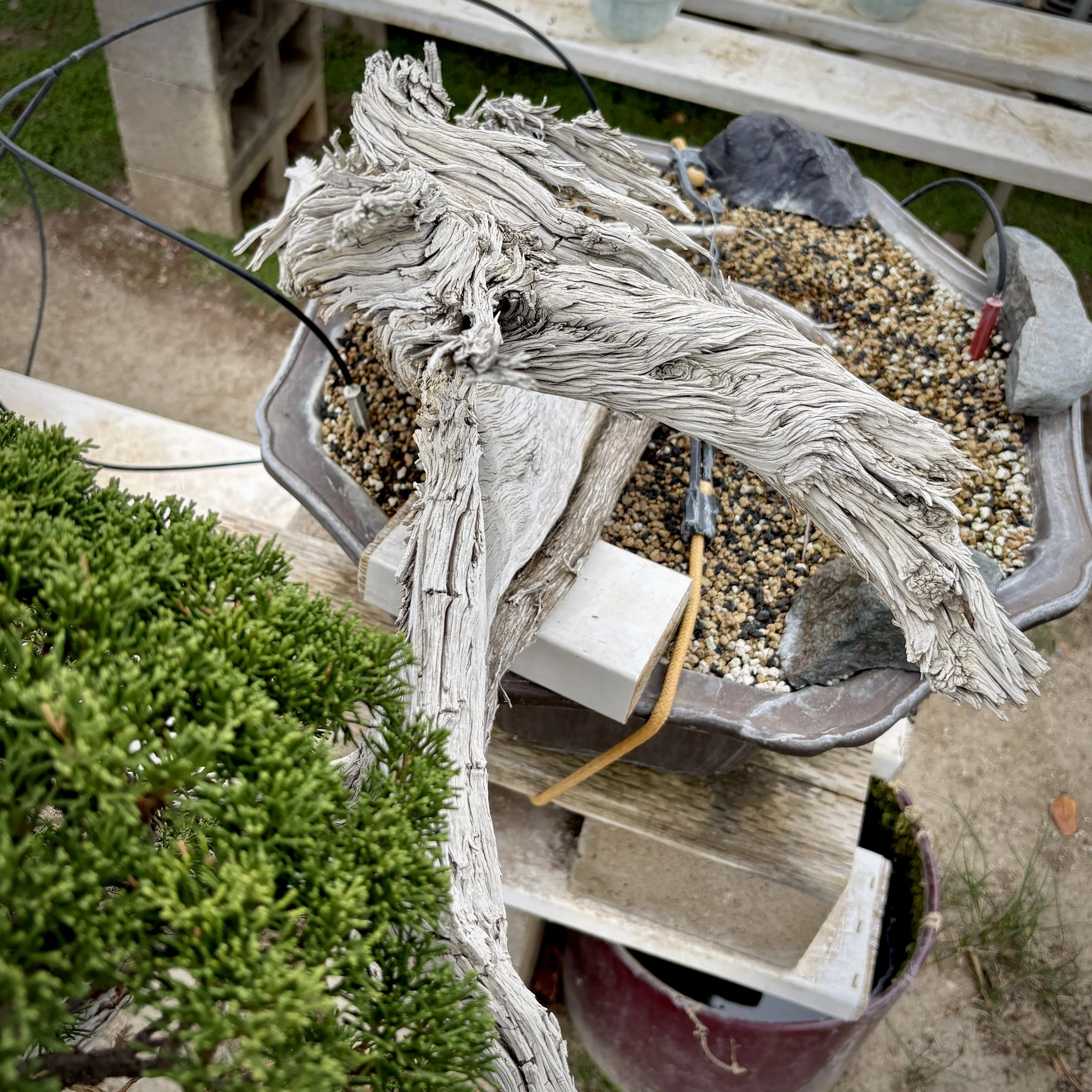

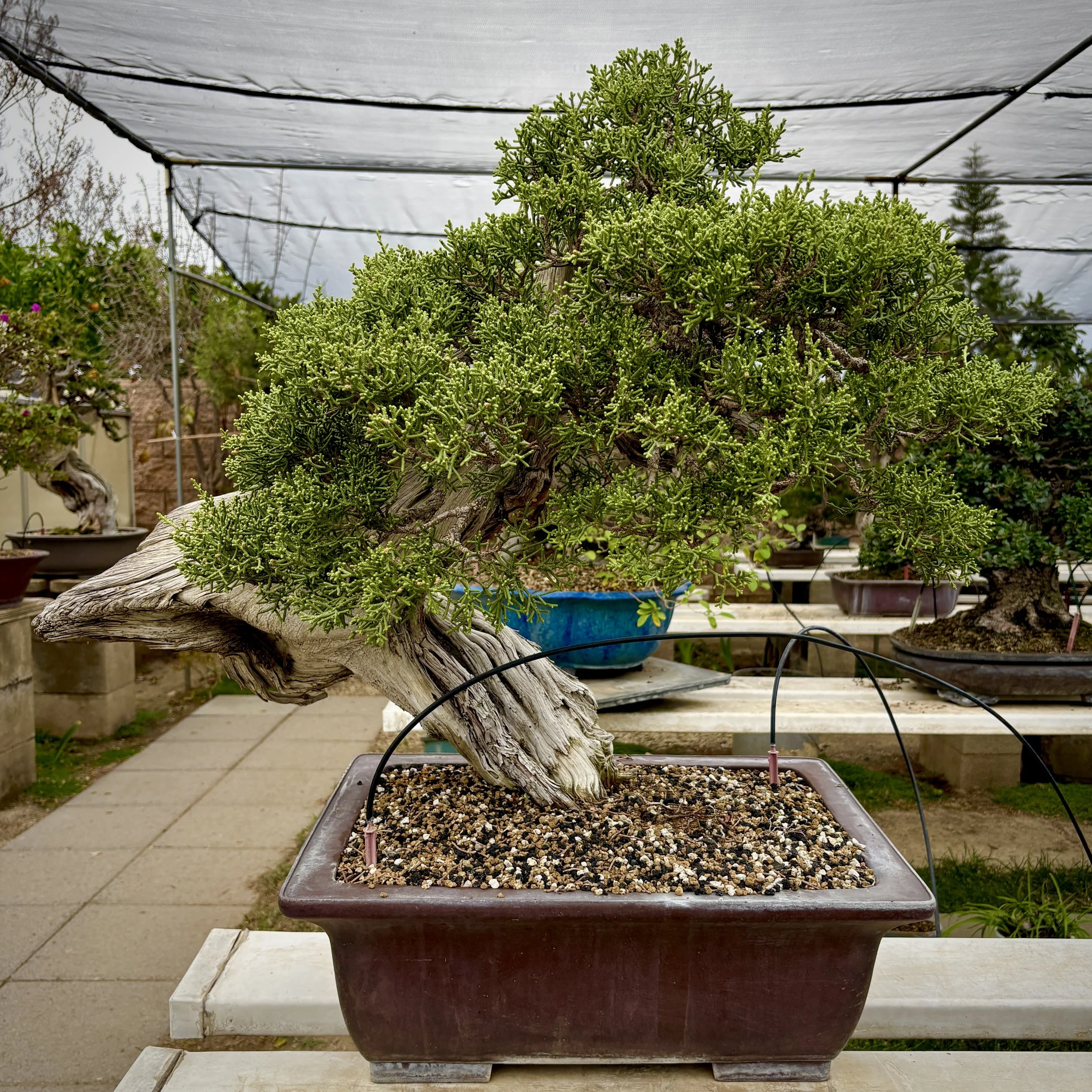
One detail that he practices, traditional Japanese style, not often practiced in the US—starts the angle of the descending branches close to the trunk. In the US, he often sees branches extend laterally and then angle the ends downwards. But when angling close to the trunk, the branch will look heavy and old. (examples below). Then the branch will cascade and have left/right movement.
Japanese Black Pine
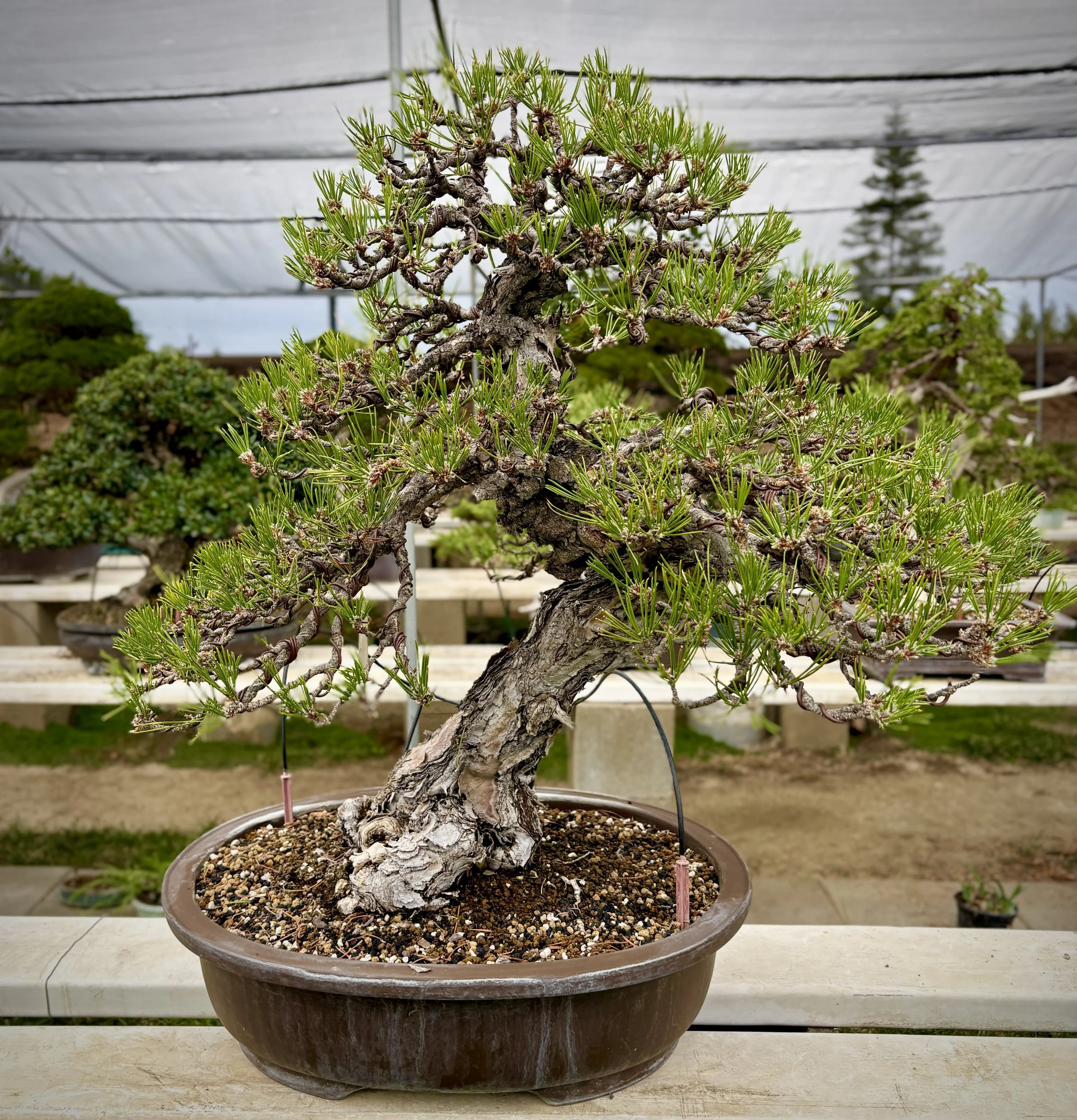
Japanese Black Pine
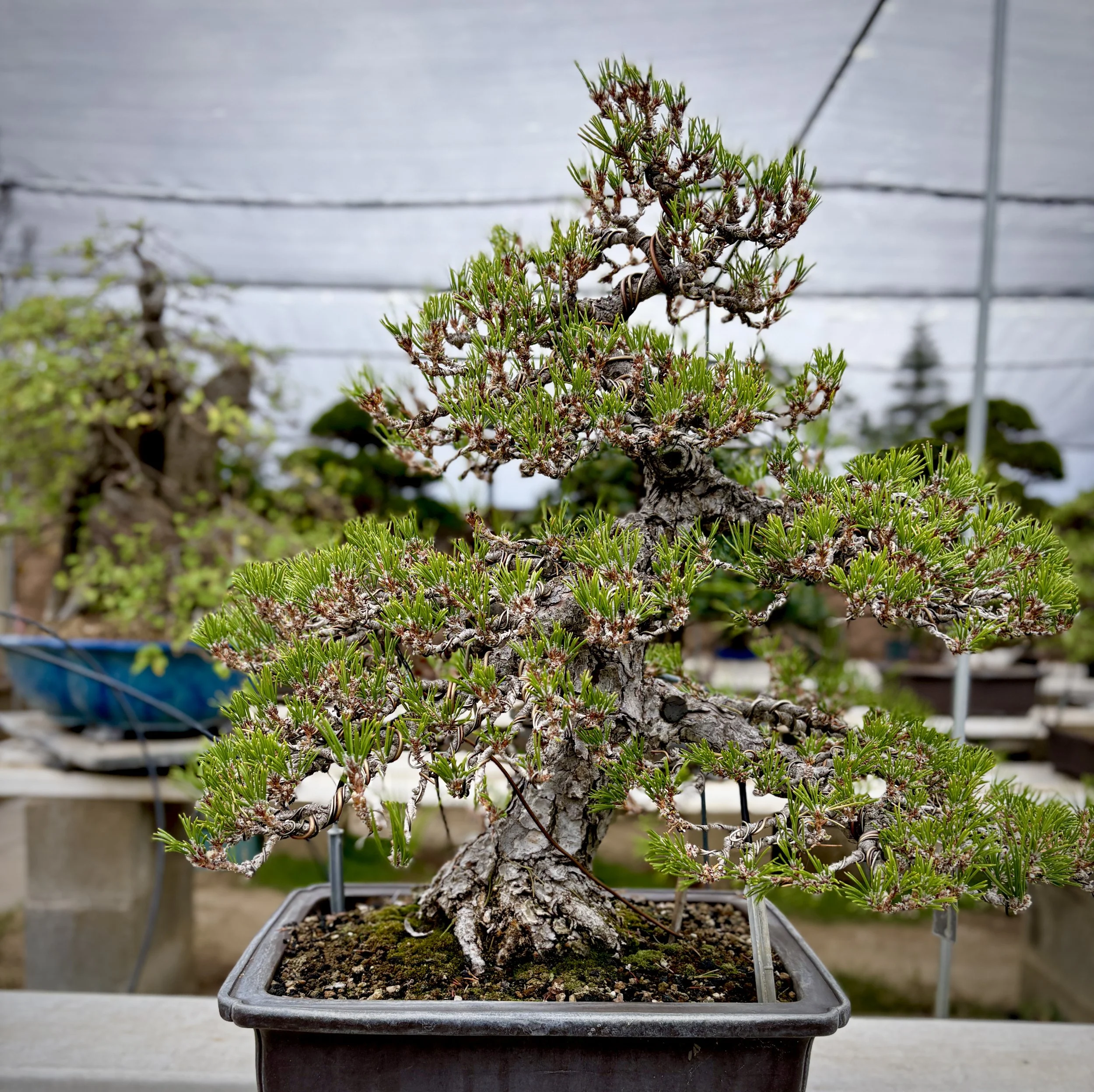
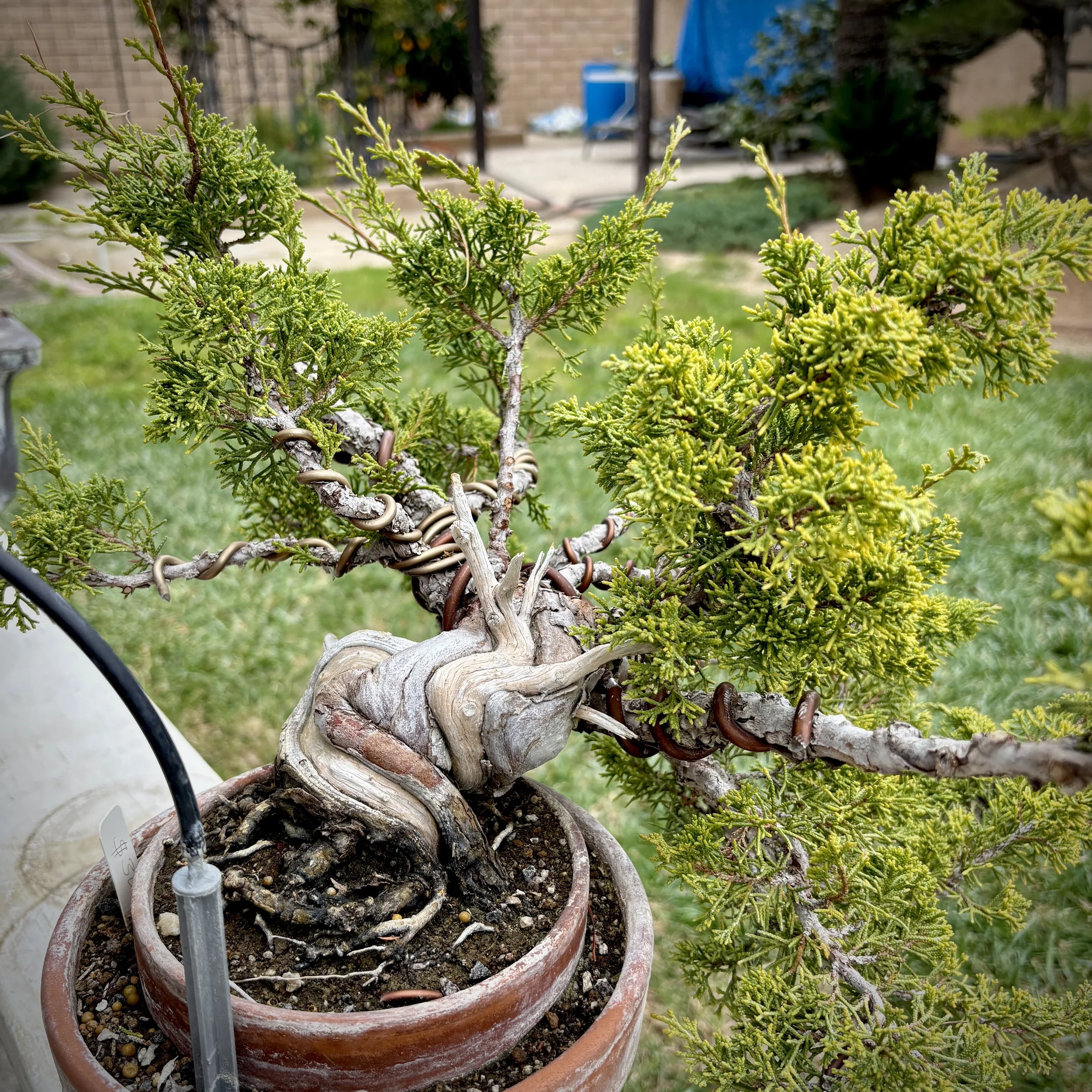
Chinese Elm, first tree in the US, grown entirely in a pot
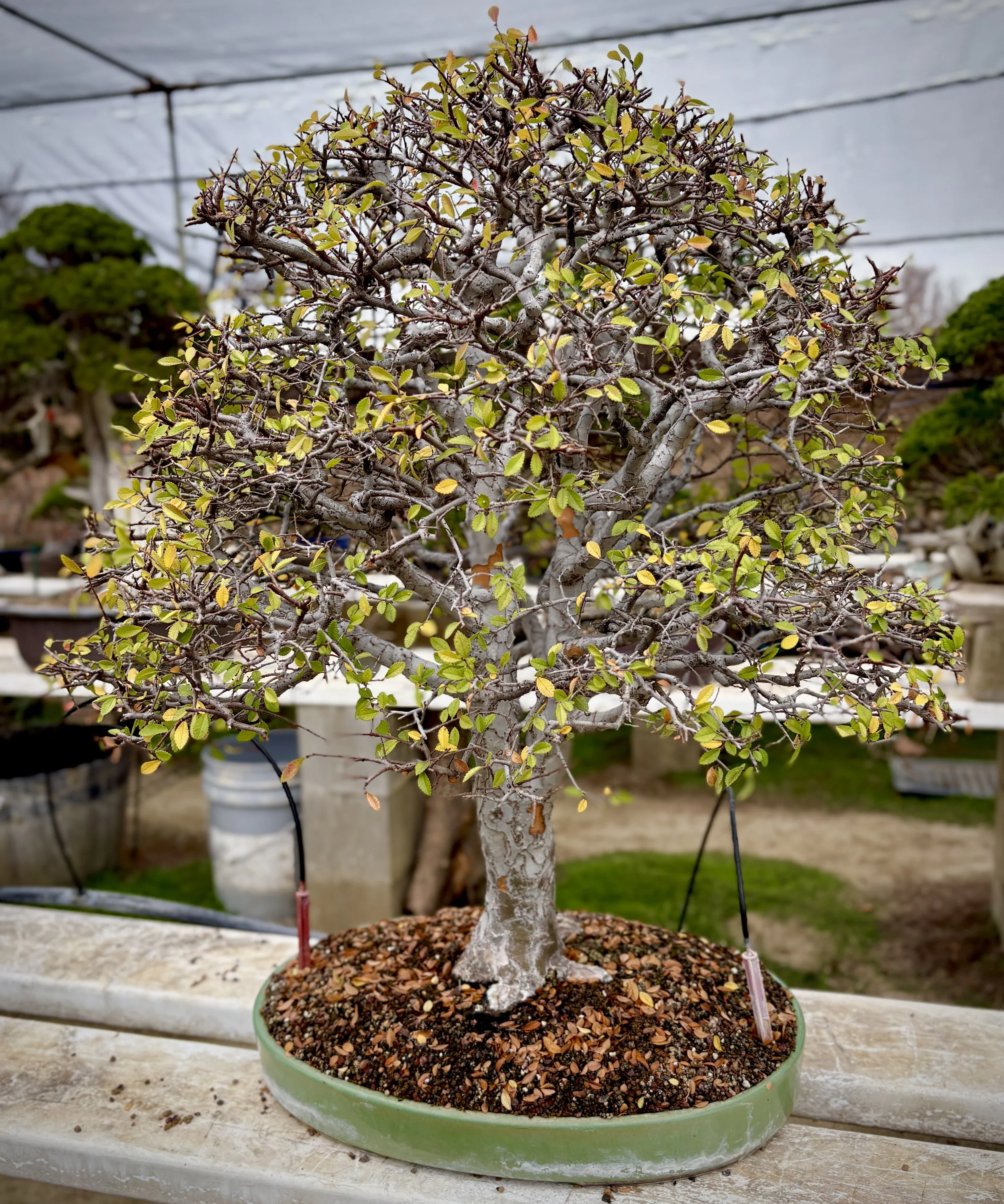
Developing Potato Vines (exposed-root)
Not a common bonsai material. Originally found in a parking lot and developed and propagated. Once in a bonsai pot & bonsai soil, the leaves can reduce easily. Flowers Apr-Aug, with flowers shaped as potato’s. (Remove finer roots on the upper exposed roots. Focus on the stronger roots.)
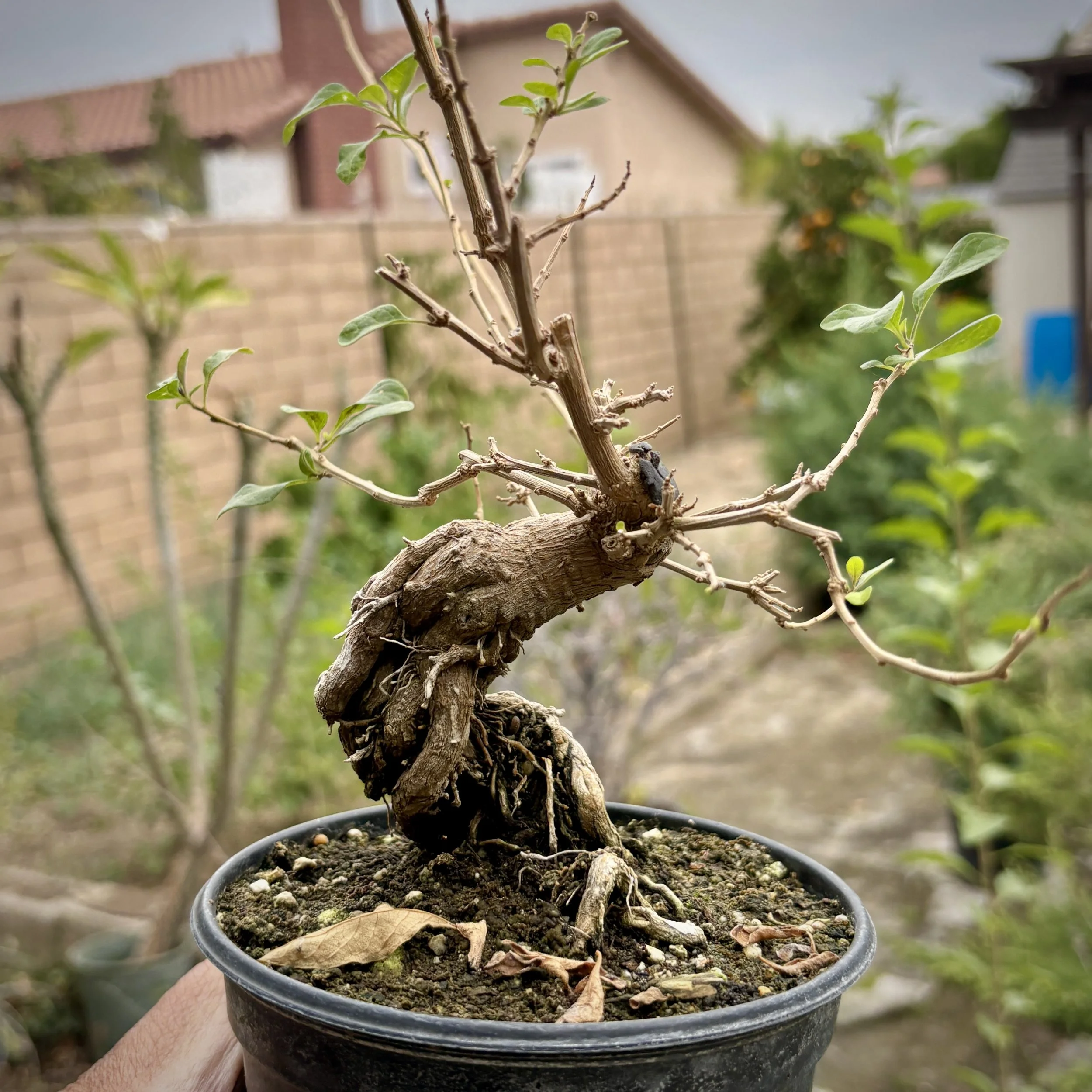
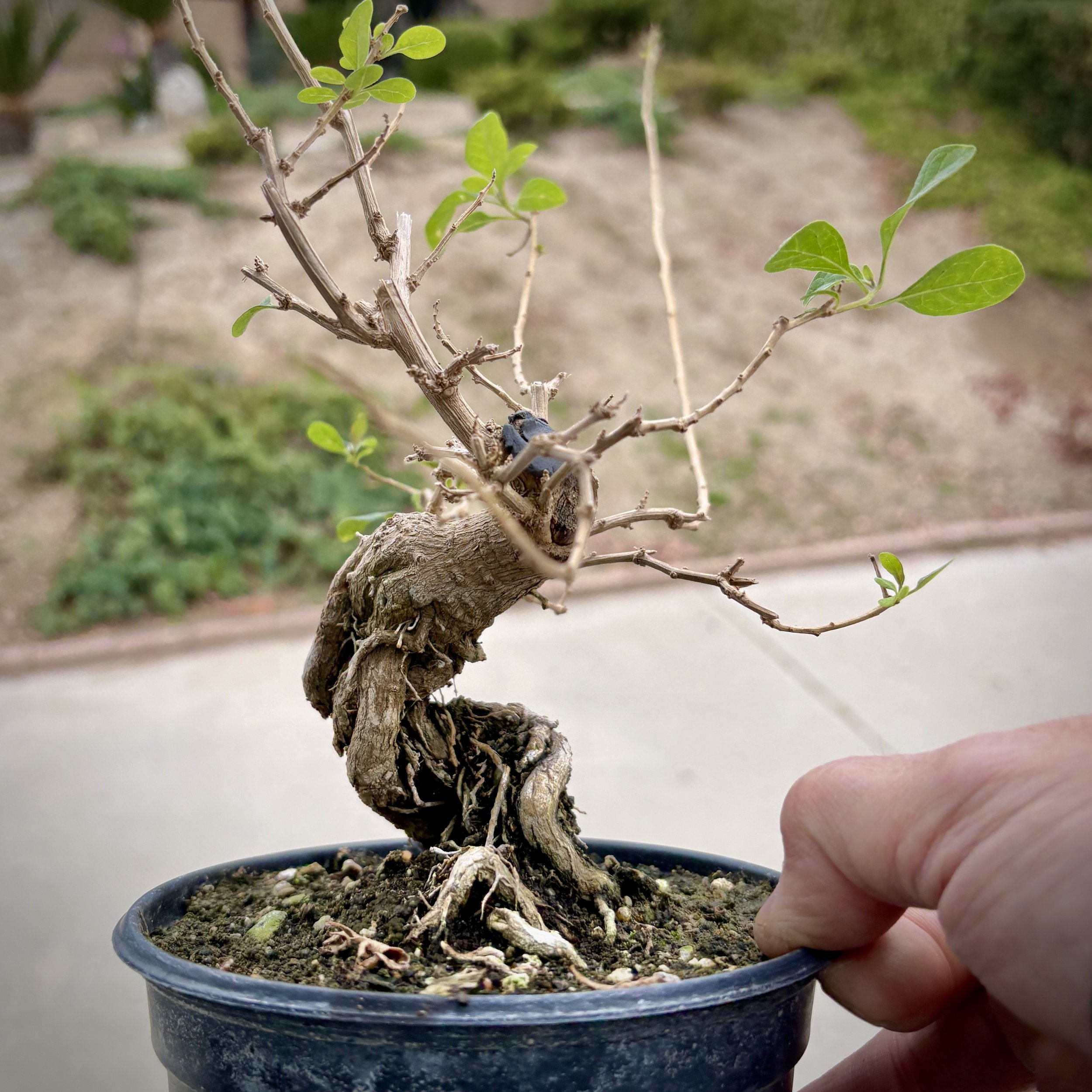
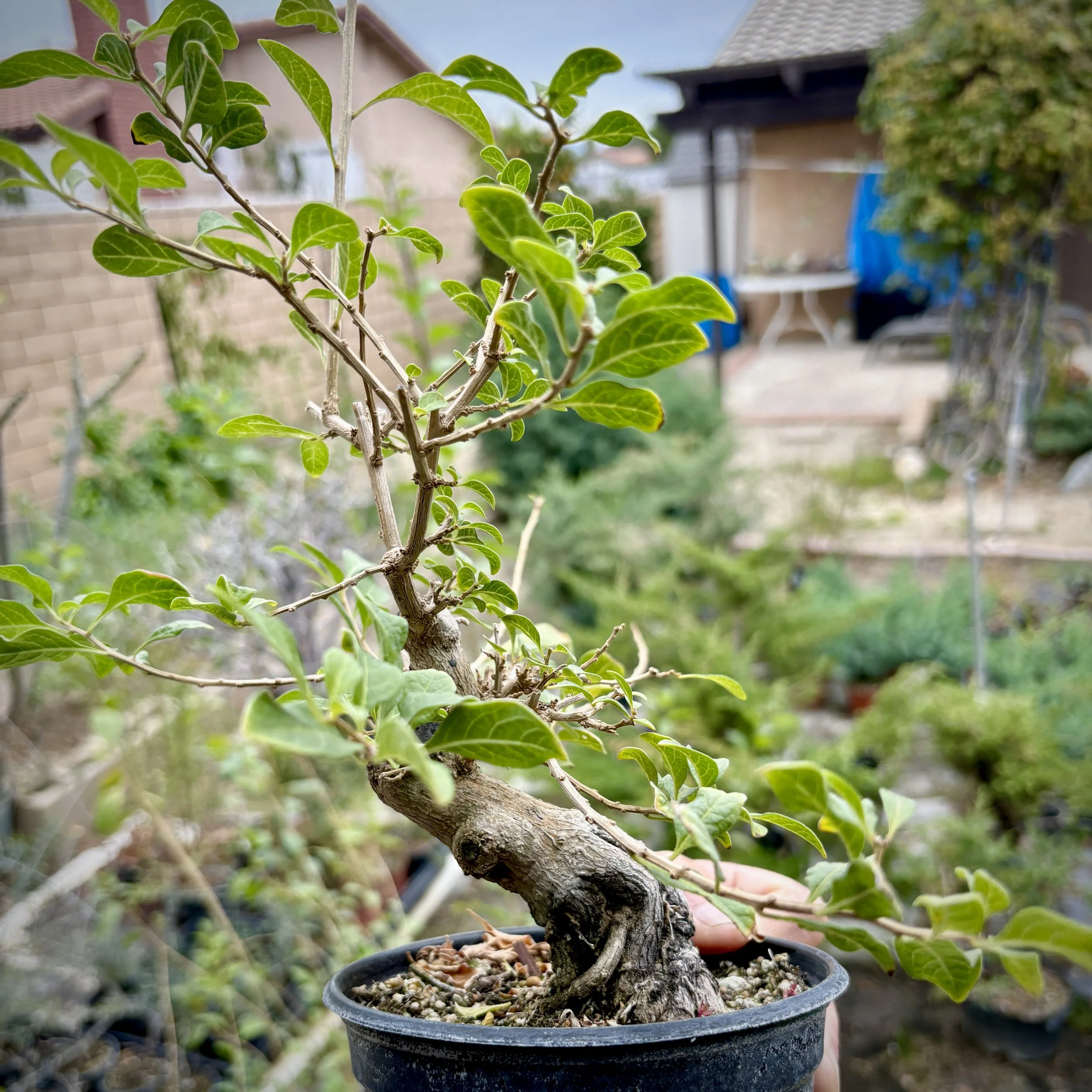
Chinese Elm, also developing Seiju & Cork Bark Elms
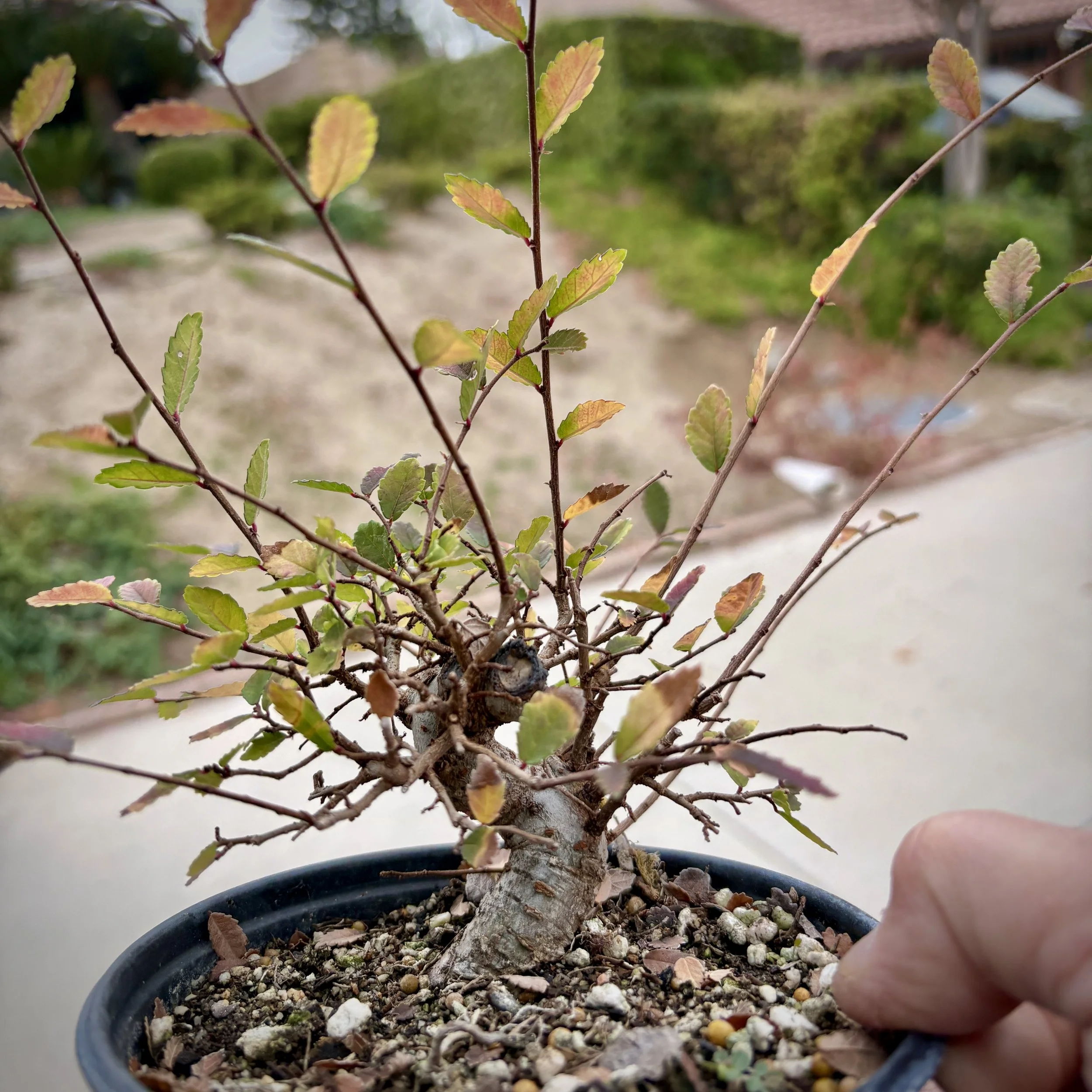
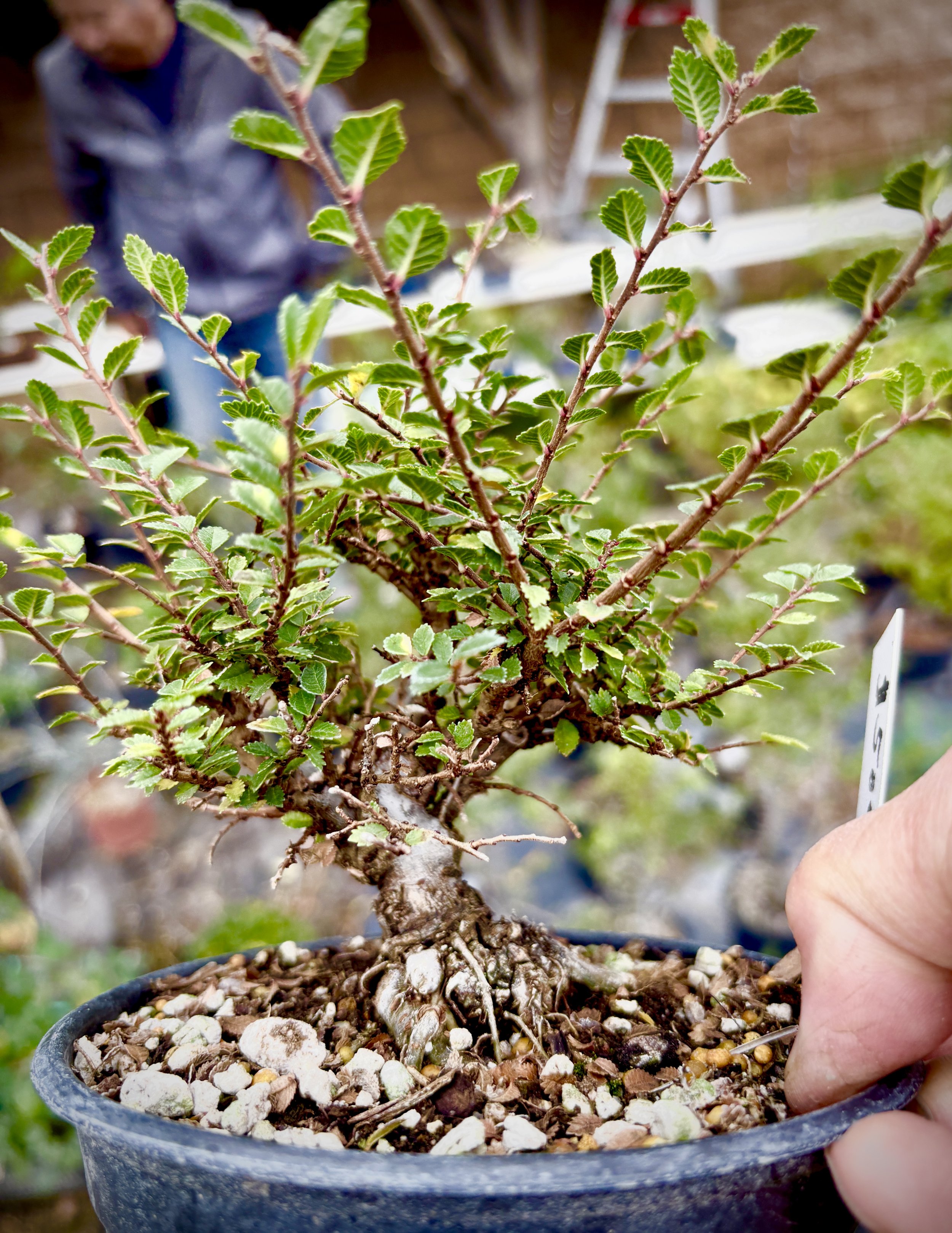
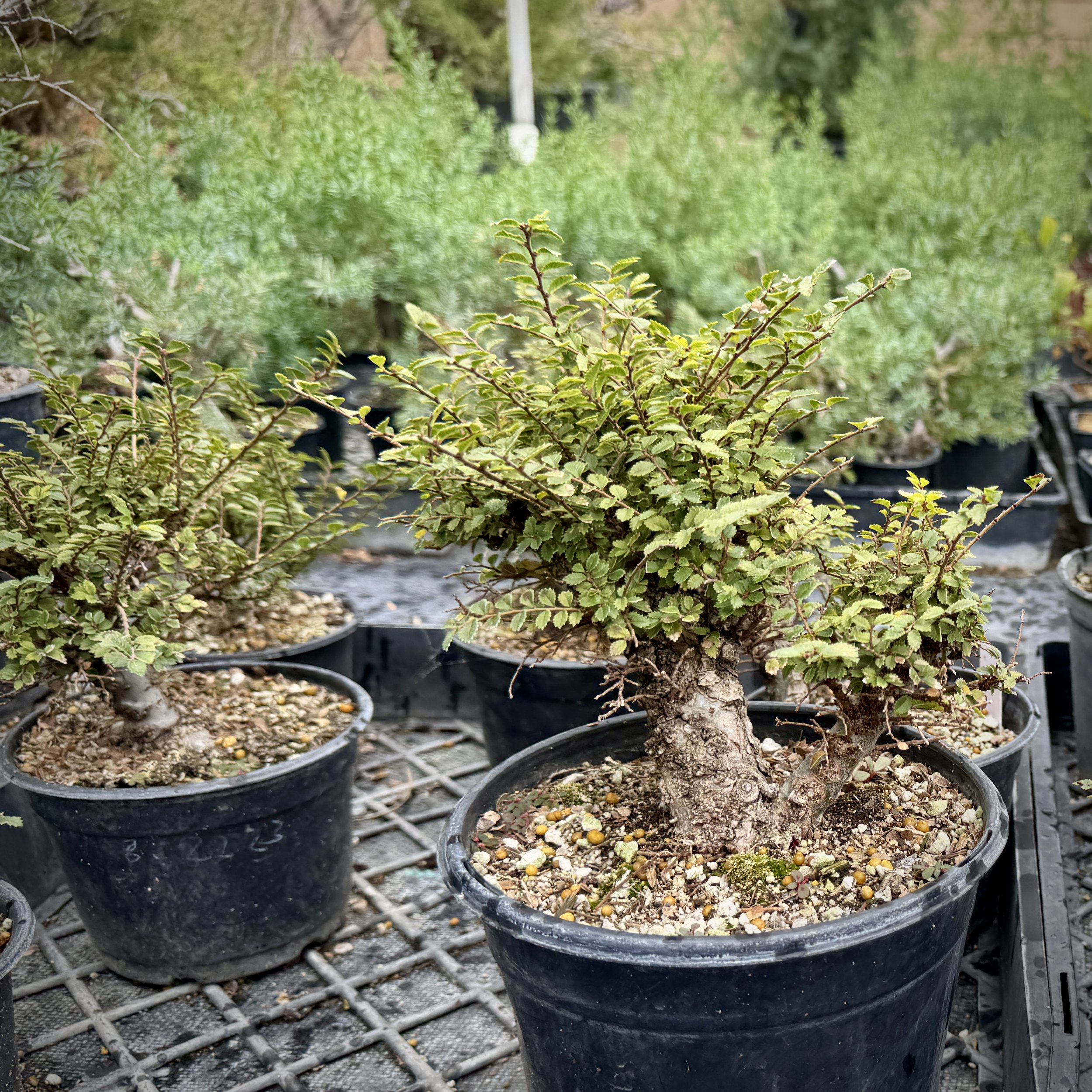
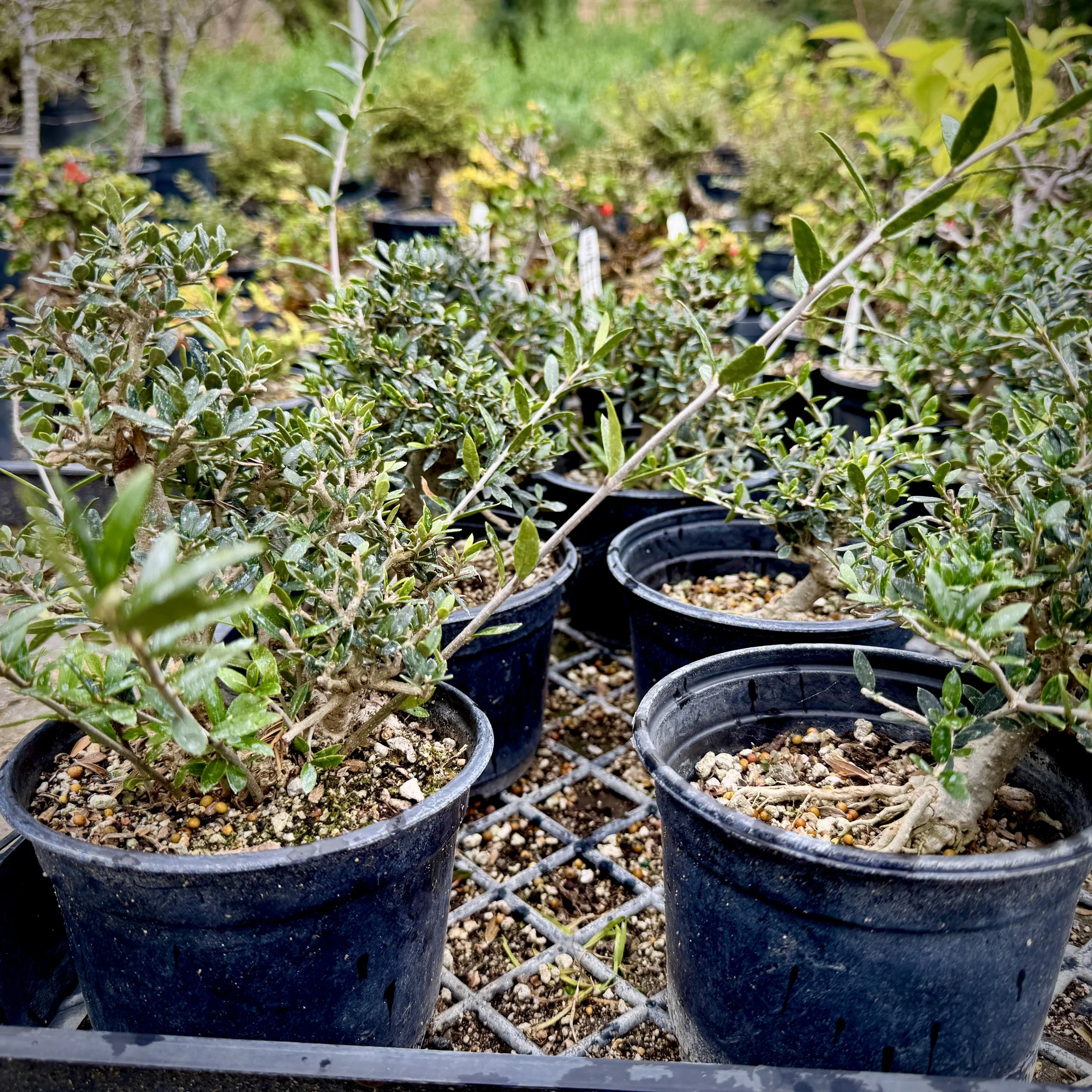
Japanese Trident, cut & grow (~15yrs)
Appreciated for its green-grey bark, compared to US trident with brown-grey bark.
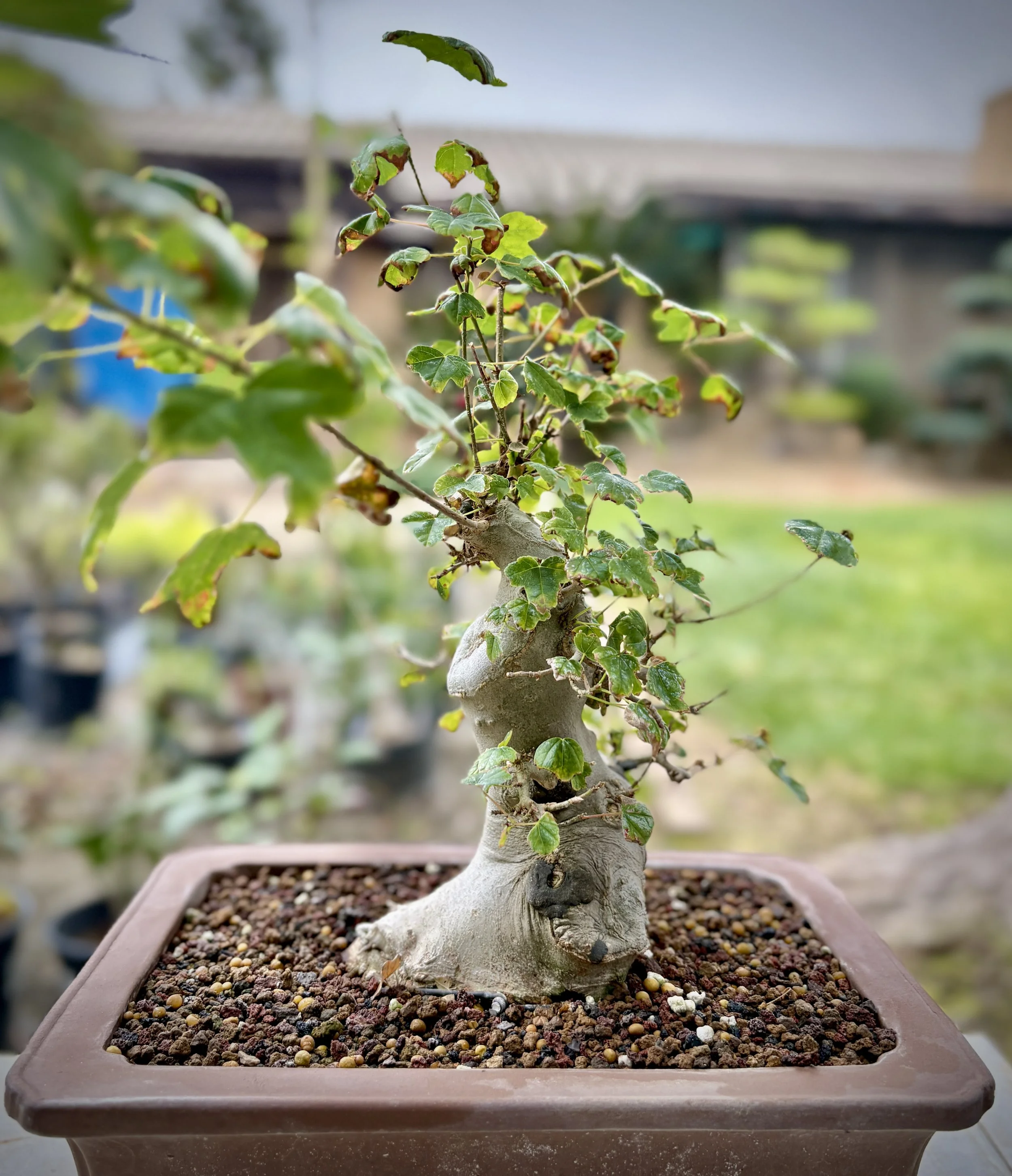
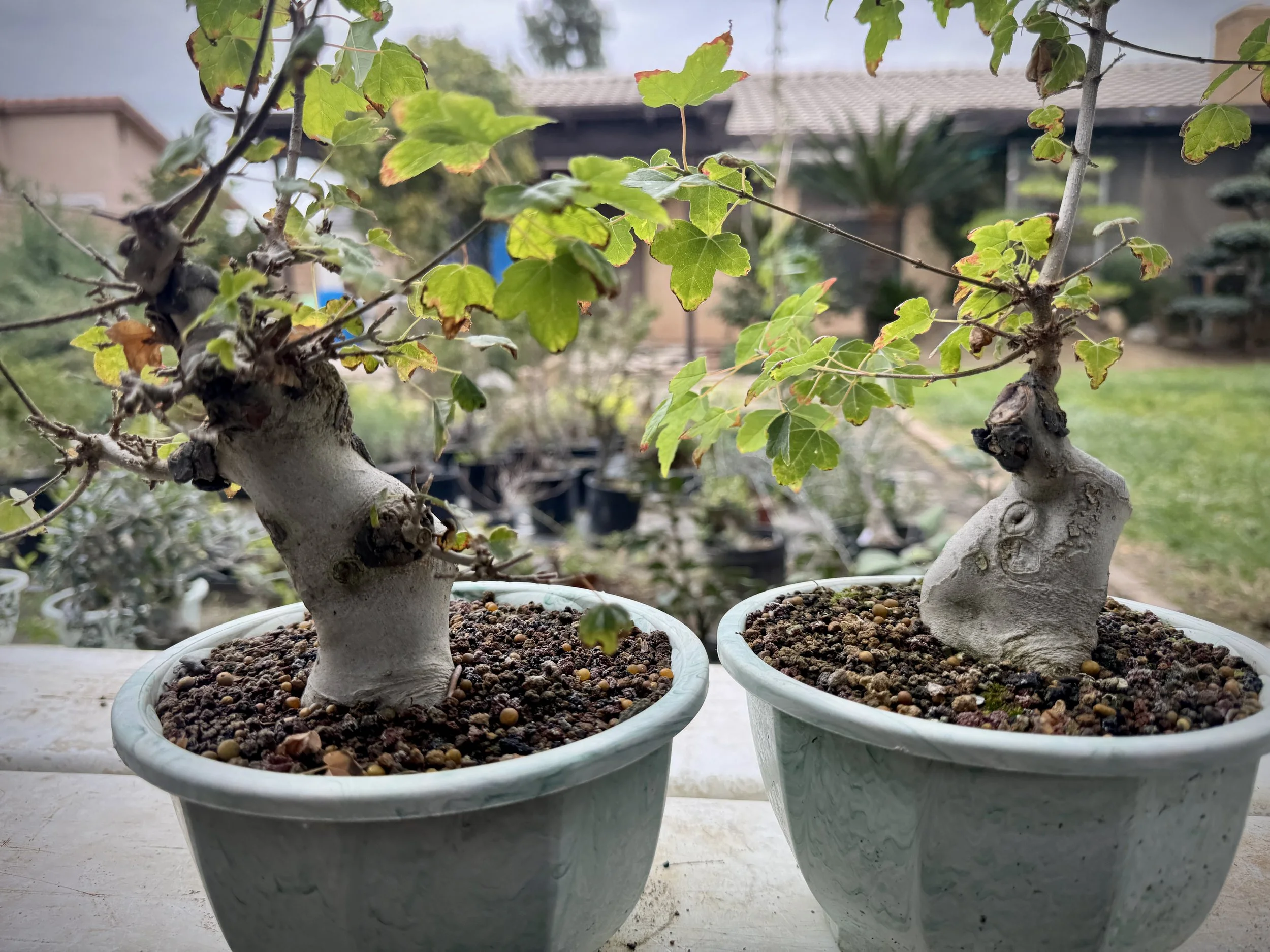
Developing a number of Chojubai
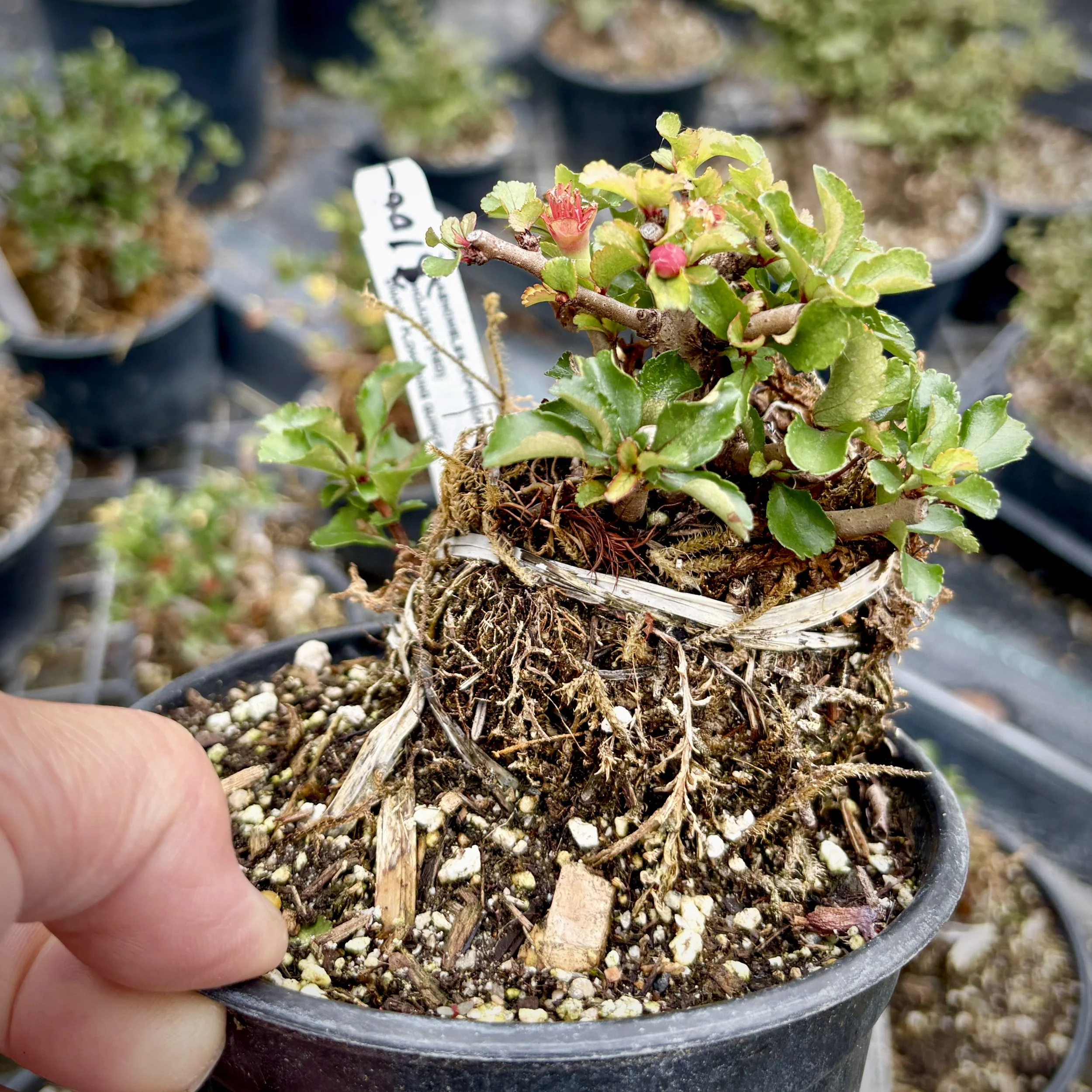
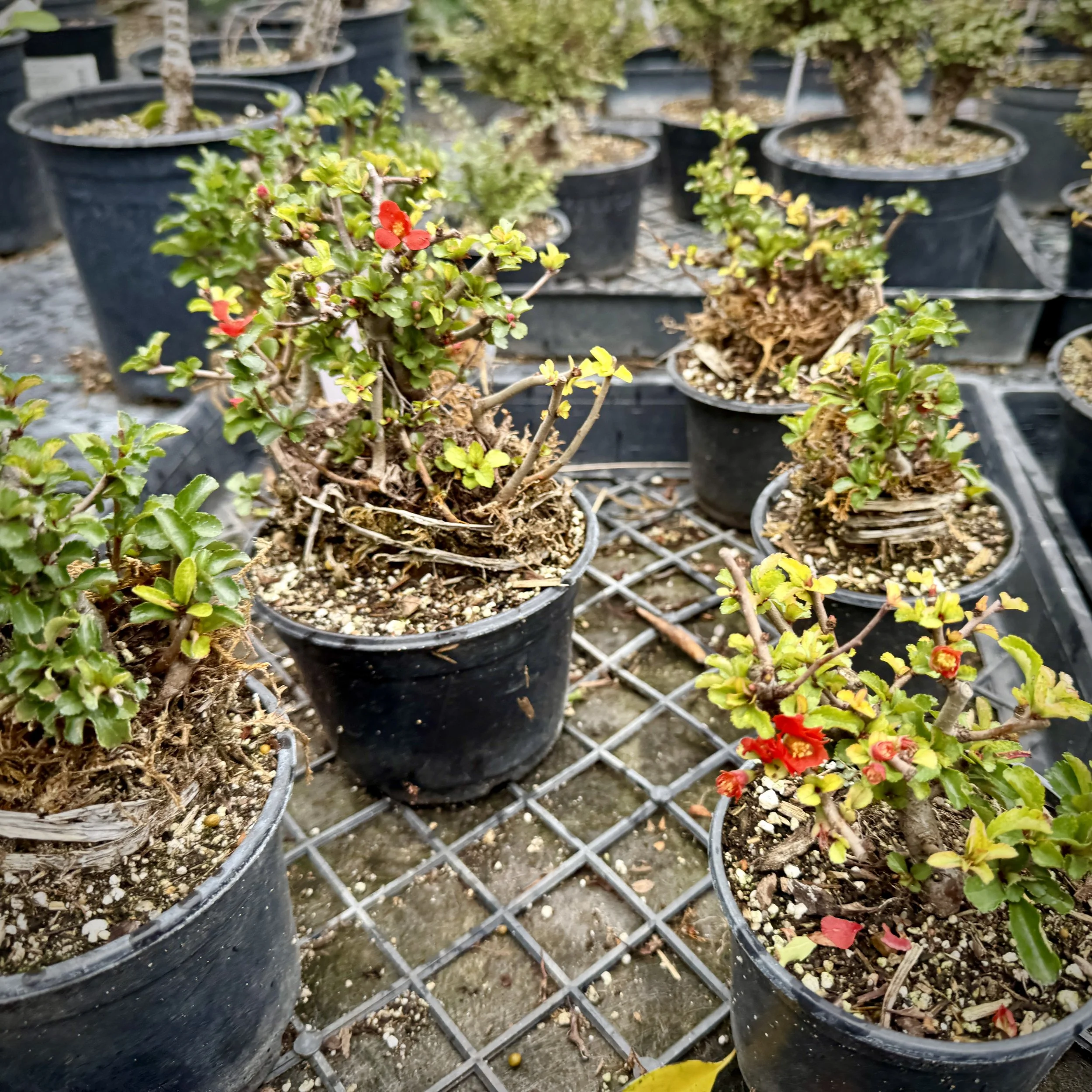
Developing air-layered and cutting junipers, adding wonderful movement. Itoigawa. Starts air-layering in Mar/Apr and harvest a year later. Cuttings on Feb.
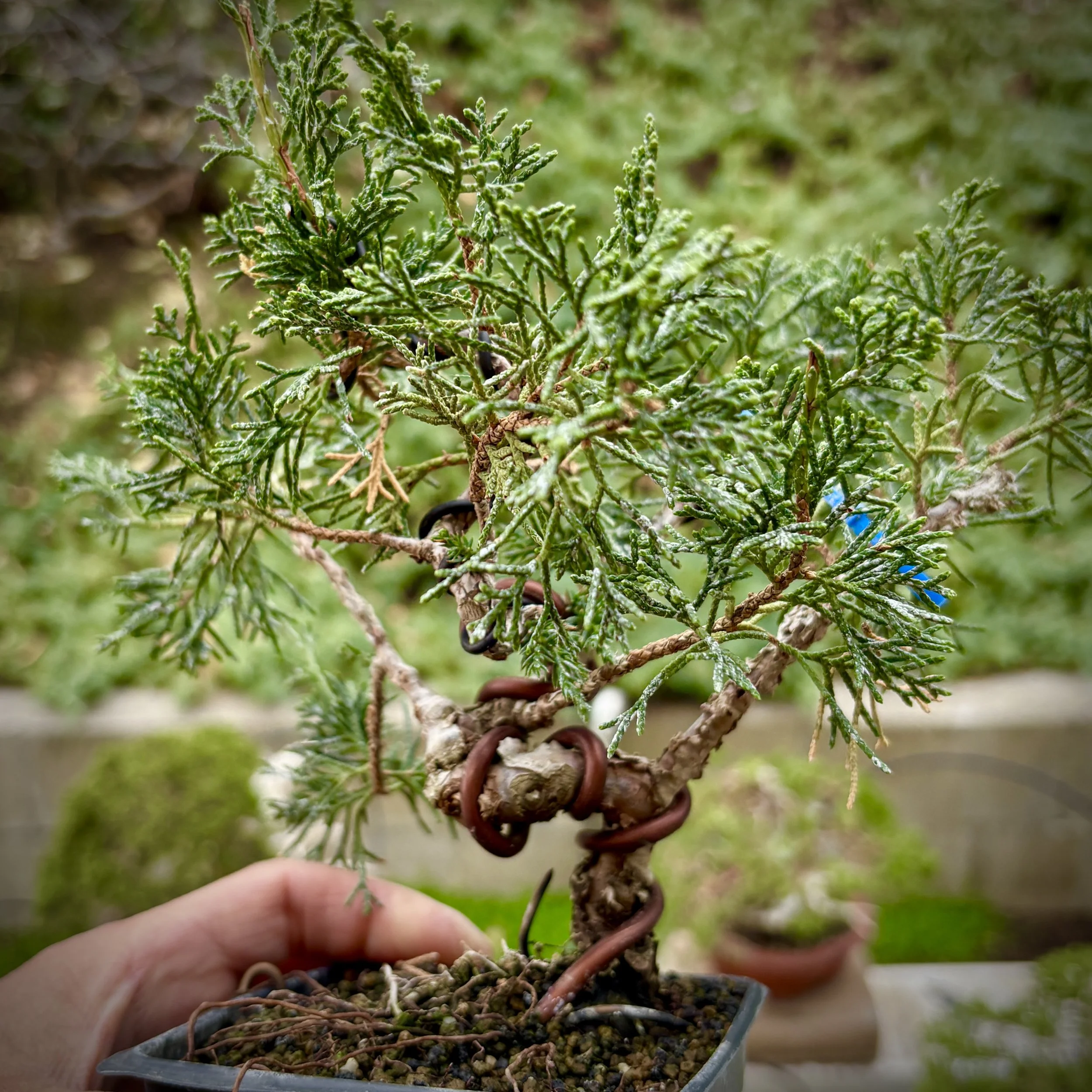
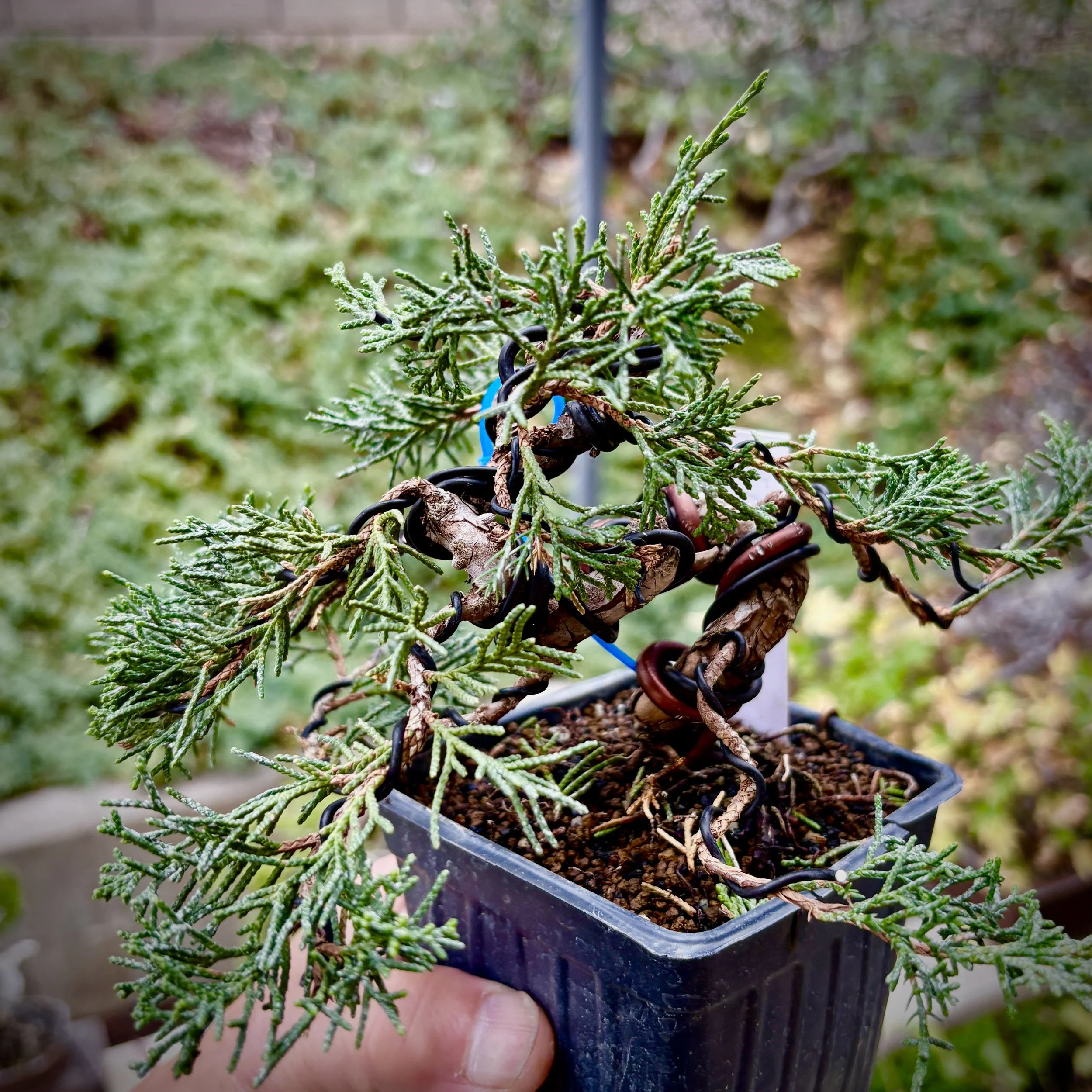
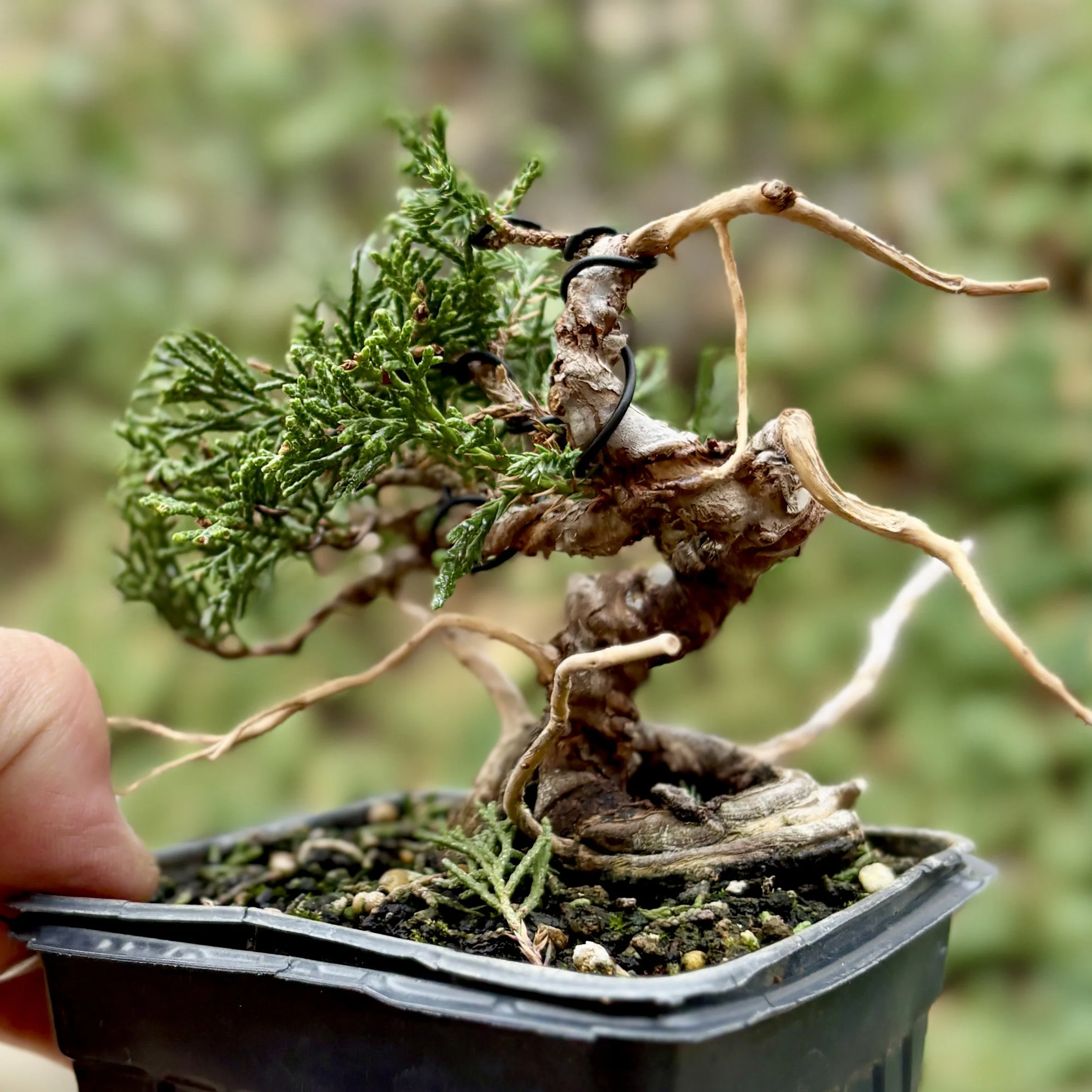
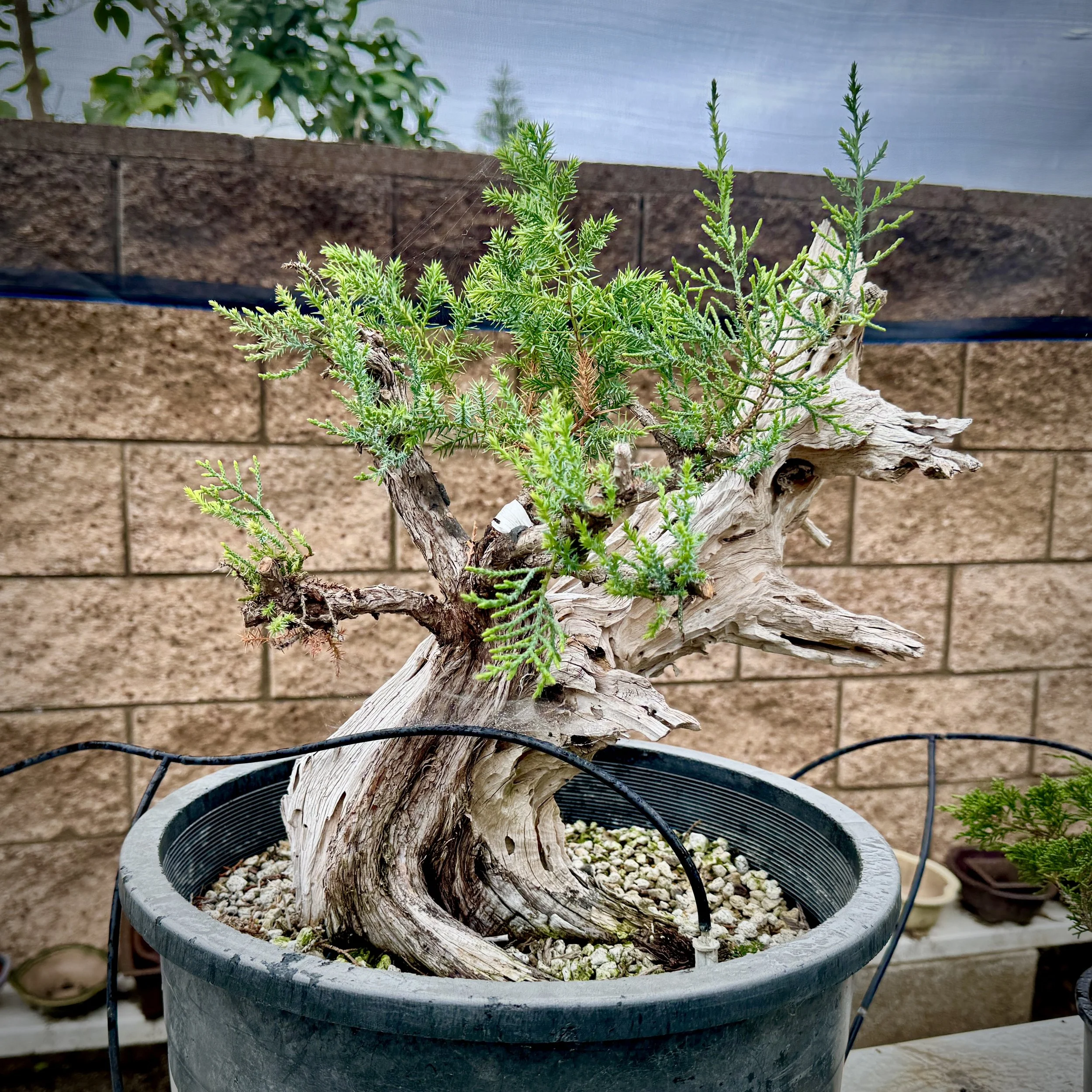
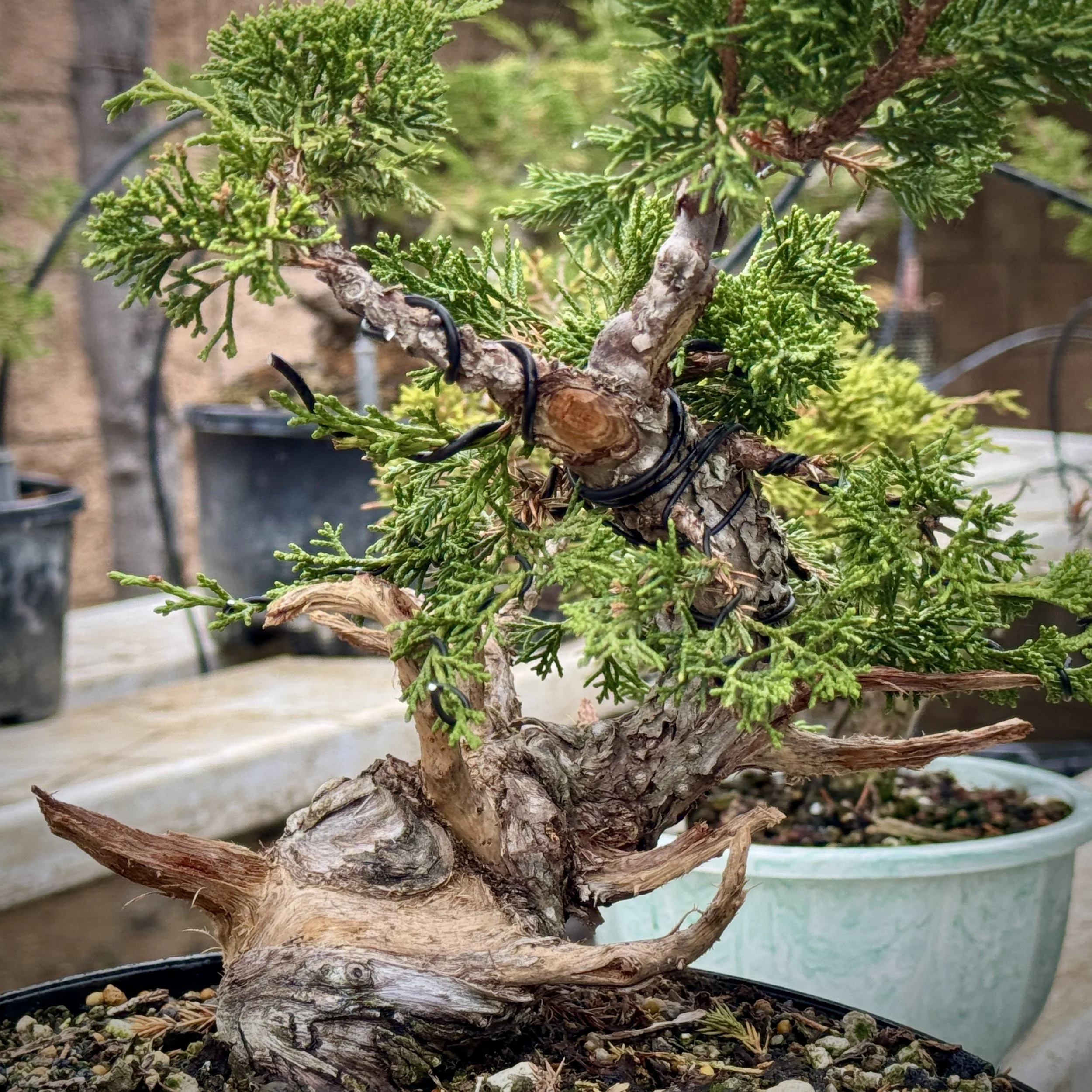
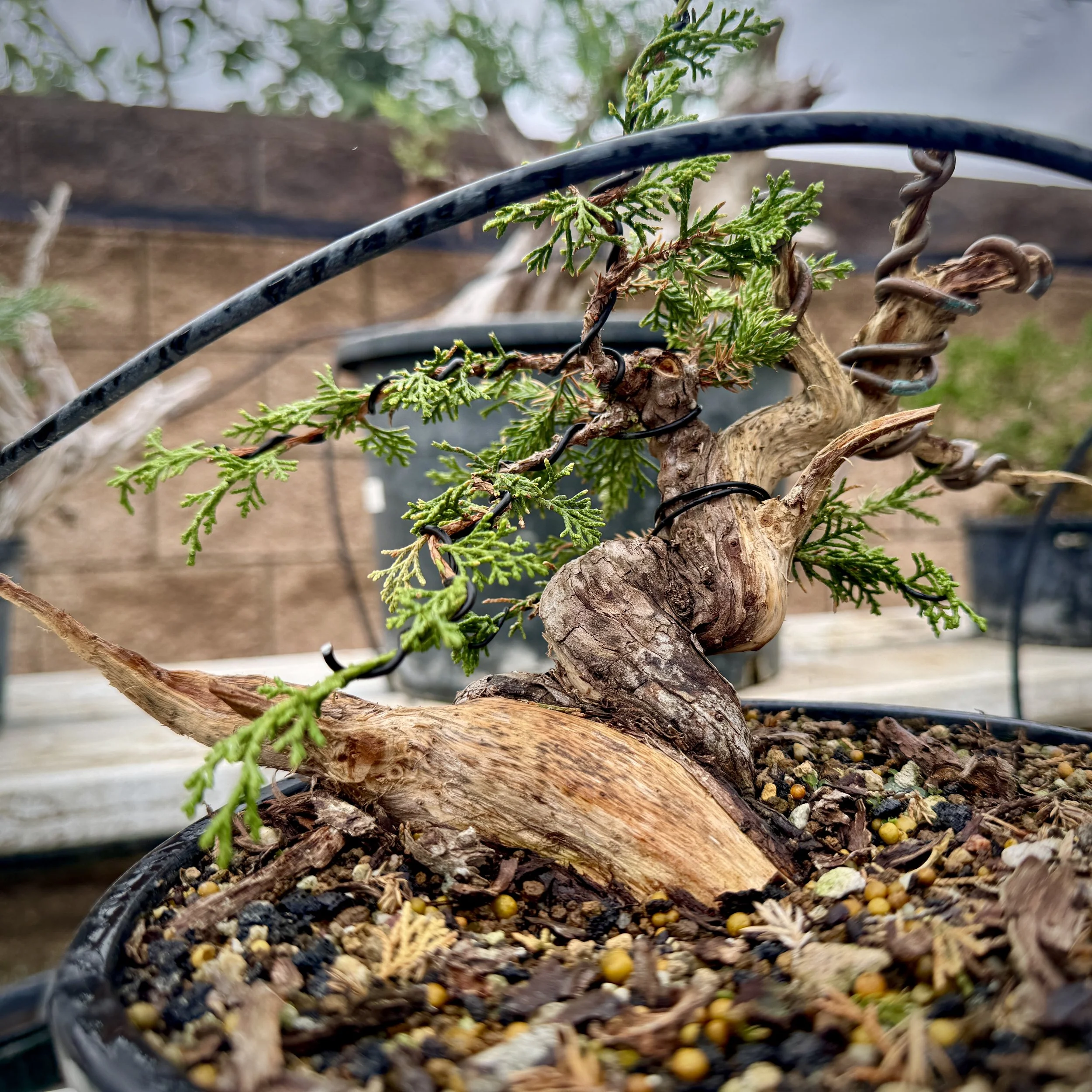
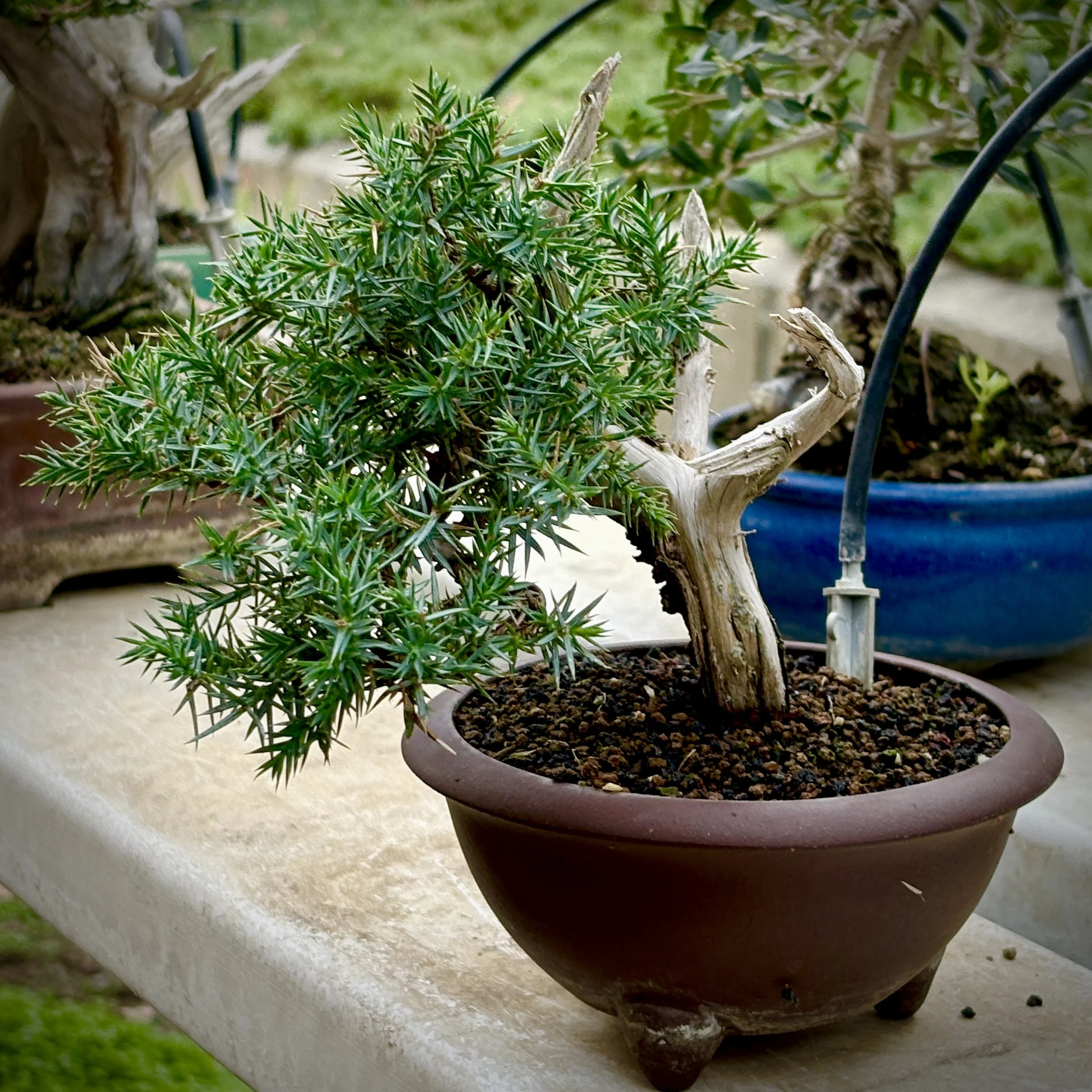
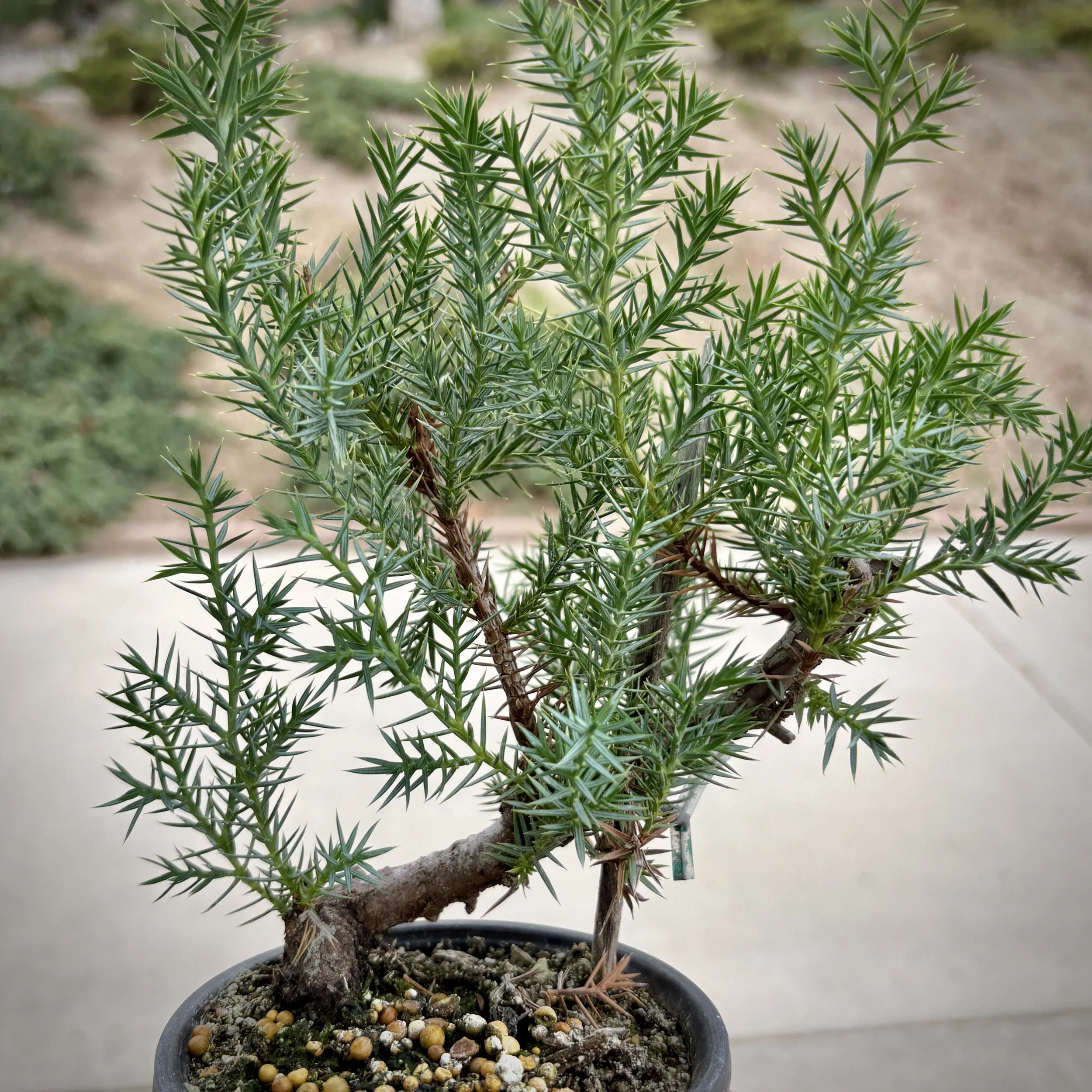
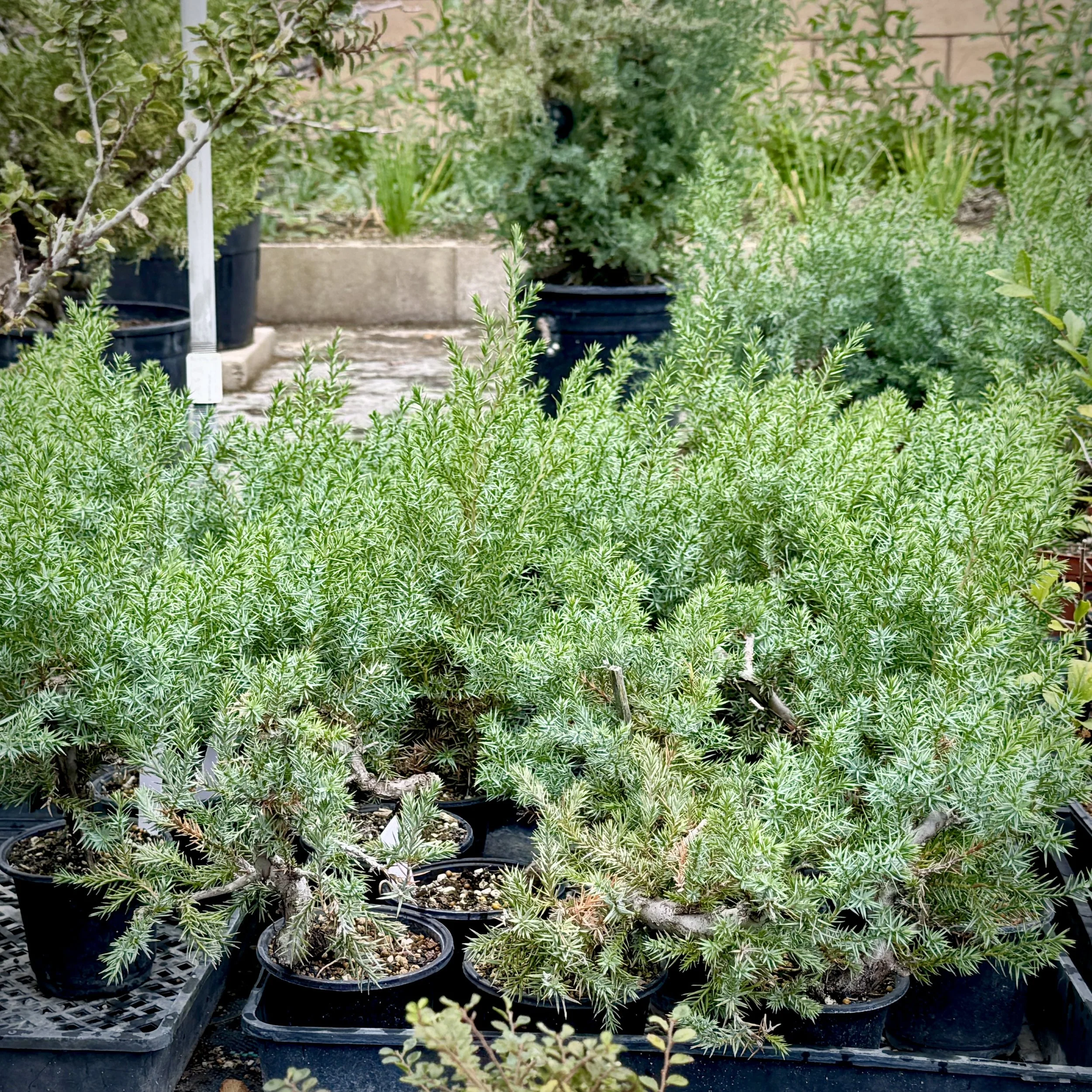
Tosho Junipers, very spiky
Do not do much to it in the winter, it is brittle and more sensitive. In late spring or summer you can anything to it.
Tak told me stories that farmers in Japan would use Tosho cutting in mouse holes to get rid of rodents (ouch).
(They're thirsty trees. Lots of feed, sun & water. Don't prune for a while, let it get a good head of steam before you start working on it. Read Peter Tea's blog on tosho, lots of good stuff there.
https://peterteabonsai.wordpress.com/2011/08/08/tosho-part-1/
https://peterteabonsai.wordpress.com/2011/08/08/tosho-part-2/)
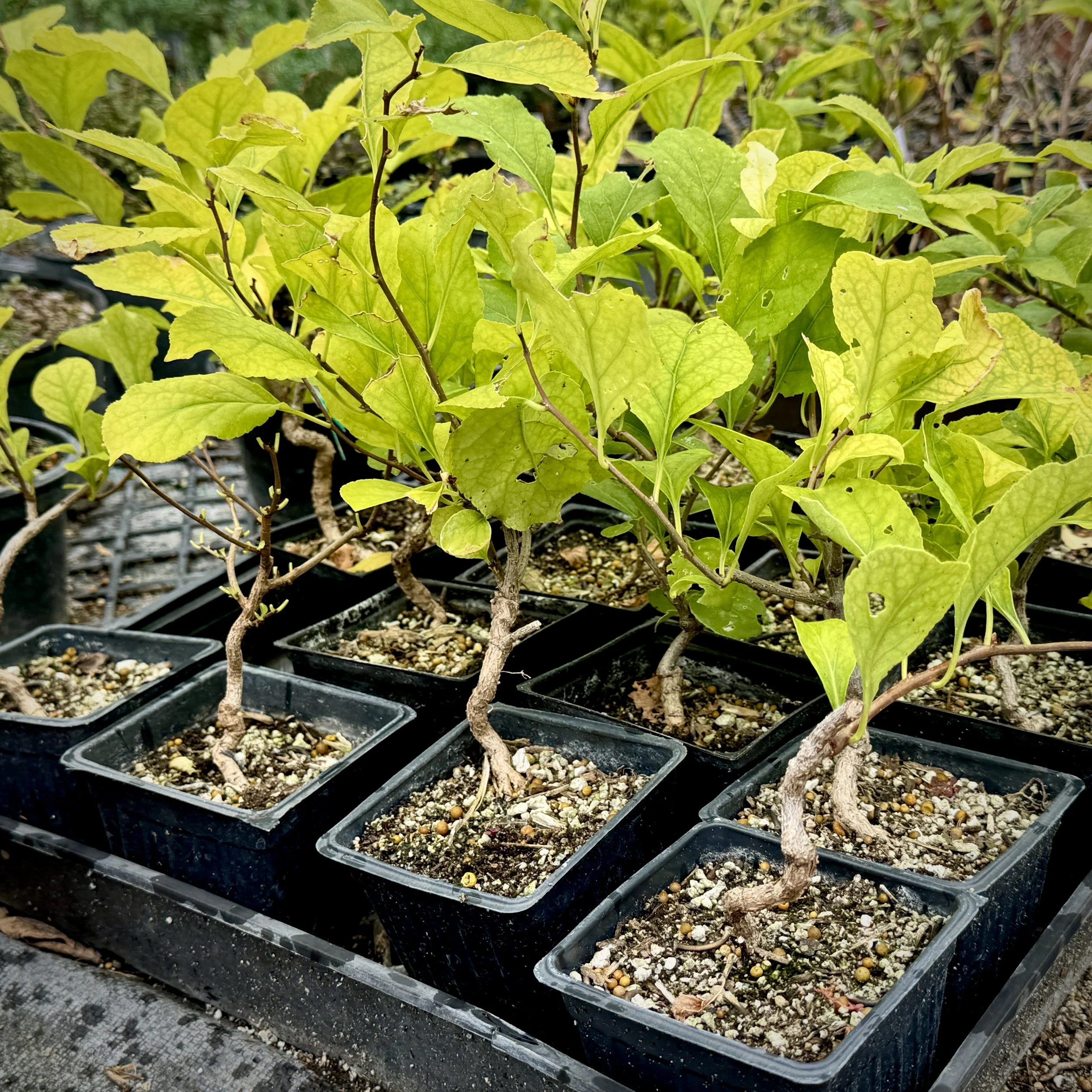
He has a few Beautyberry plants, all sourced from a mother tree in his front yard. But having over-developed and distributed them in So Cal, there is no demand for them—so he’s not actively propagating them now.
Air layering results with the best nebari, radial roots and nice taper. Especially compared to cuttings.
Cuttings and growing from seed, he plants in 100% Akadama fines.
Mr. Shimazu can be reached by phone or TakBonsai@yahoo.com.