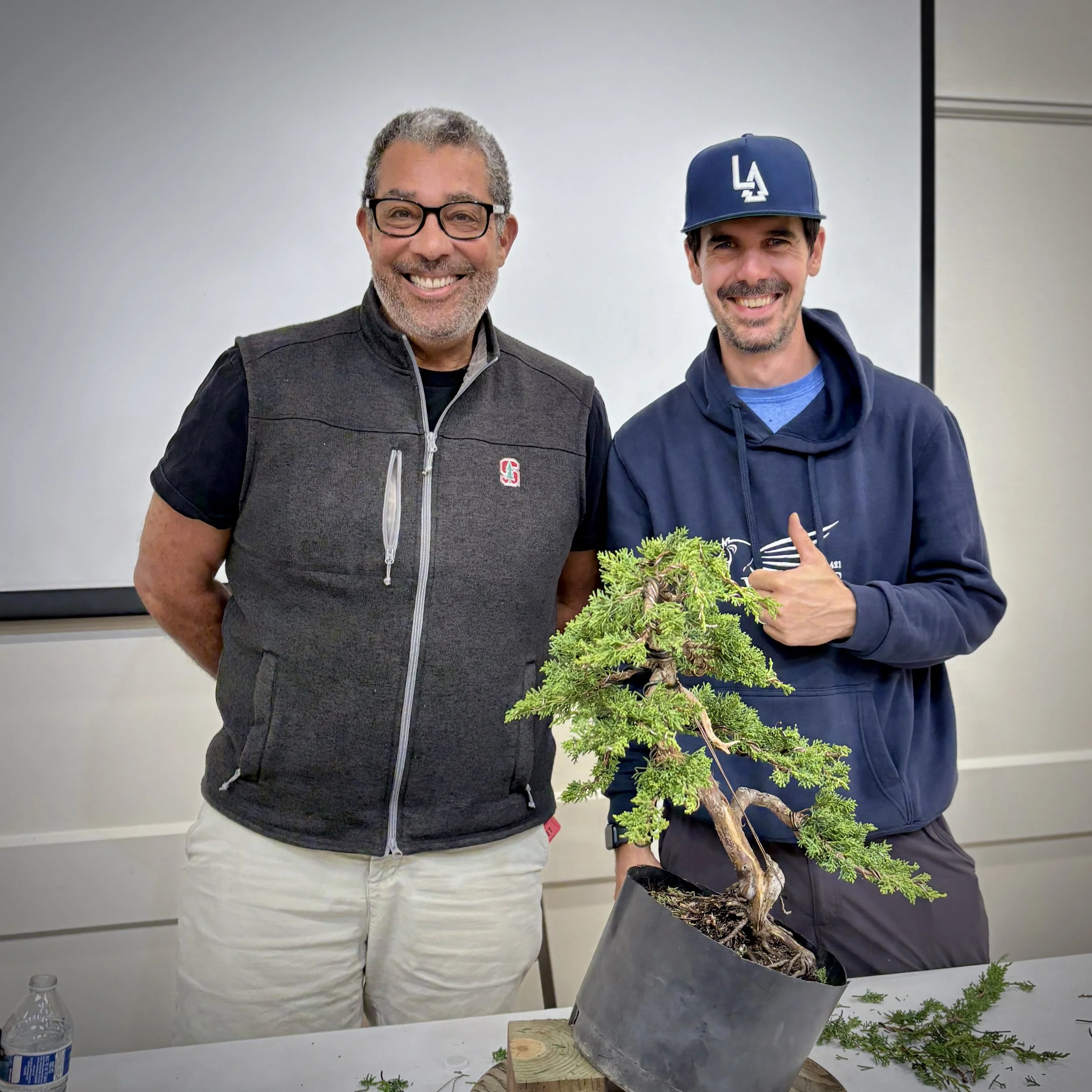
Conifer Pad & Apex Development//Philippe Baron
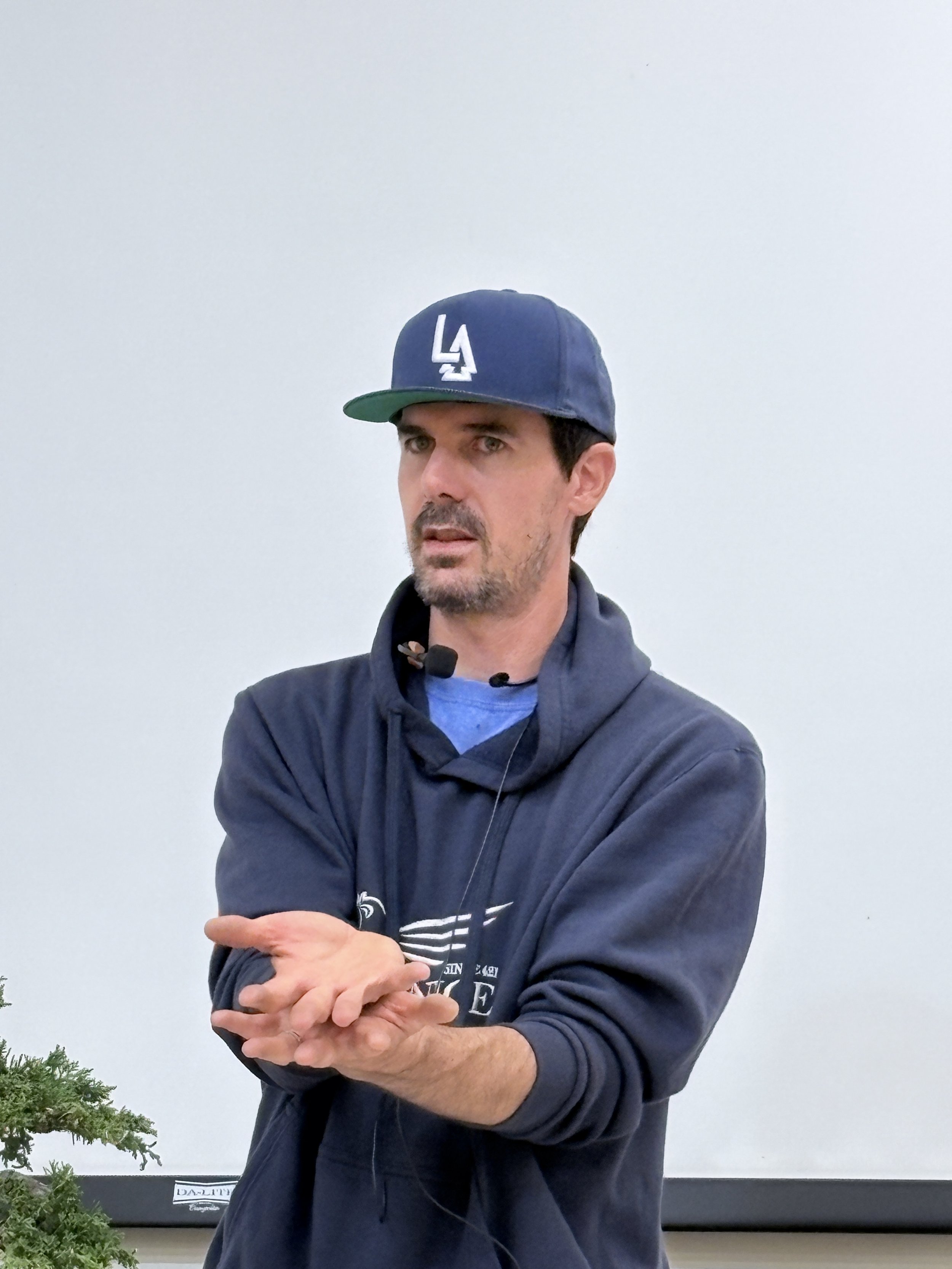
Philippe Baron has been doing bonsai for ten years. Starting on the east coast, he studied under John Romano. Met Mauro Stemberger there, and learning that Maouro conducts workshops & demos for a number of weeks in LA each year, Philippe moved to LA to set up practice and supports Mauro when in town.
Below illustrates different pads that harmonize with the size and scale of the tree.
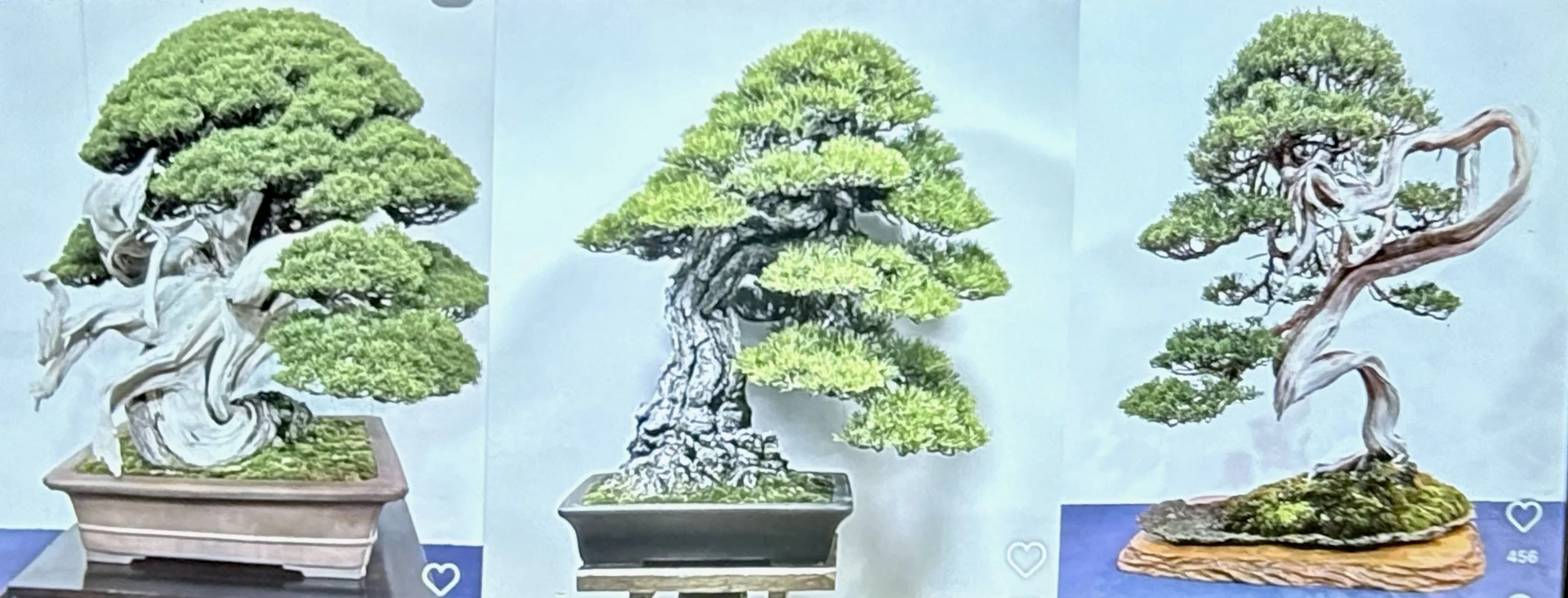
What is a nice pad?
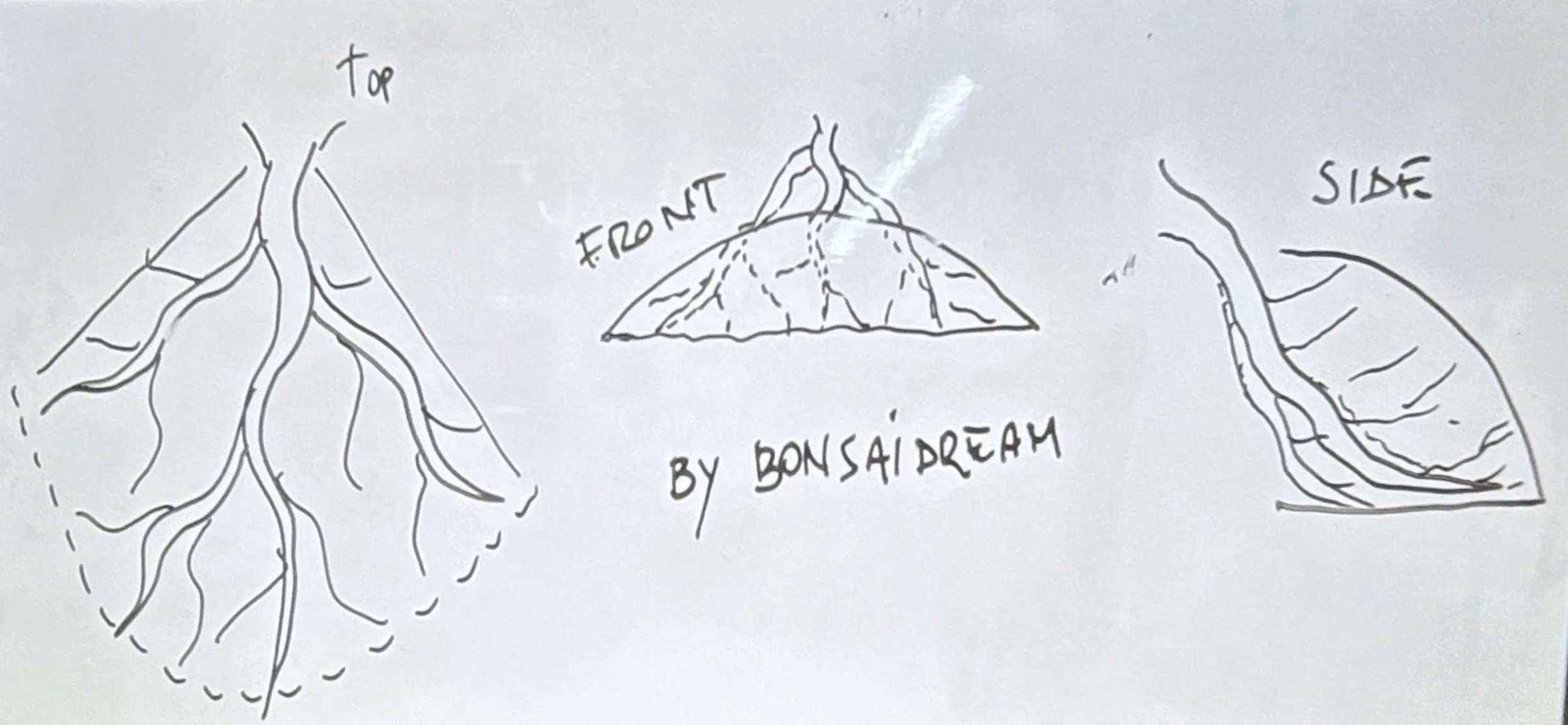
Fan shape, from above
Size of the pad should be in proportion to the trunk (harmonize)
Volume should harmonize with the tree, being strong or delicate
Create a clean line underneath—can be flat or with some branches underneath, but foliage line should be flat
First pad has a large size, strong & voluminous pad (of a strong trunk)
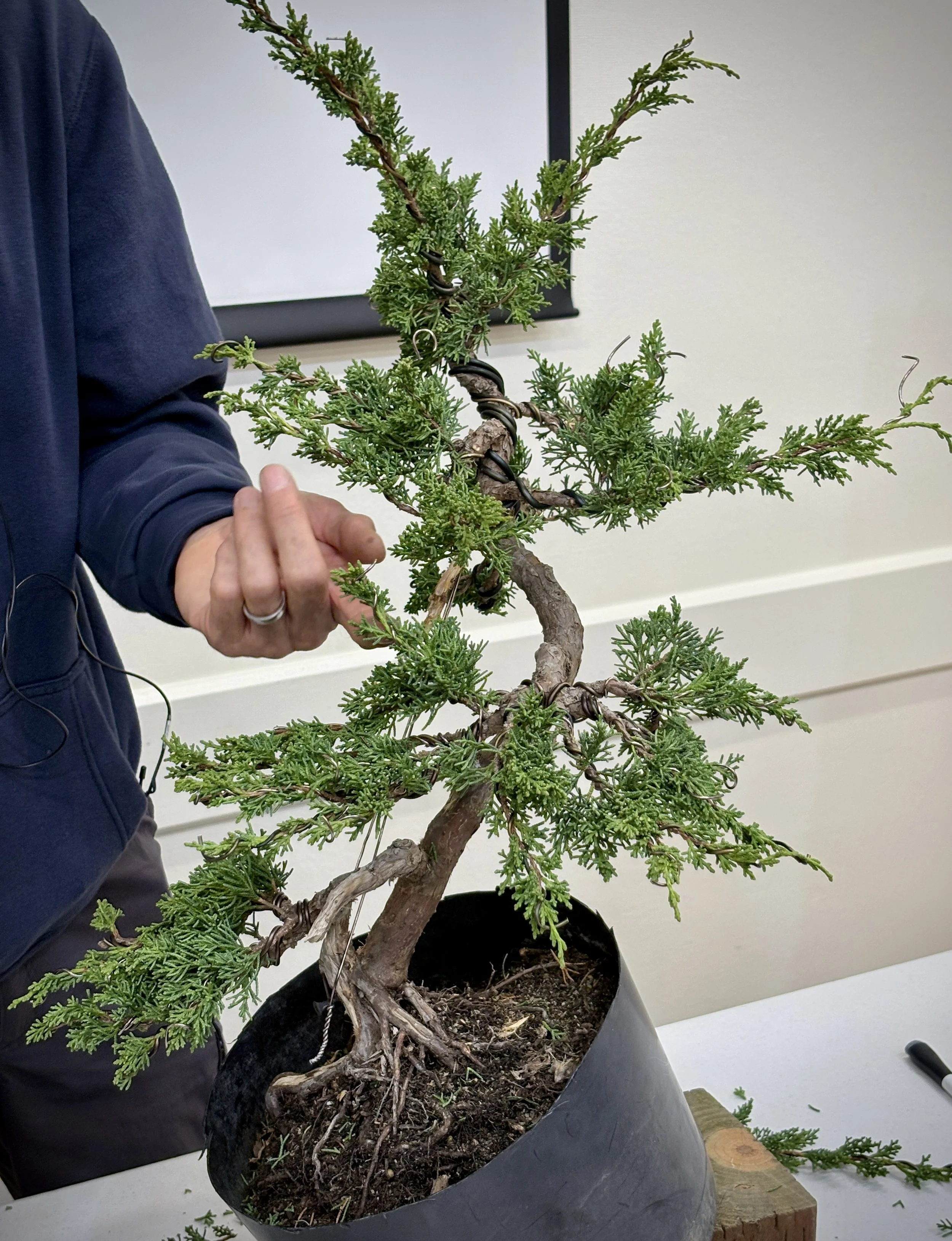
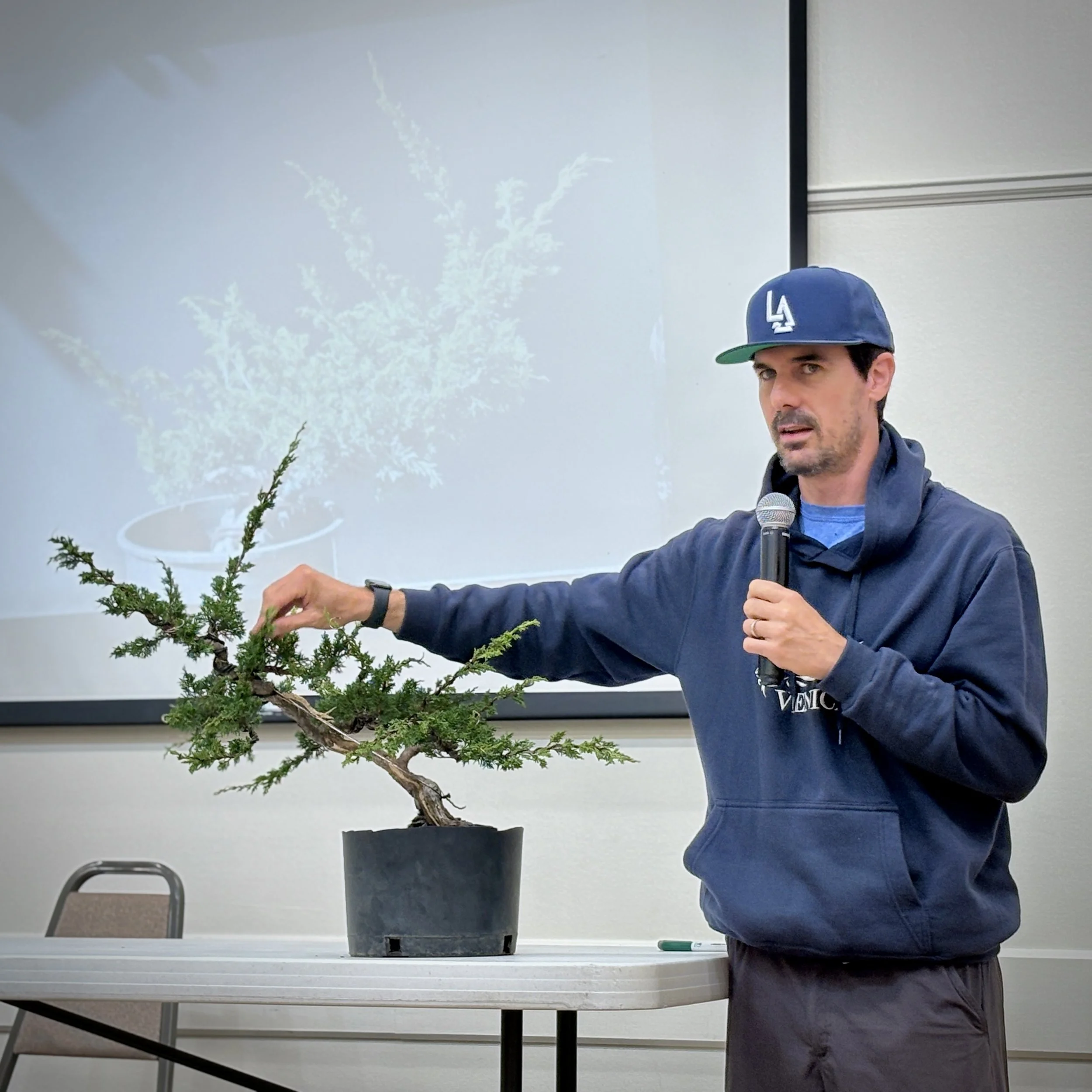
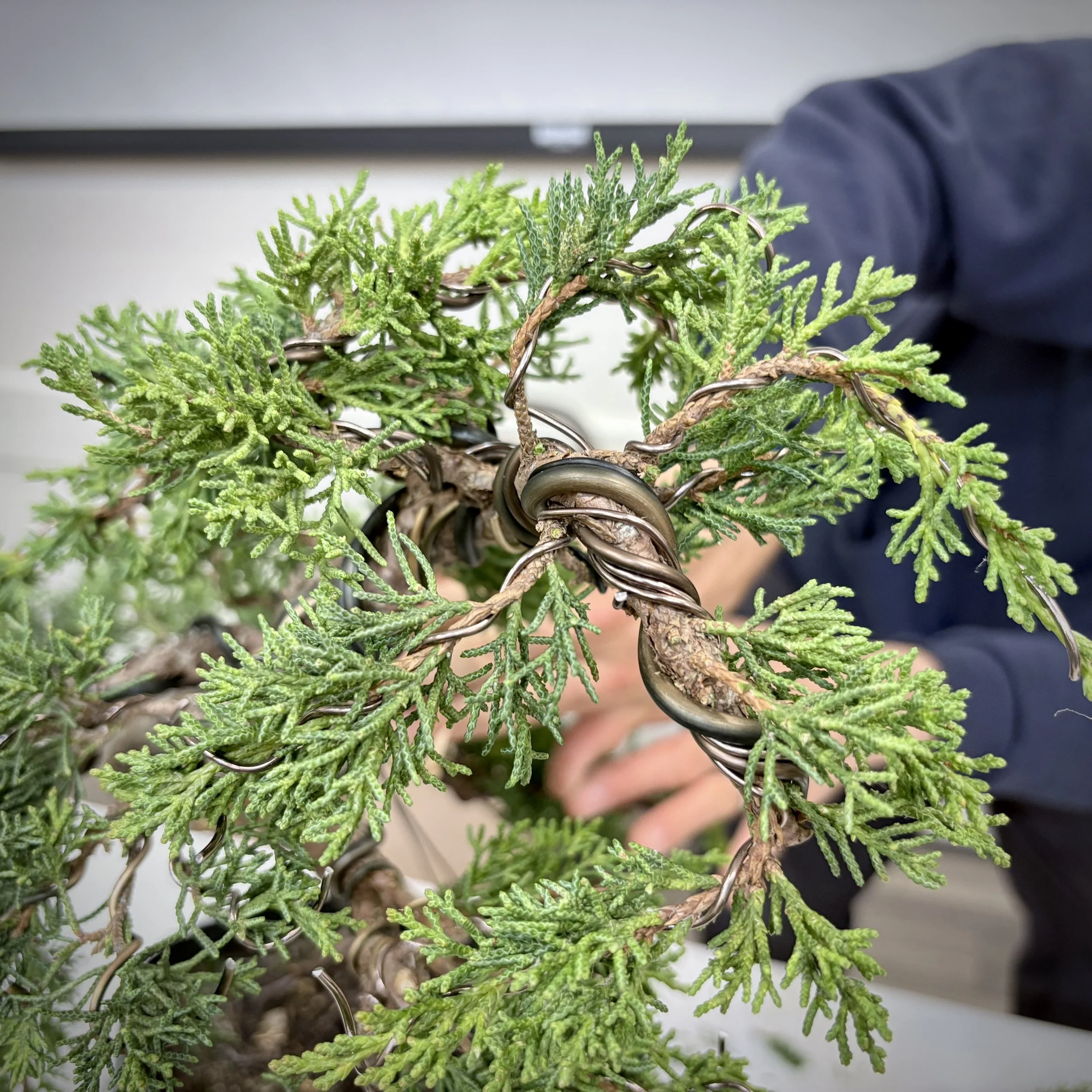
Pads are created by wiring
Wiring is your paintbrush
Allows you to put green foliage where you want it
Prefers to keep as much green as possible (first styling), then refine by removing redundant or unwanted branches—work with what you have
Prefers to wire it all, then edit and prune later
But removes first ½” of growth or crotch growth.
Future refinement may replace crotch growth over a secondary branch
Test after wiring by slightly moving the branch—if anchored well, no other branches should move. Fine branch wiring may cross over the anchor wire to be more stiff
Start with the lowest primary branch. Followed by the next then the back branch
First branch is to bring in to an acute angle, towards the viewer; put movement into the primary branch (down, movement) then position the foliage around it
Creates compact branches closer to the trunk, often with Yamadori, as nature gives you branches where they are
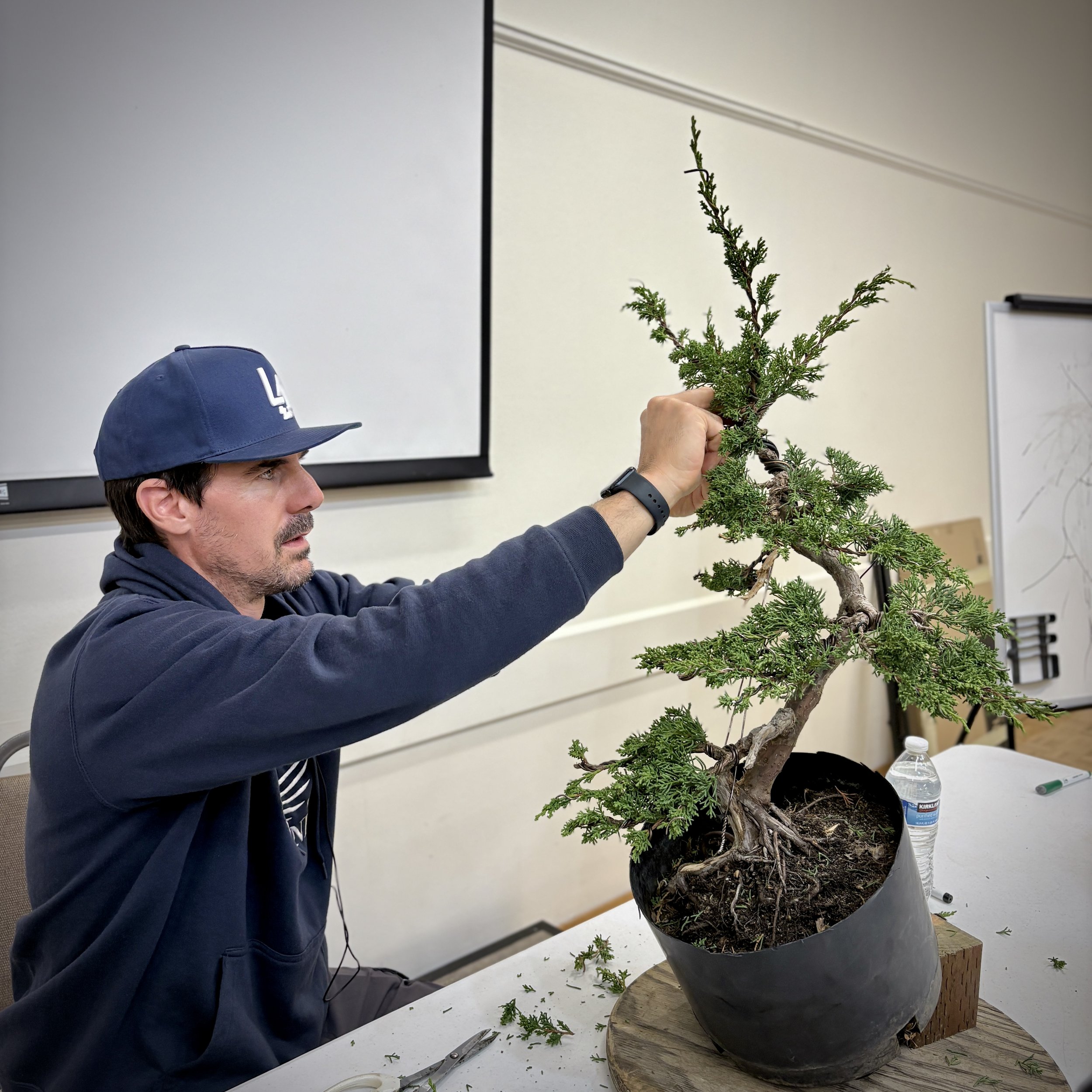
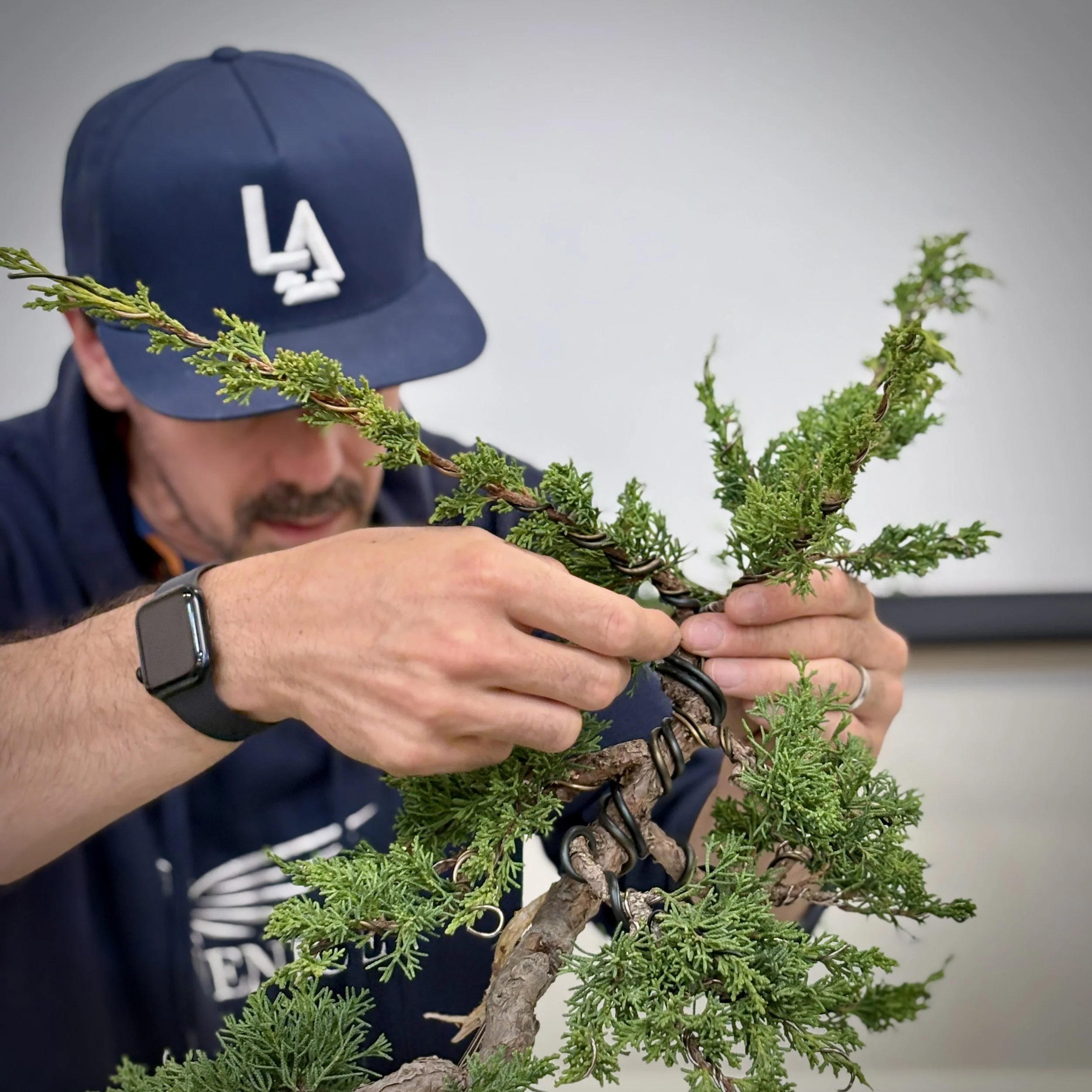
Apex in proportion to the style or size of the trunk
A stronger tree has a more dense and larger apex, and with less negative space between pads
Apex will fold branches down in all directions. To fill gaps and build volume, some branches are made compact by folding down then back up ? D].>
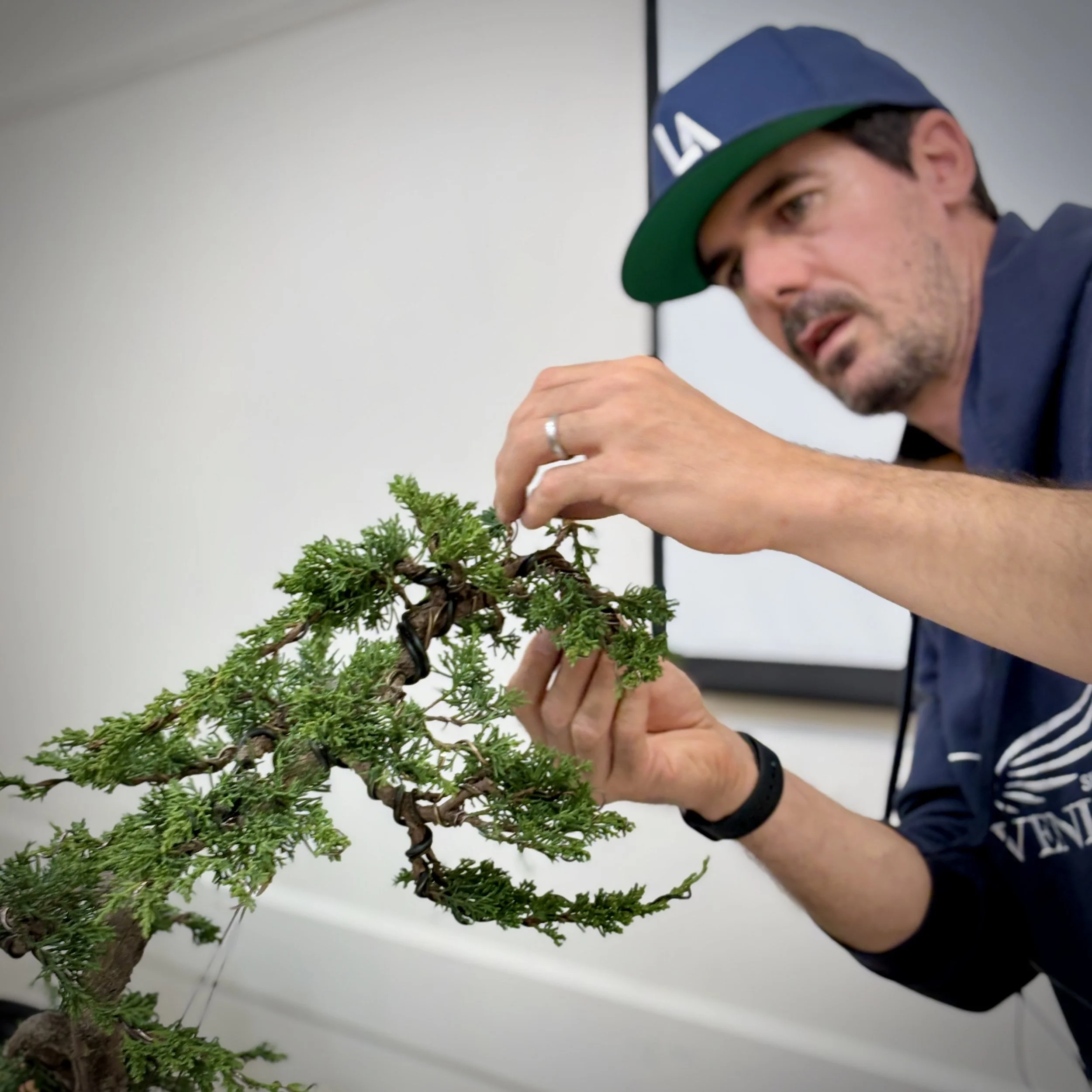
Depicting how wired beaches form the fanned shape of the pads, then smaller foliage positioned within that pad, filling any gaps.
Recovery & Maintenance
Pruning is a stress on the tree, and leaving the healthy tip growth in place will help the branch recover. During refinement the tip can be reduced.
Over time, the foliage will fill out, Remove downward growth and upward new shoots. Aggressive vertical shoot draw too much energy.
This tree has some negative space now, but after it recovers he would revisit and create more negative space
Rear branch is thick and has many branches and foliage. In one or two years would assess that inverse taper is not an issue or reduce some foliage.
Let a tree recover for a year before more work, except for pests and fertilization. Keep it healthy.
Repotting in a year (Jan-Mar); He prefers to get it into the final pot next. Stressful, but do it once, lots of time to recover.