✳️ AT Workshop - Oct 17, 2026
Adam’s PBE Shohin Kishu
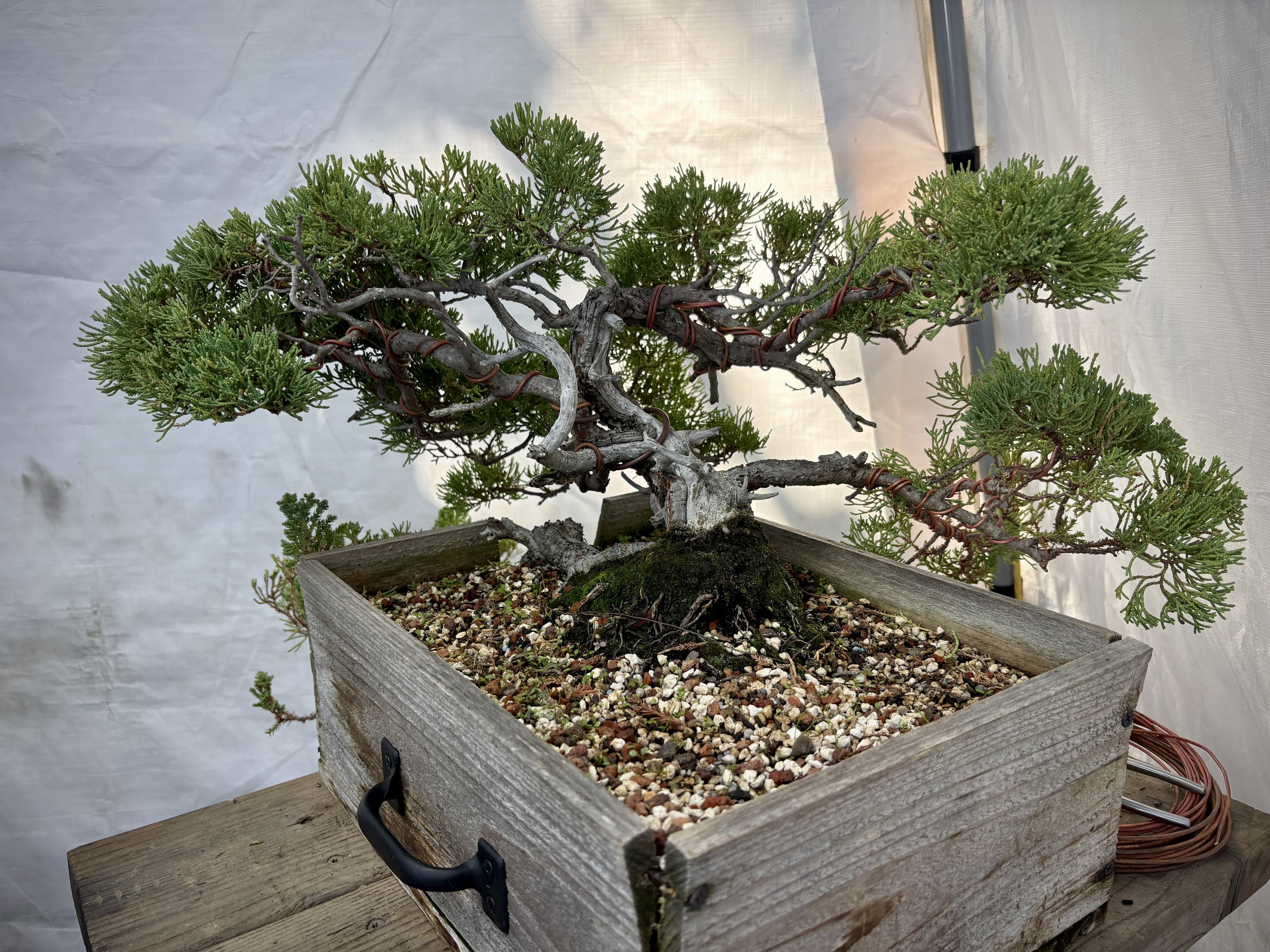
Choosing a front and options to remove the lowest branch
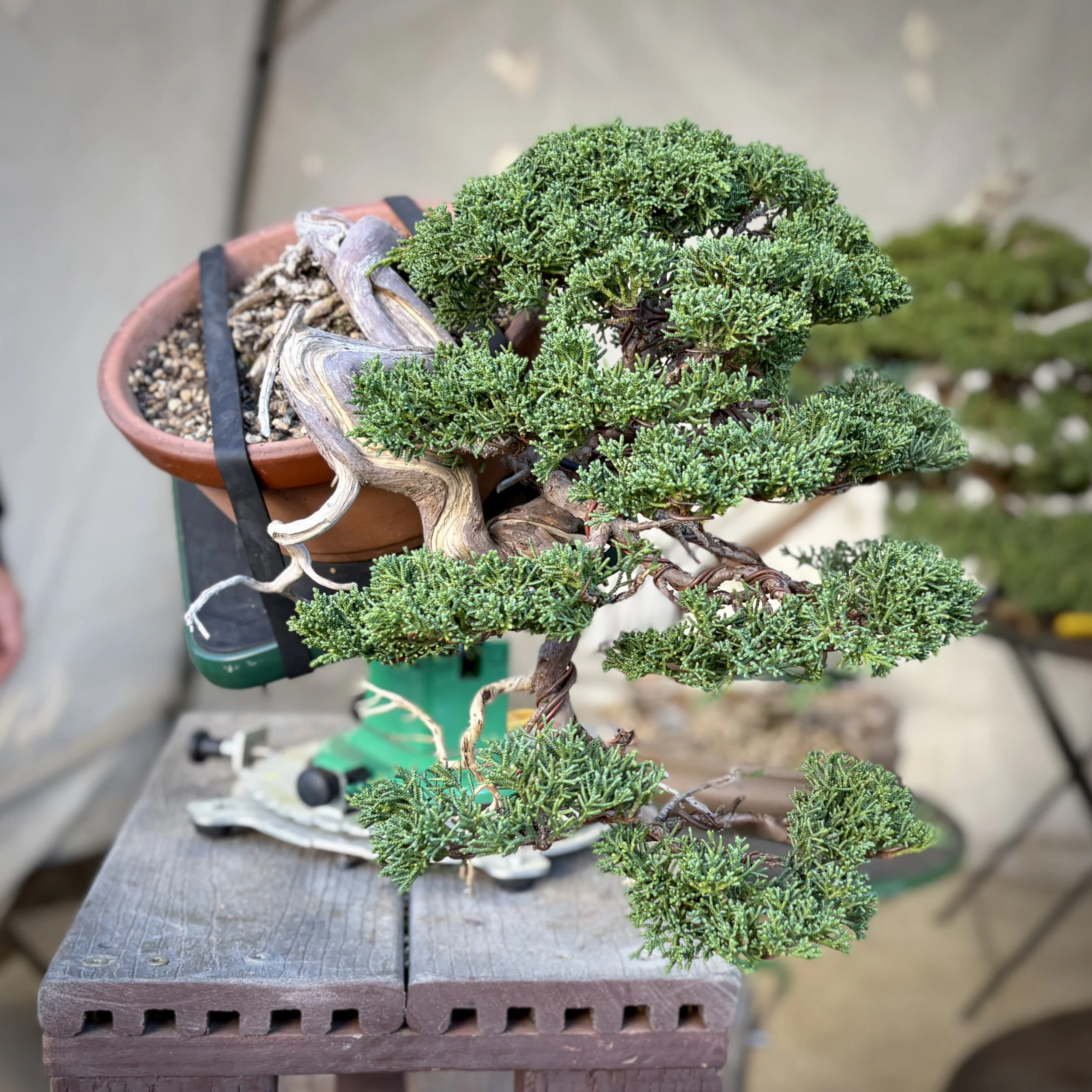
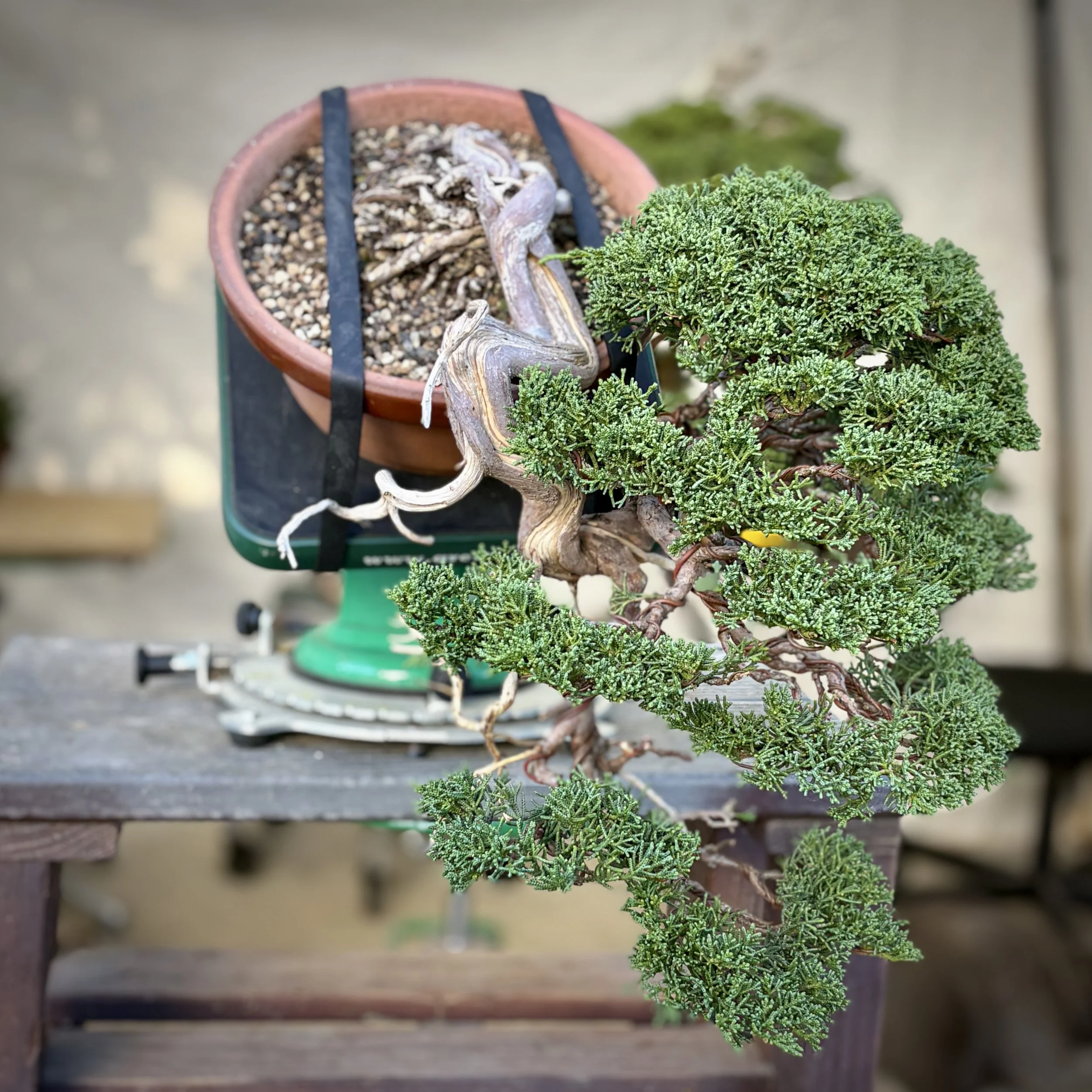
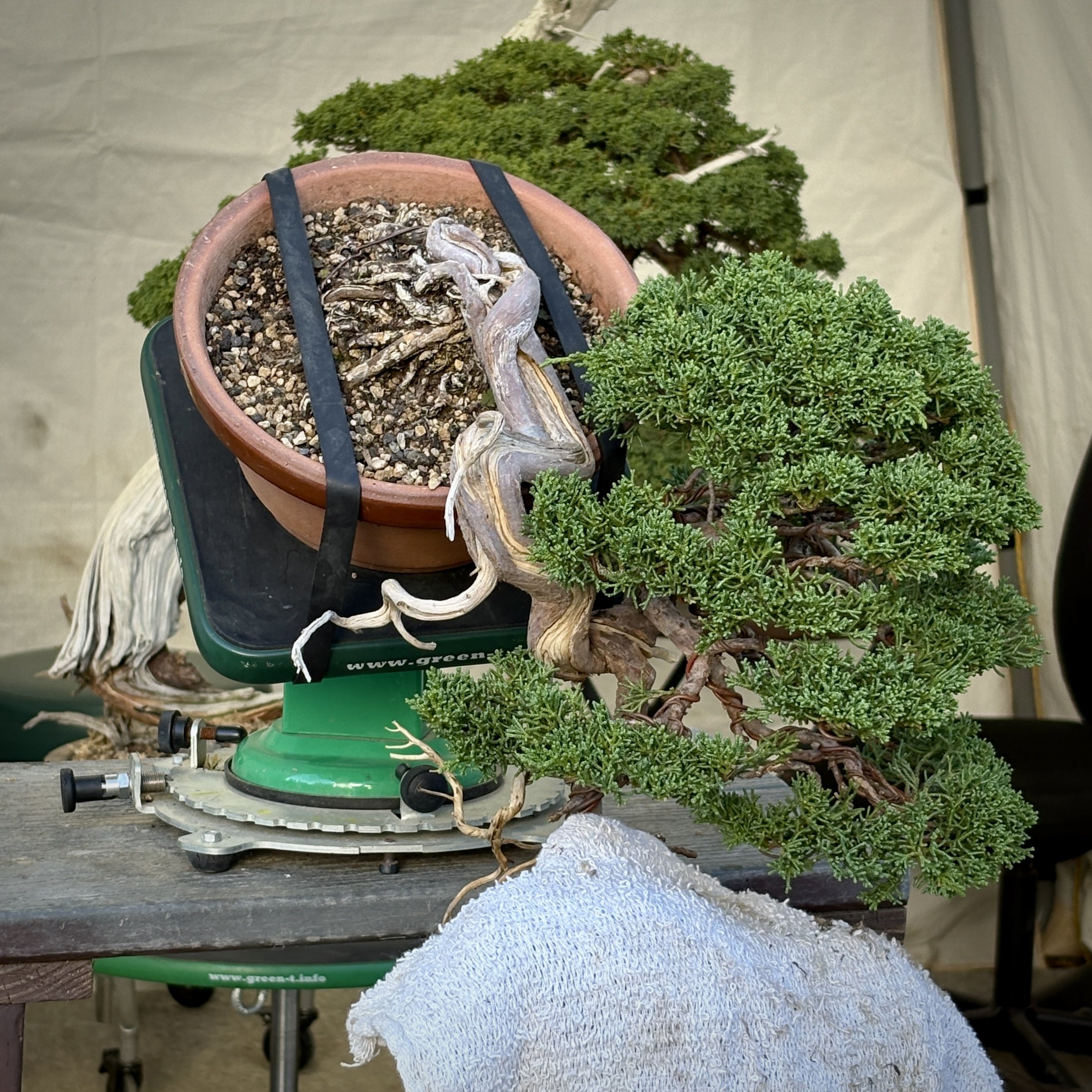
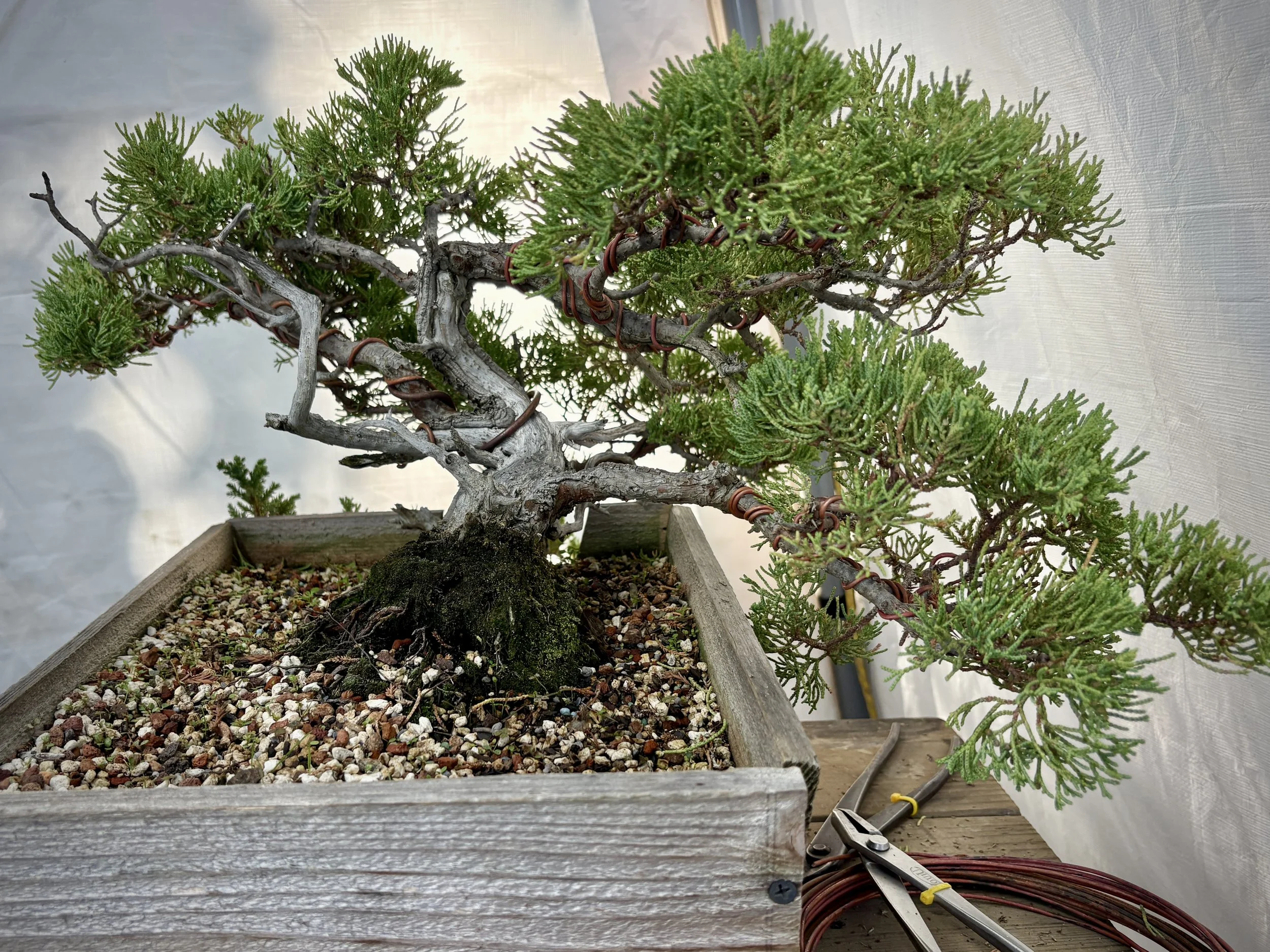
Shimpaku Juniper, wiring practice
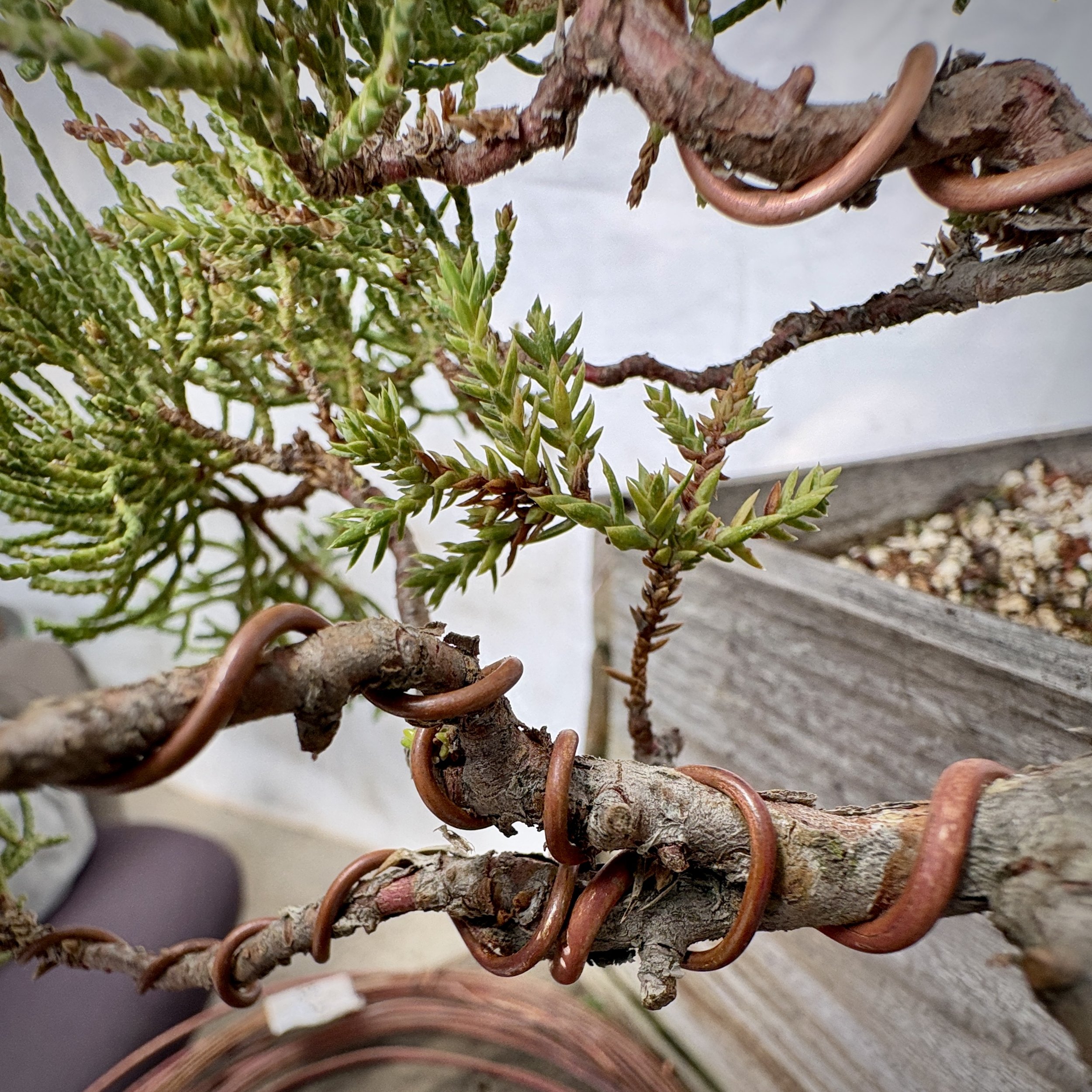
60° wind, some of my windings were too close. As the branch is smaller and diameter, the spacing can get wider because it doesn’t need as much strength to hold the bend.
Practice ending on the cascade where the foliage is juvenile. Bring that back and get some feedback from Adam.
In general, one branch is one pad unless there are tertiary branches of one branch that can become one Pad.
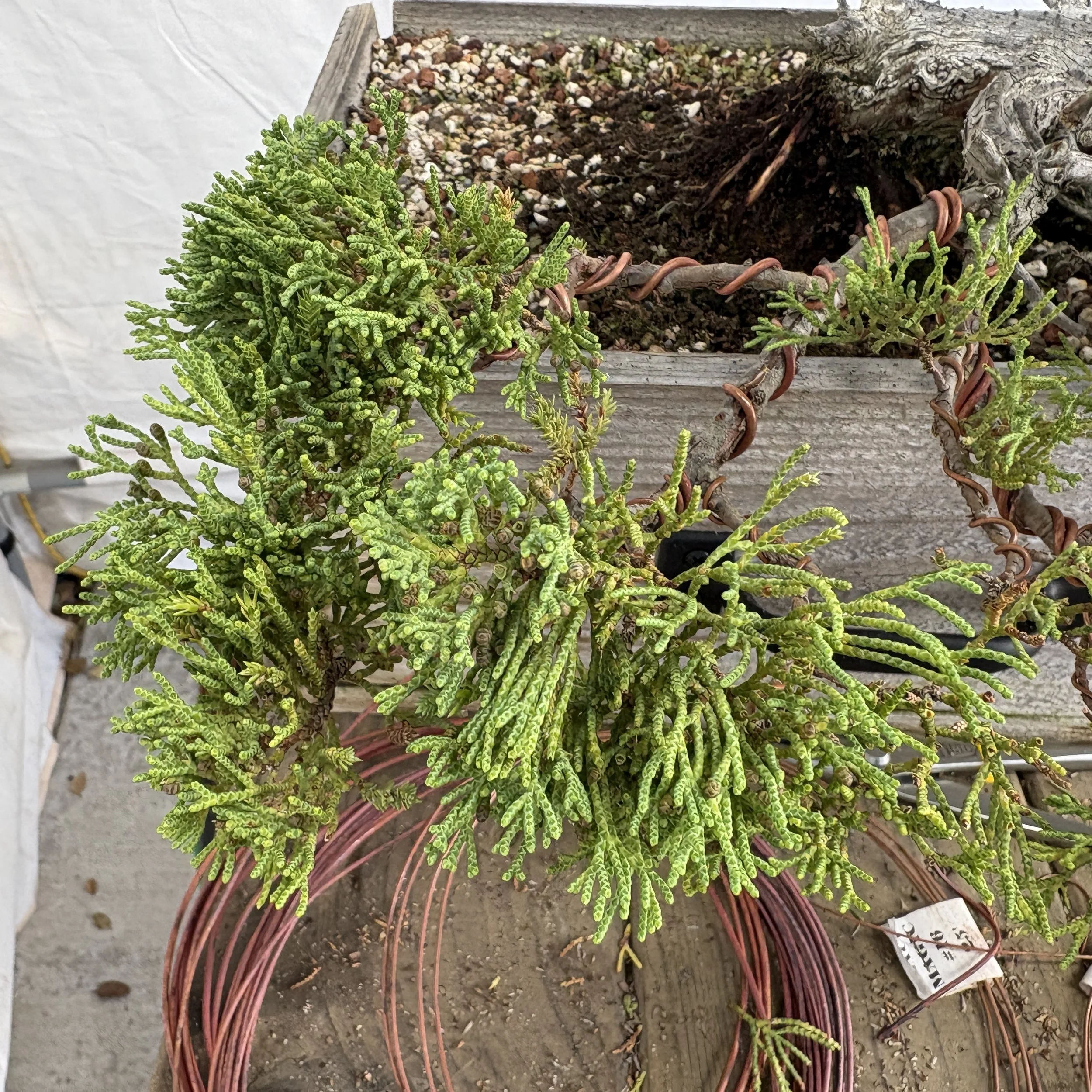
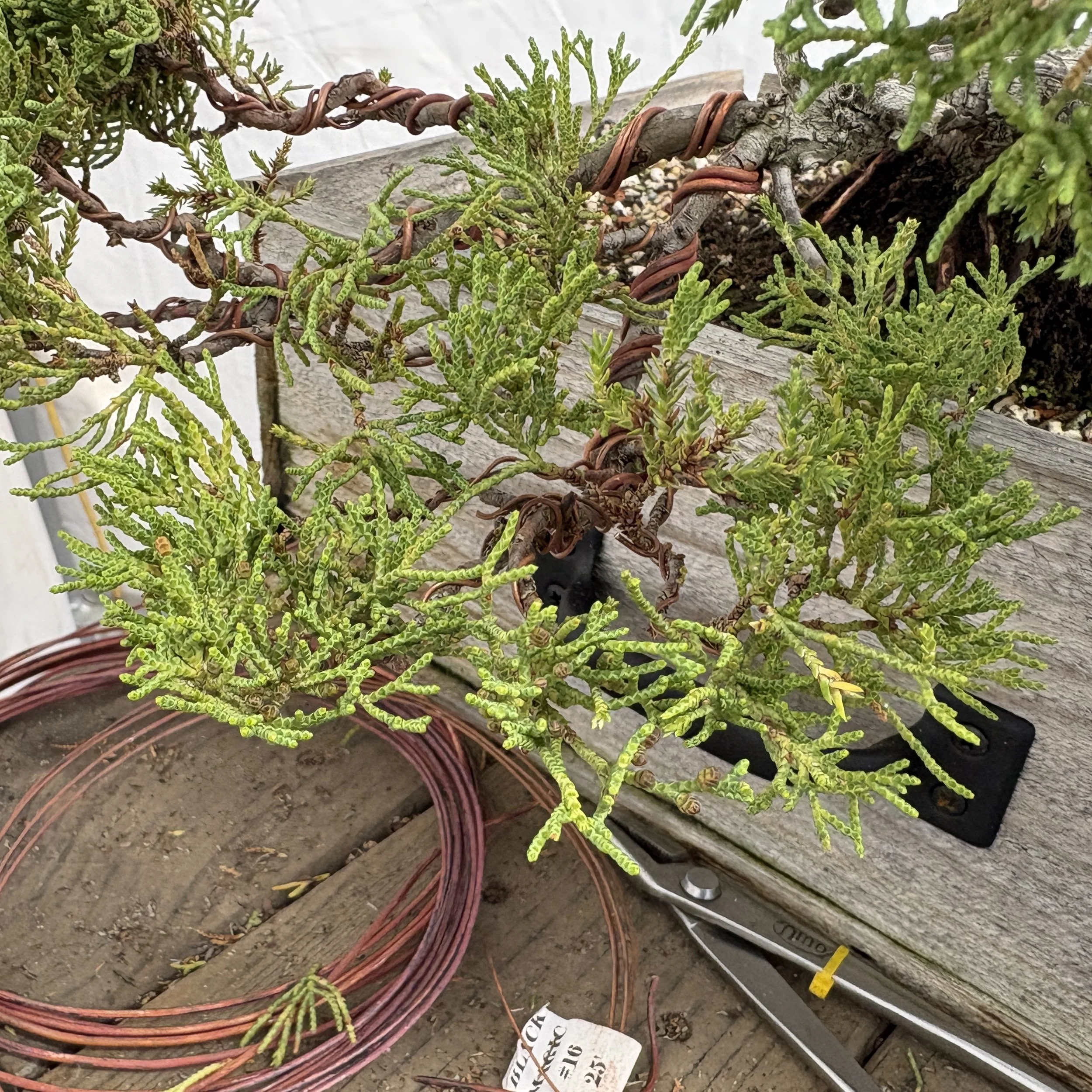
Do not bring all the foliage together into a fat cloud. Clean out the crotches and any downward foliage. Can do some thinning and make sure there’s good branch structure. Make sure the branches go to the sides and if needed, rotate the branch
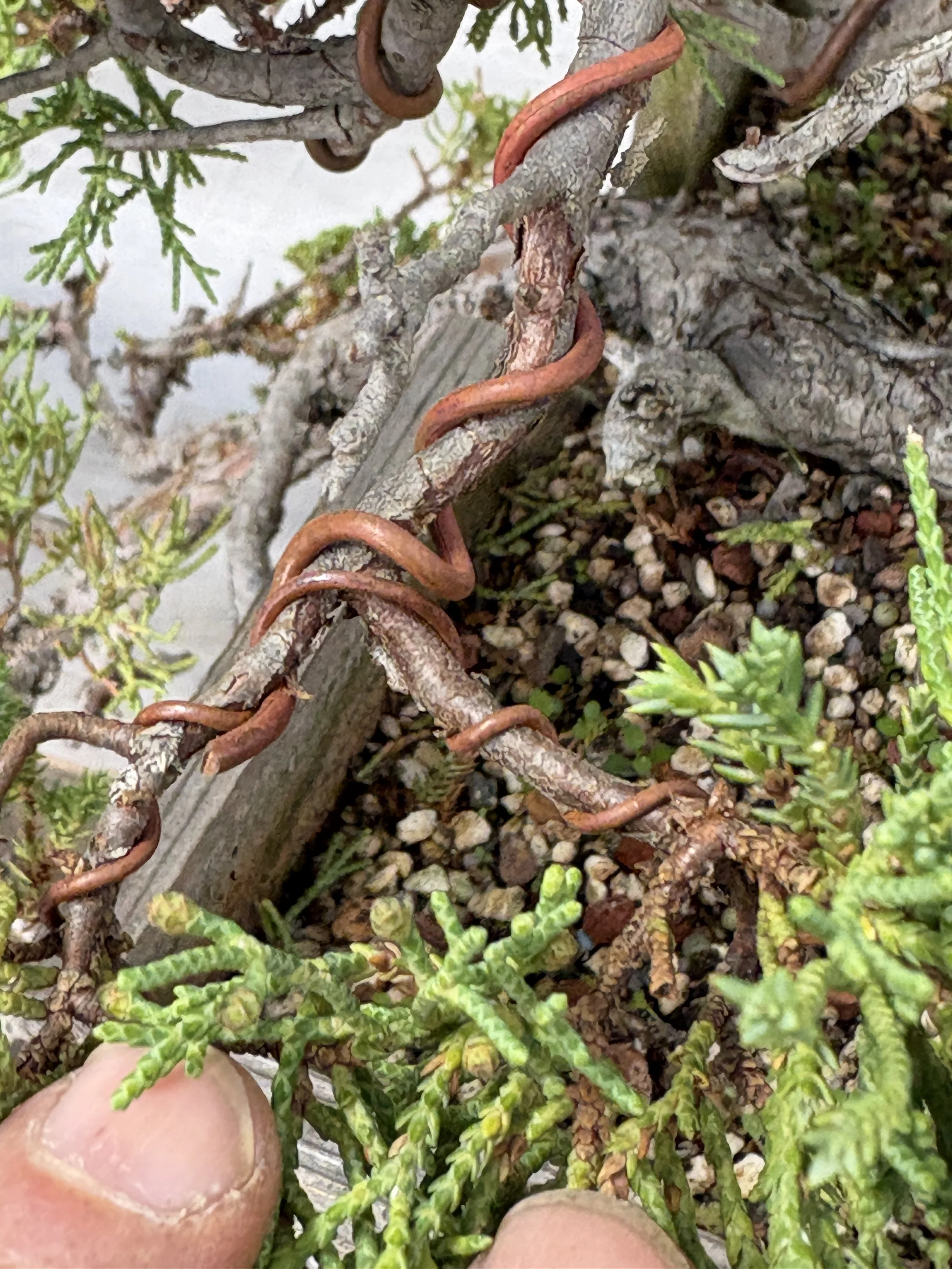
Make sure the wires are close to the branch without gaps. It takes practice with copper, especially if it is poorly yield. You can still be gentle by using the wire as leverage make sure your fingers are delicate, and that the wire is close to the branch
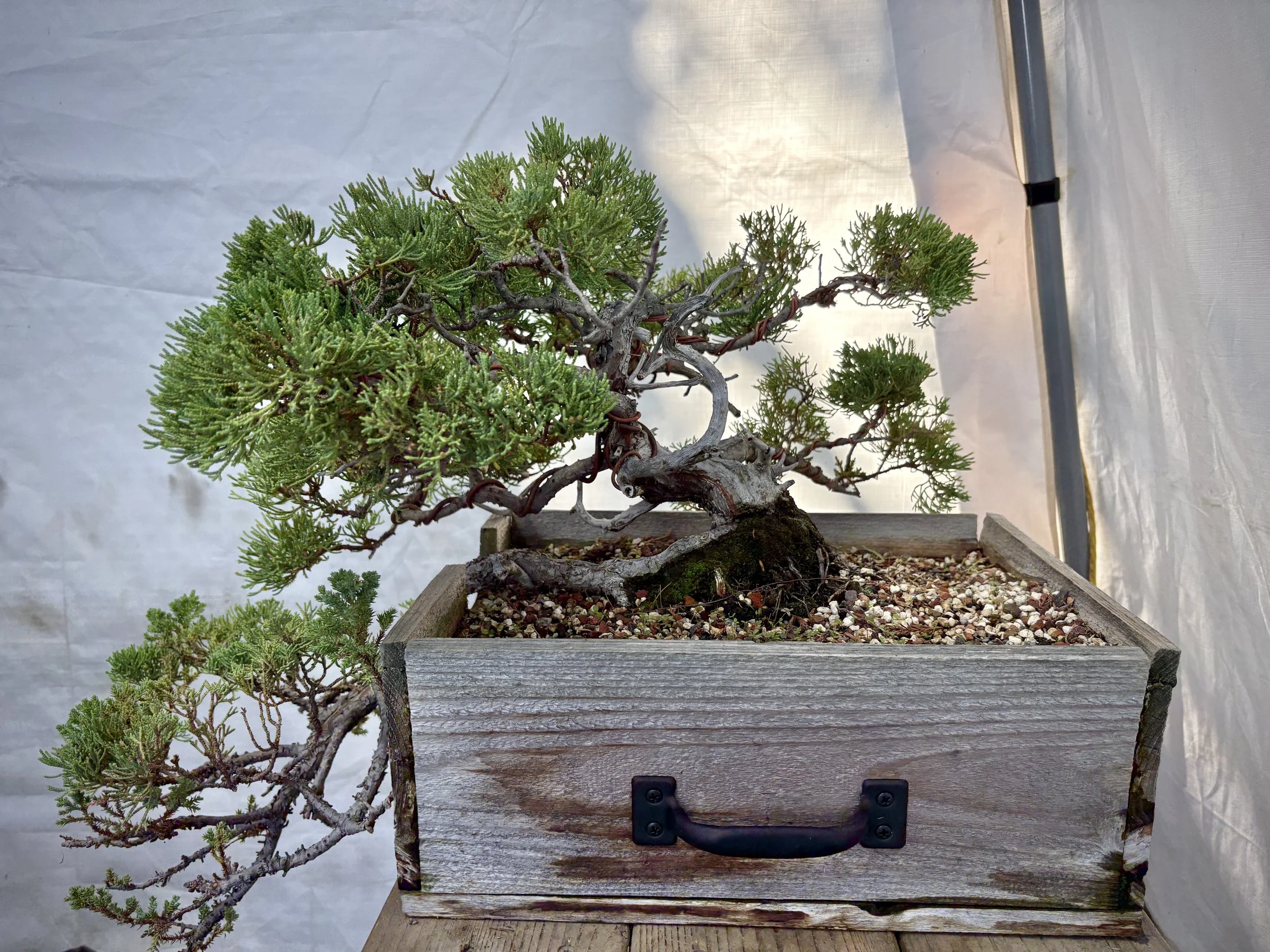
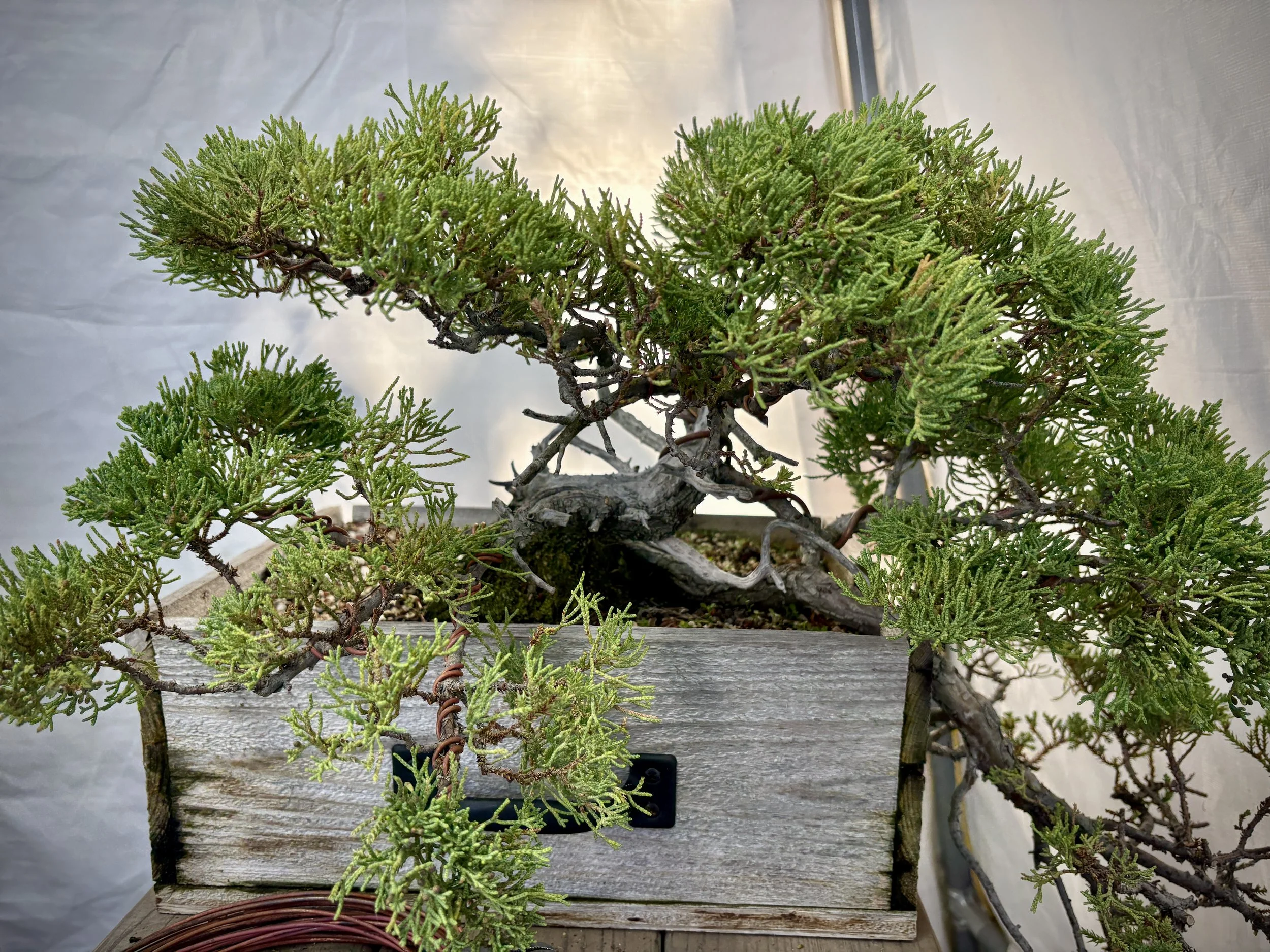
This section of the cascade is too straight. Starts off well, but needs thicker wire and movement.
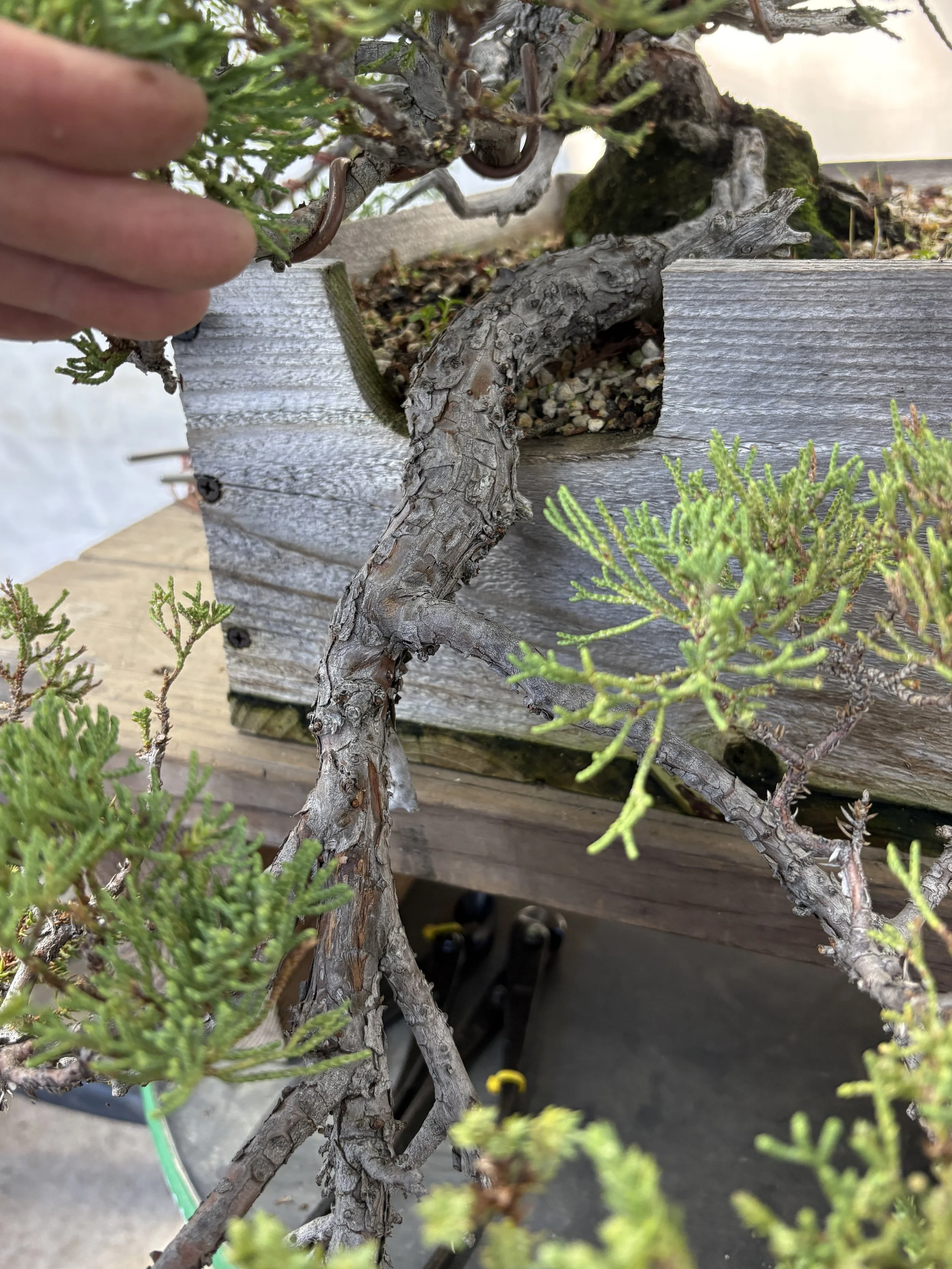
Below is an example of a poorly formed pad, without thinning out and stratifying branches.
Below is an example of a clean pad created by Adam.
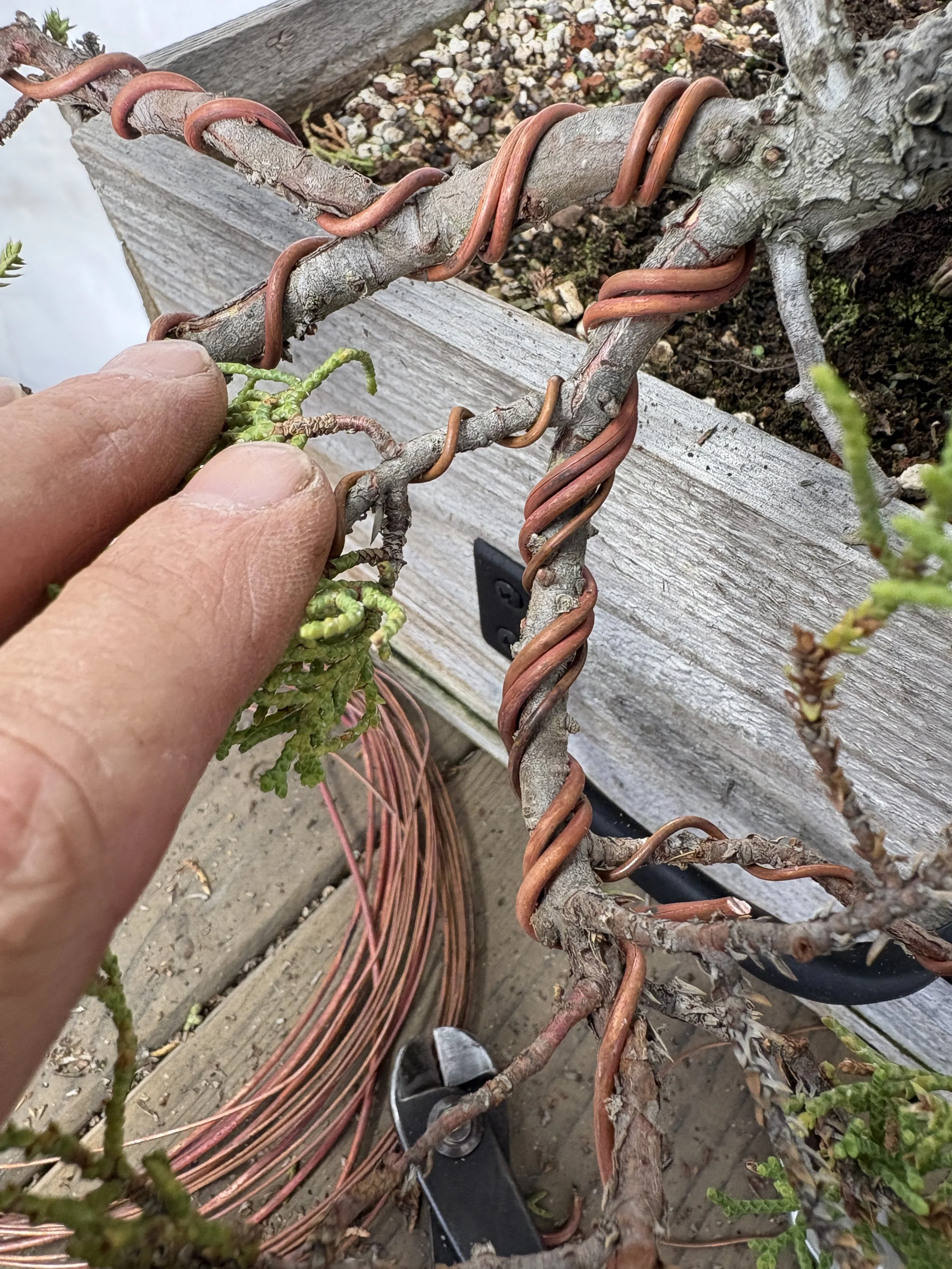
The wires should continue to go in the same direction along a branch. You should only be one time that the wire going left or right will change direction, and that is when it is at the anchor where it may come down a branch in the opposite direction. So when a wire is wrapping in one direction and goes down a smaller branch, it should be in the same direction. If you were to cut the wire under the branch, is the wire continuing left or right?
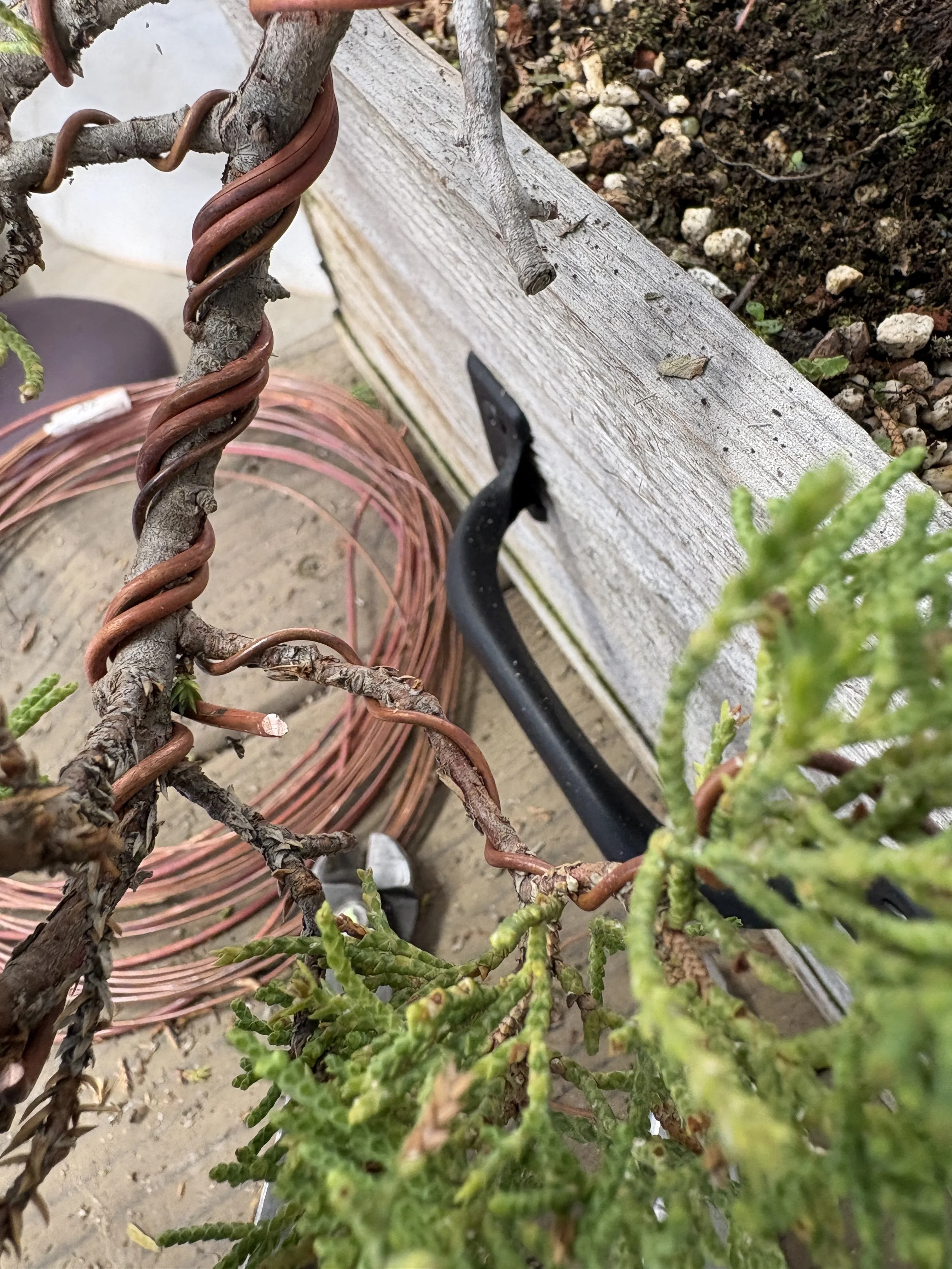
The larger wire should continue down the largest side branch. If done well, the anchor wire should allow the branch to be bent in any direction without causing the main branch to rotate.
Below is an example of an incorrect end of the thicker wire. Too much gap and follows the smaller of the two branches. Later corrected.