🔵 Ginkgo Biloba, #2417
More mature pre-bonsai, strong vigor, numerous branches. SBBK Show $60.
Chi-chi' is an upright male ginkgo selection that has globular protrusions on the bark that are said to be "breast-like". Fall color is a bright golden yellow.
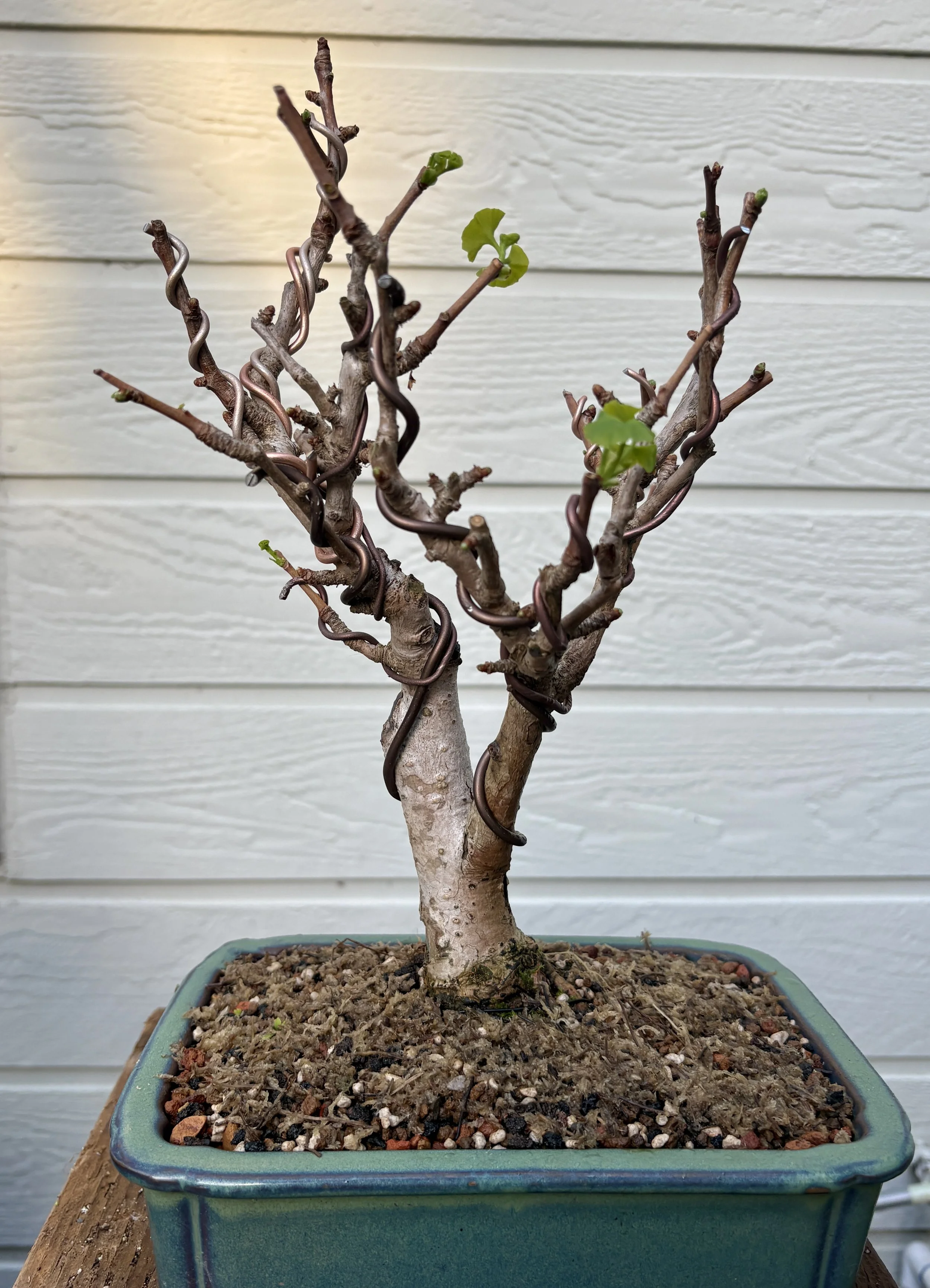
Reverse side reveals dead branches—to prune in late winter and hope to bud back
Mar 2026 Repot
More aggressive root work than recommended—but it was a mess. Removed thick roots above the soil line.
Lowered all roots below soil line.
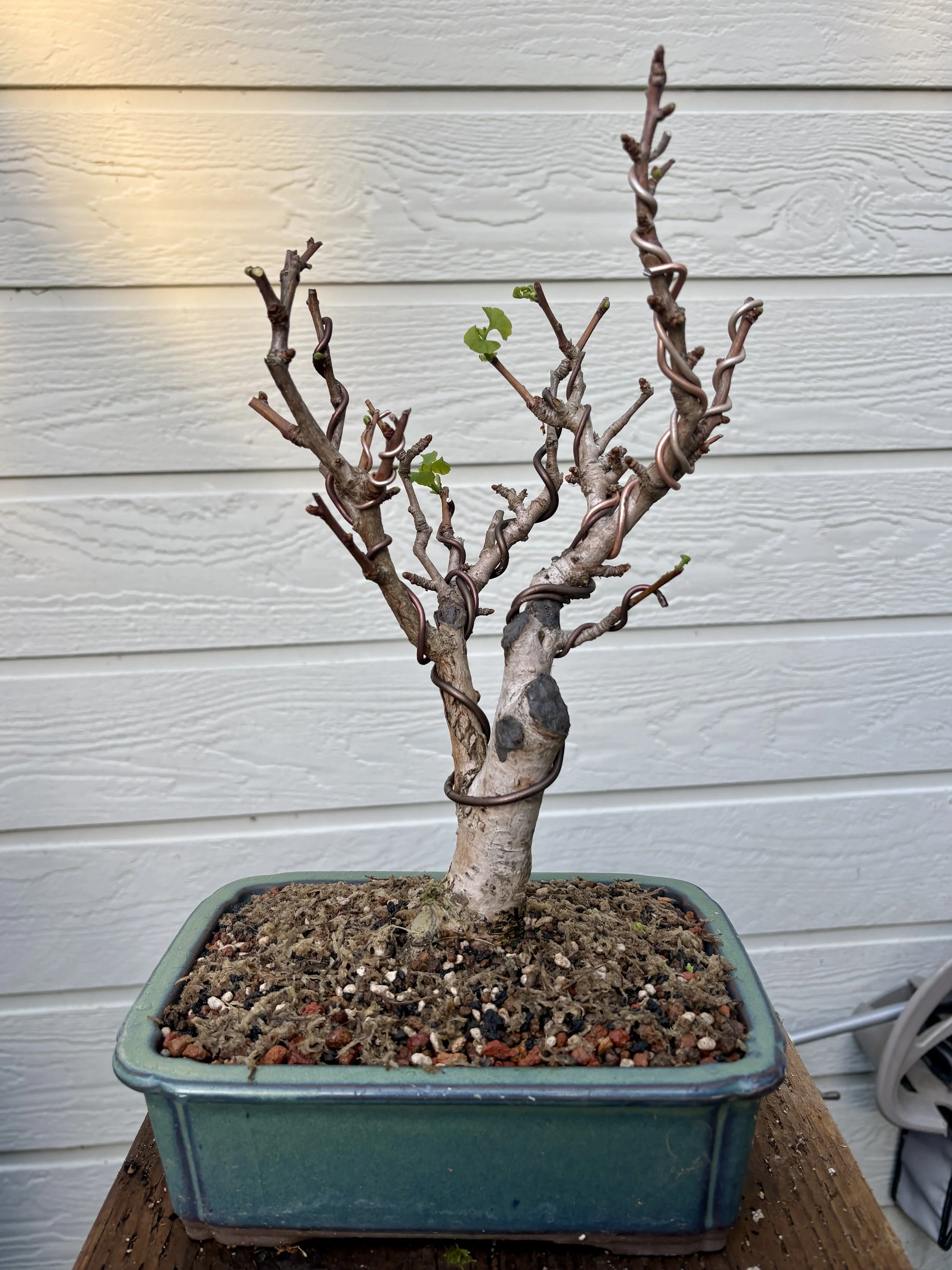
Dec 2025: branch structure is too traditional and should be flame style instead.
Orienting branches vertically and will not shorten branches—will allow vertical elongation.
Jun 2025
Stimulating ramification or smaller leaves, removed 2 leaves from each bundle.
Apr 2025 Careful Rootwork
Per JT & Val, carved 1/3 of the diameter of the root each year. Applied cut paste.


Mar 16, 2025 Repotted
Same pot, but raked out broken down akadama. Replaced with 2:1:1. One big root to deal with—will ask if I prune it back.
Wired branches more balanced and circumferential.
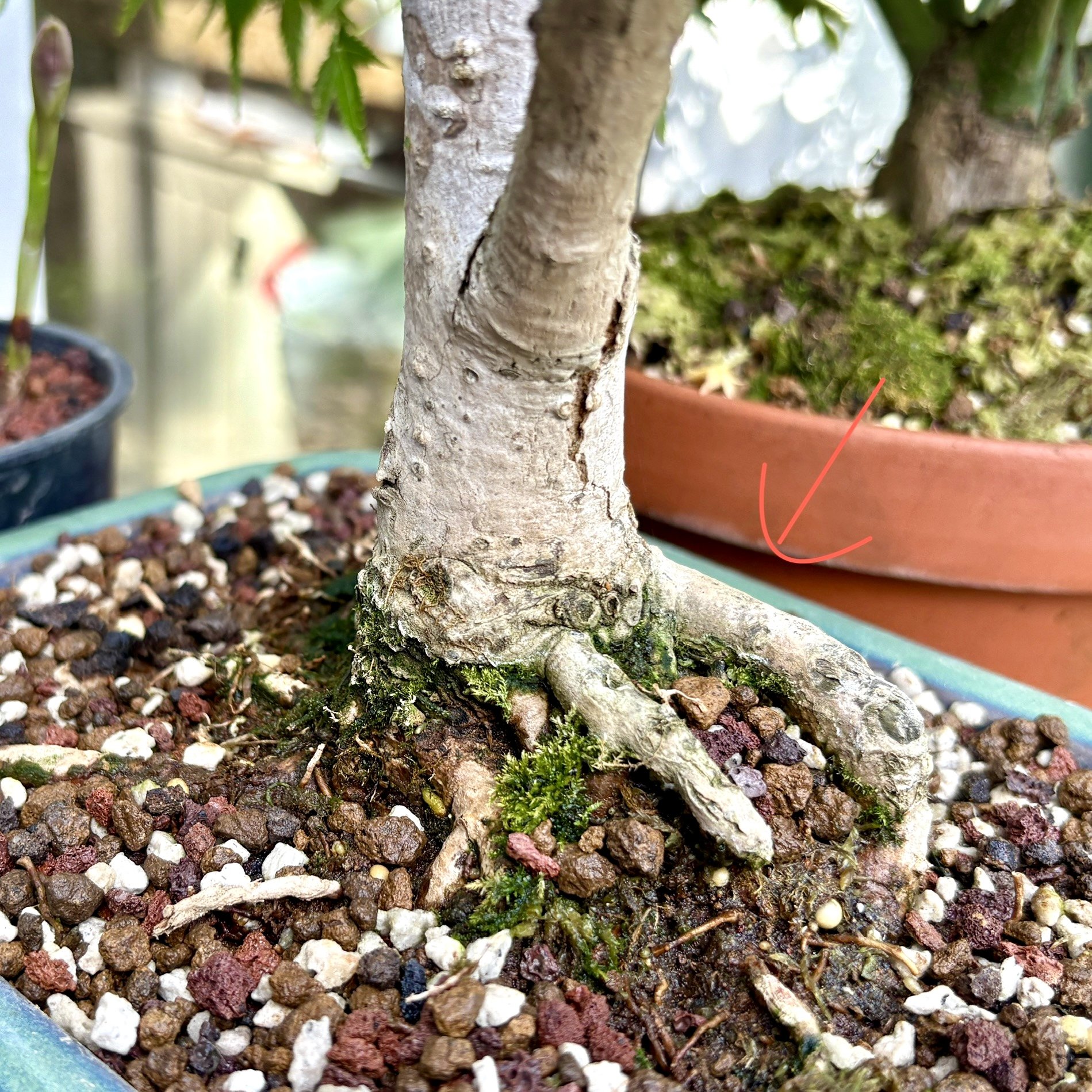
[Val]
Peter Tea would reduce roots over a few seasons, cutting a third or half of the diameter each year before removing.
Ginkgoes can be tricky and sometimes you will lose entire parts of branches or trunks unexpectedly.
They also don’t heal well (bark).
So for this tree it will be an experiment.
I do think the root you want to remove needs to come off.
The next time you repot, dig around to see if you can find roots on the other side; that will become your future nebari level.
[JT]
Since you just repotted the tree, I would wait for the foliage to completely harden off and strengthened the tree, probably late June or early July.
You shouldn’t transplant but you could tease the soil from the upper root area down to the point where you can see if there are roots underneath the one you want to remove. The soil particles look to be large enough to gently do this recon. If you have functional roots underneath then make the cut.
But remember that ginkgo roots usually tear rather than cut cleanly so do a finished cut with a grafting knife and apply cut paste as this will be above the soil line.
Anytime there is diseased, dead or damaged branches, they should be removed, regardless of time of year.
https://www.ginkgoltd.com/proper-pruning-techniques/


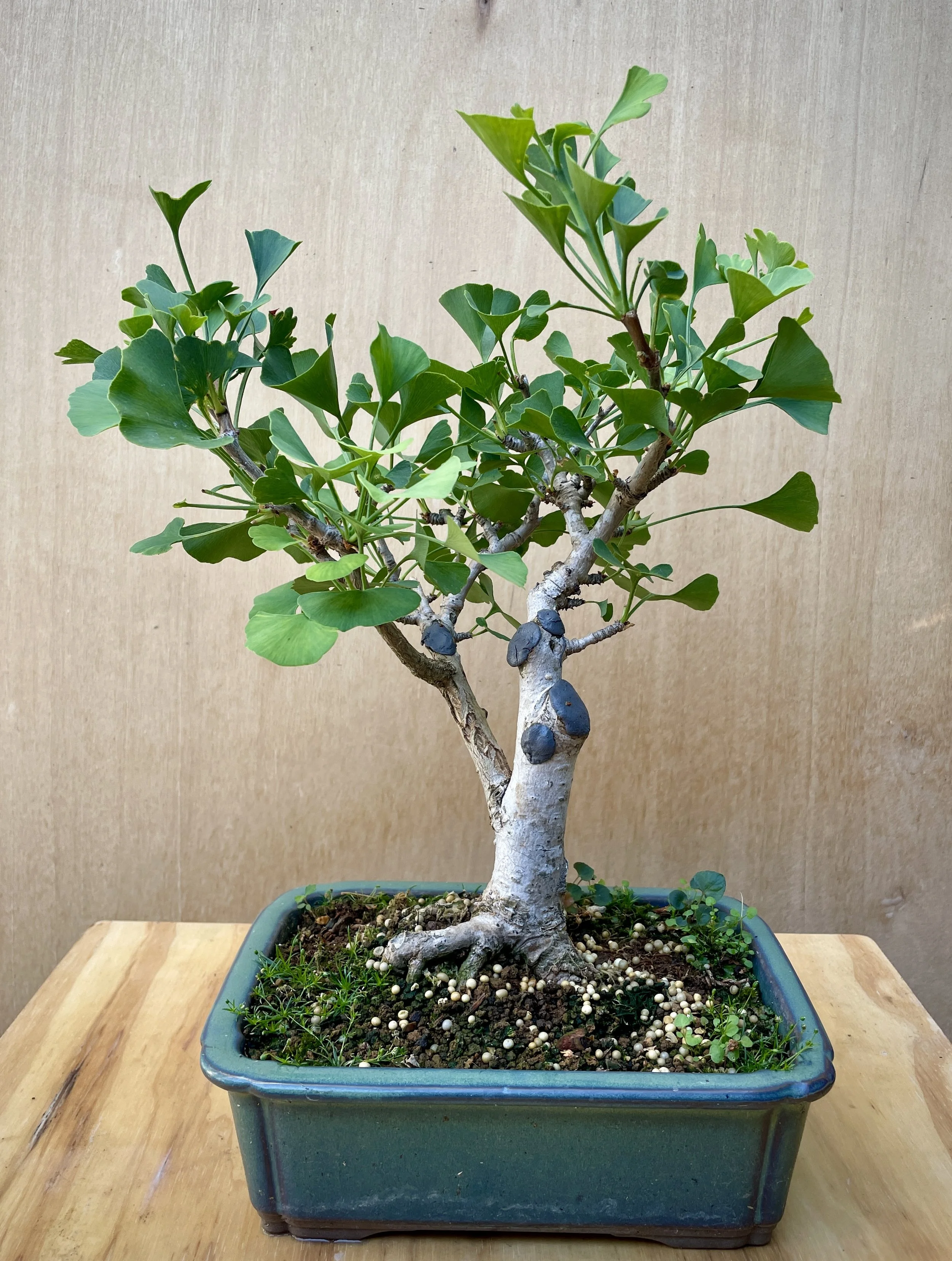
Partial defoliation, reducing to two leaves per bud. Result was a multiple array of smaller leaves. Hoping to encourage back-budding or more branches over time.
Sep 2, 2024


Care
You should never fully defoliate a Ginkgo biloba bonsai. Ginkgos are structurally distinct from standard deciduous trees (like Maples or Elms). Removing all the leaves at once, or cutting the existing leaves in half, can severely weaken the tree and often results in branch dieback or tree death.
However, you can perform a careful, targeted partial defoliation in early summer (late June to early July) to manage leaf size and balance vigor.
The proper partial defoliation technique for Ginkgo requires specific steps:
Target the Largest Leaves: Selectively remove only the largest, coarsest leaves to allow light into the inner canopy.
Leave the Petioles: When removing the leaf, cut the blade off but leave the stem (petiole) attached to the branch. The petiole will naturally fall off later on its own.
Prune Extended Shoots: On vigorous elongated branches, you can cut the shoot back, leaving just 3 to 5 nodes (leaf clusters) to promote back-budding.
Post-Defoliation Care: Because the tree has less foliage, it will require less water. Protect the tree from harsh afternoon sun for a few weeks until the tree adjusts, and do not fertilize until new shoots appear.
