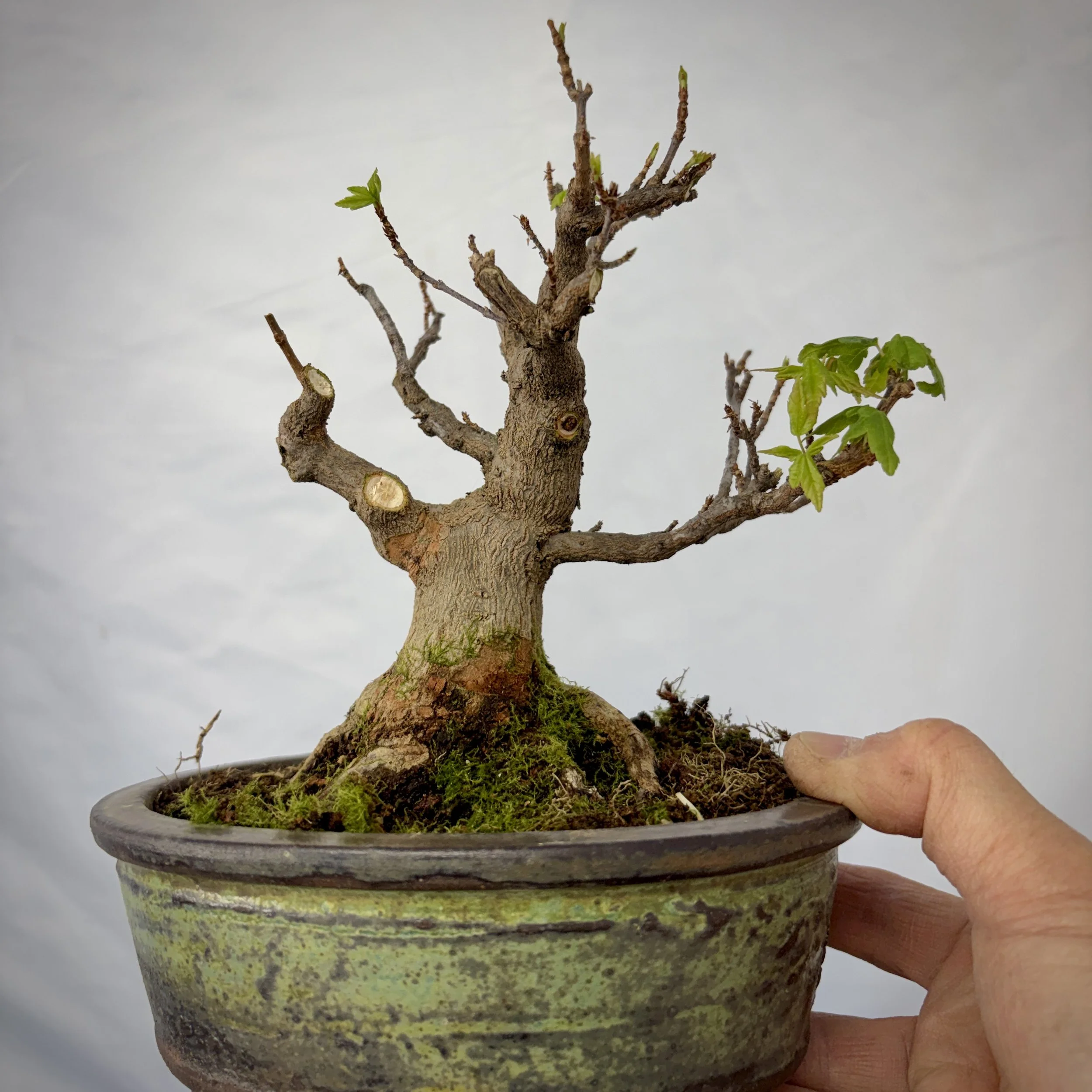
✳️ AT Workshop - Mar 8, 2026 [Trident]
Trident work
Working on an older trident clump, with a very pancake nebari. Repotting and excavating old compact soil at the base of the root ball. No new roots would grow if old soil was there.
Used an ice pick or an awl, digging all the soil out and rinsing with a pressure gun or a hose, until all the their roots can be seen.
With a root cutter, remove any large roots that are not part of the radial nebari, especially if it may block new soil from filling in.
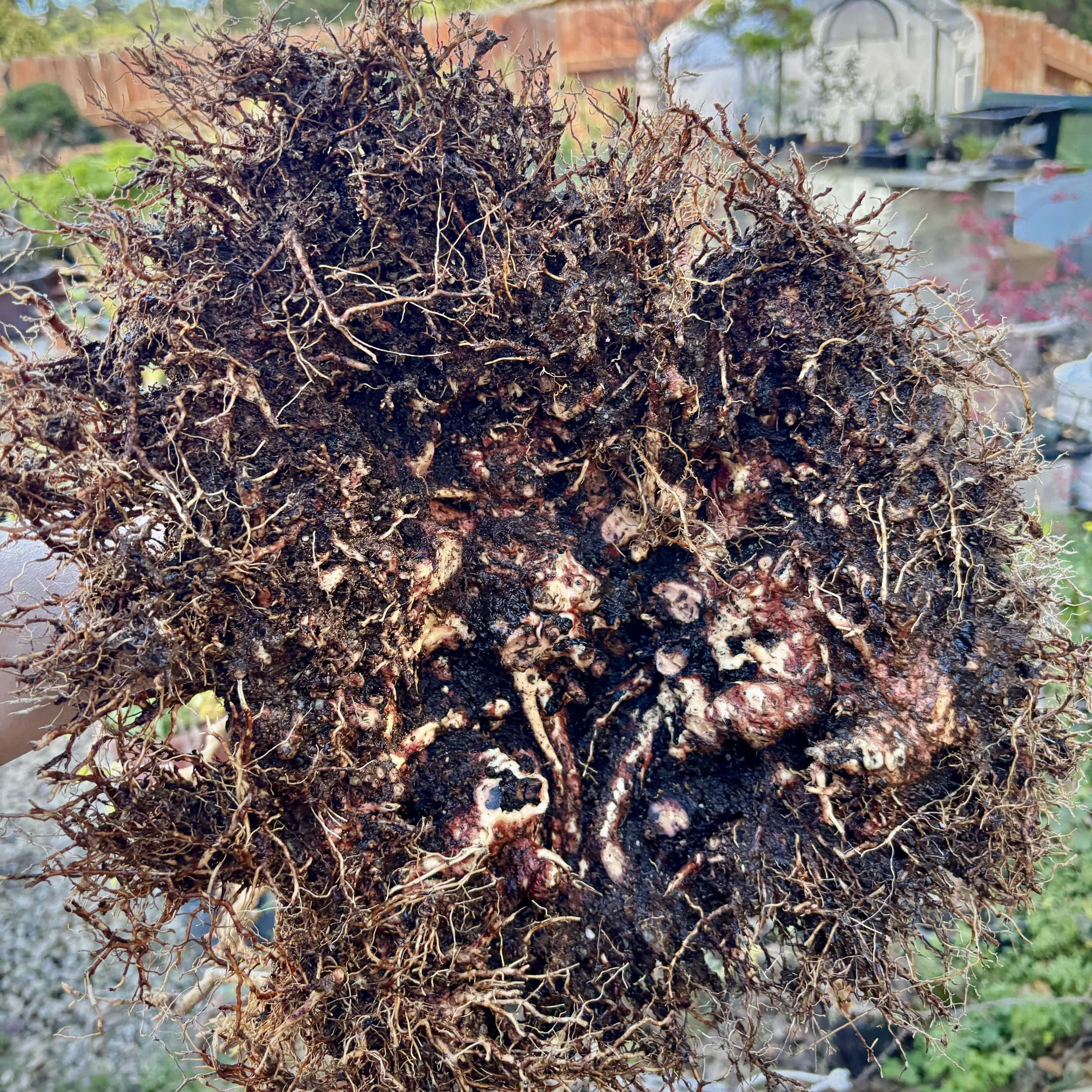
To fill a void in a pancake nebari, inserting 1-2 seedlings to grow larger overtime and fill the void will be the solution. No need to make approach graft notches in the parent tree, it will just fill and become one infused.
Mound the soil, tall and carefully rotate back-and-forth as you lower the tree until you feel the soil, filling the void and squishing out the bottom of the nebari.
This was placed in an Anderson flat and no need for hold down or tie down wires, but ensure that you cover all the roots
Step back and look at the Anderson flat or pot with level eyes until you cannot see the back of the pot or the flat to be even and level. Make sure the tree looks seated down enough so that when soil is filled that the roots will be covered.
Water thoroughly until all of the akedama under the pancake nebari has been saturated, so repeatedly apply water, give it time and keep applying water.
Trident on rock
Trident on rock was developed with the trunk conforming intimately to the flat rock, as though the tree was laying against the rock. Very little roots in the soil. It lacked a root(s) on the opposite side of the rock. The solution would be to use a sapling trident and find the best position for it to rest against the stone and come adjacent to the base of the tree.
Gouge out a slot into the base of the trunk, where the sapling would rest. Gouge beyond the cambium.
Expose the cambium on the sapling where it would rest adjacent to the tree. Used grafting tape (or similar) to hold the sampling in place, I used a small wire tightened down to hold the sampling intimate to the tree. One could use a tack as an alternative. Grafting tape was also used to hold the lower part of the sapling in position close to the rock and ensure that the roots will extend deep into the soil.
Add soil, ensure roots are covered, use tiedowns to hold the roots or the rock in place
Working on Tridents
Trident are rather hearty, and can tolerate bare rooting or do a lot of root work, and they will rebound.
What is unique with Trident and Stewartia is that they prefer to have exfoliated bark to be picked off.
When a tree is young, the park is smooth and even. When a trident is old, the bark may flake or you may tease off the bark to expose the redder color underneath and a trident can build muscle muscles, or bulges or veins, which are more pronounced and should not be hidden by the bark.
So exposing it one can appreciate those muscles or bulges, which is unique. A mottled coloring or variation in the bark, due to removing some bark overtime, is acceptable.
New Shohin Trident from Rich
Very nice tree, next to encourage finer branching
The front should have the apex of the trunk come towards you rather than away.
There were some branches which looked too heavy or pronounced compared to the trunk. They were removed, and we will grow new finer taper.
Same for thicker branches at the Apex of the tree, and by removing them, we will stimulate new finer buds and finer tweaks
Used a rotary tool with a burr and make branch removals with a concave recess nice and smooth, with cut paste covering it to encourage smooth healing.