✳️ AT Workshop - Feb 21, 2026 [Repotting, Redwoods]
General Repotting Notes
When using a round training pot, use one of the cutaway holes to be your front so you know next time.
Cut or free drainage wires and tie down wires. To aid in removing from the pot, have a soft rubber mallet available to tap the pot rim to free from the plant.
Only use dry soil, bone dry. If you mix dry Akadama with damp lava or pumice, the Akadama will soak up the moisture and breakdown during chop-sticking.
When preparing a pot, use pliers and make sure your tie-down wires are bent 90° from the bottom of the pot. Bend it so there is no slack allowed.
Recommend tie-down generally to be 1 mm or number one wire. It does not need to be too strong. Use 1.5 if a cascade where more stability is needed.
Drainage screen hold-down wire can be 1.5 mm, not any bigger.
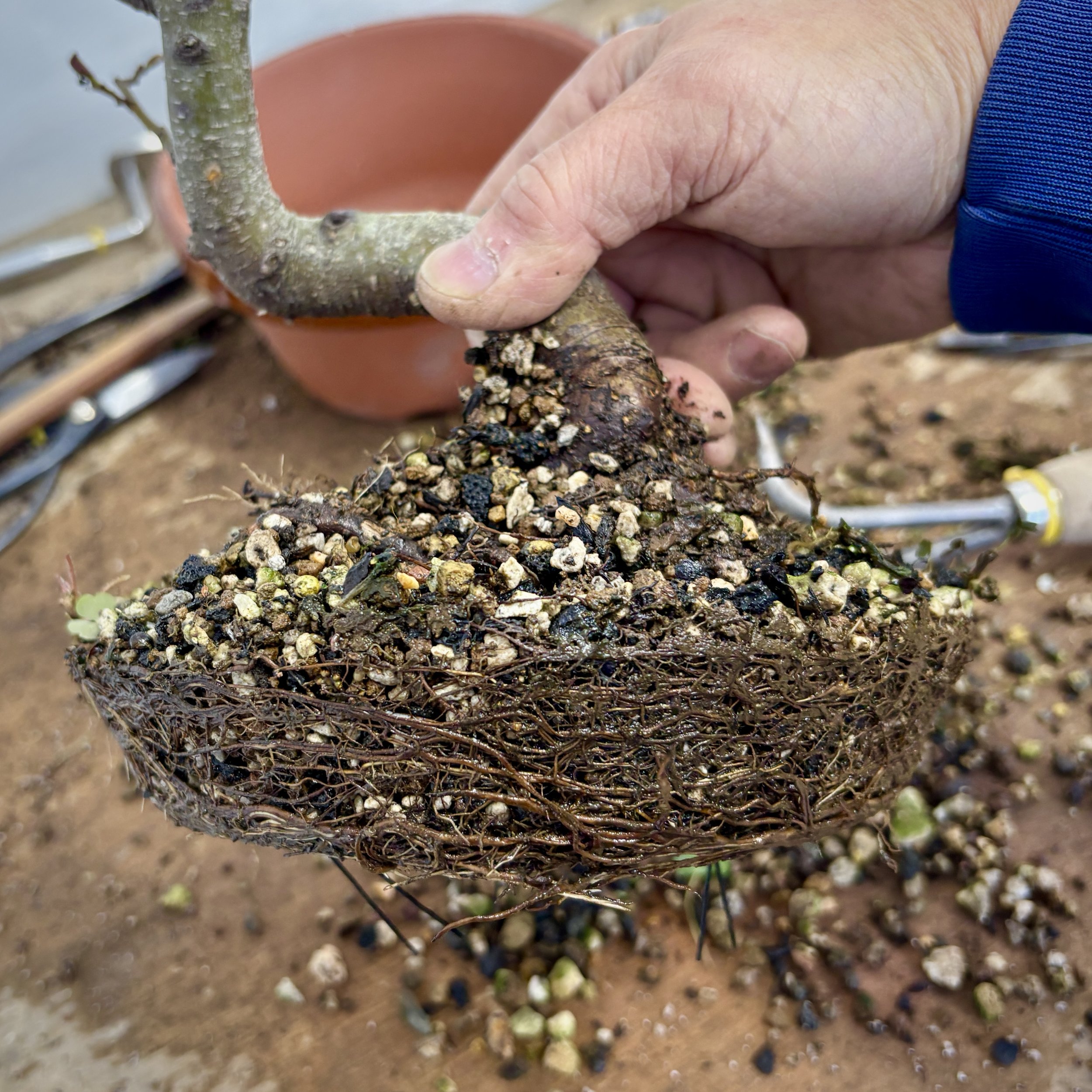
Start by raking out the bottom 1/3 of the roots, then trim them so you can see the rest of the rootball when working on it. Then progress to the outer perimeter of roots so that it will fit into a new pot with space for future growth.
Remove large roots that are not helping with Nebari, remove any large or messy roots.
If a lot of fertilization happened that year and there’s a lot of debris in the topsoil, rake that out. Or if there’s a lot of original soil on top rake that out and rinse.
If the rootball is dense, use an awl and work deep into the roots and wiggle them loose to remove any compact or original soil.
Trimming roots—Adam is more aggressive, but flat bottom, loosen but trim circumference. And taper the top down from the trunk—where the trunk is the top of the mound. More important for deciduous.
When wiring down the rootball in a basket shape, make sure the wire that is anchored is pulled taught and straight without slack, and then start to twist to the next wire, but it does not need to be extremely tight, and continue until you get to the tail. This last twisting will be holding down the entire basket wiring. Make sure you pull out any slack, and then twist, tension slack, twist.
Always practice looking at the tie-down wires under the pot and use the tips of the pliers to take out any slack by appropriating and creating a Z.
Should I rework Root issues on a tree in a colander or pond basket to bulk up the trunk?
No, there is a time to work roots. If you are bulking up the thru k don’t change plans—as repotting roots will slow the growth that season.
Let it grow out.
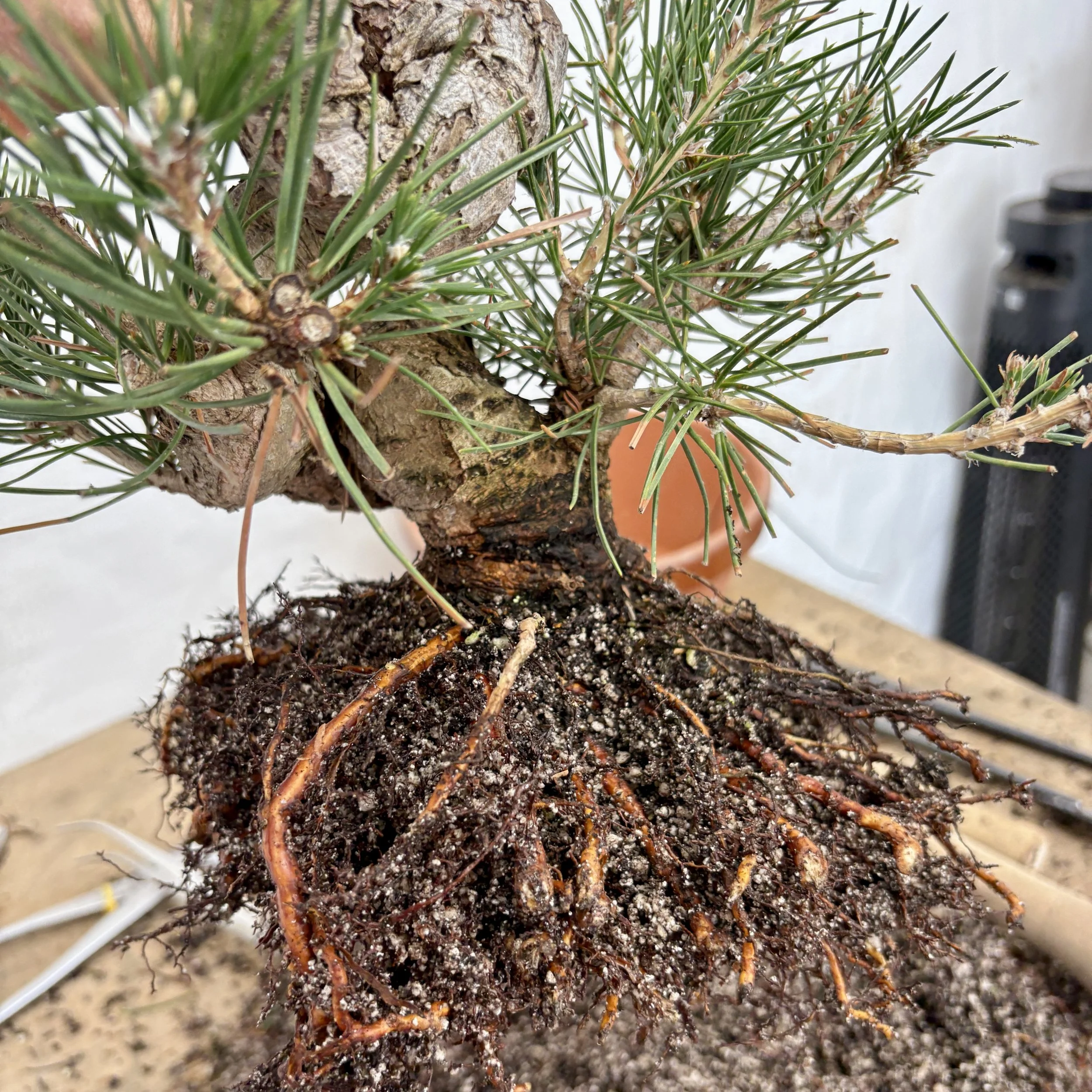
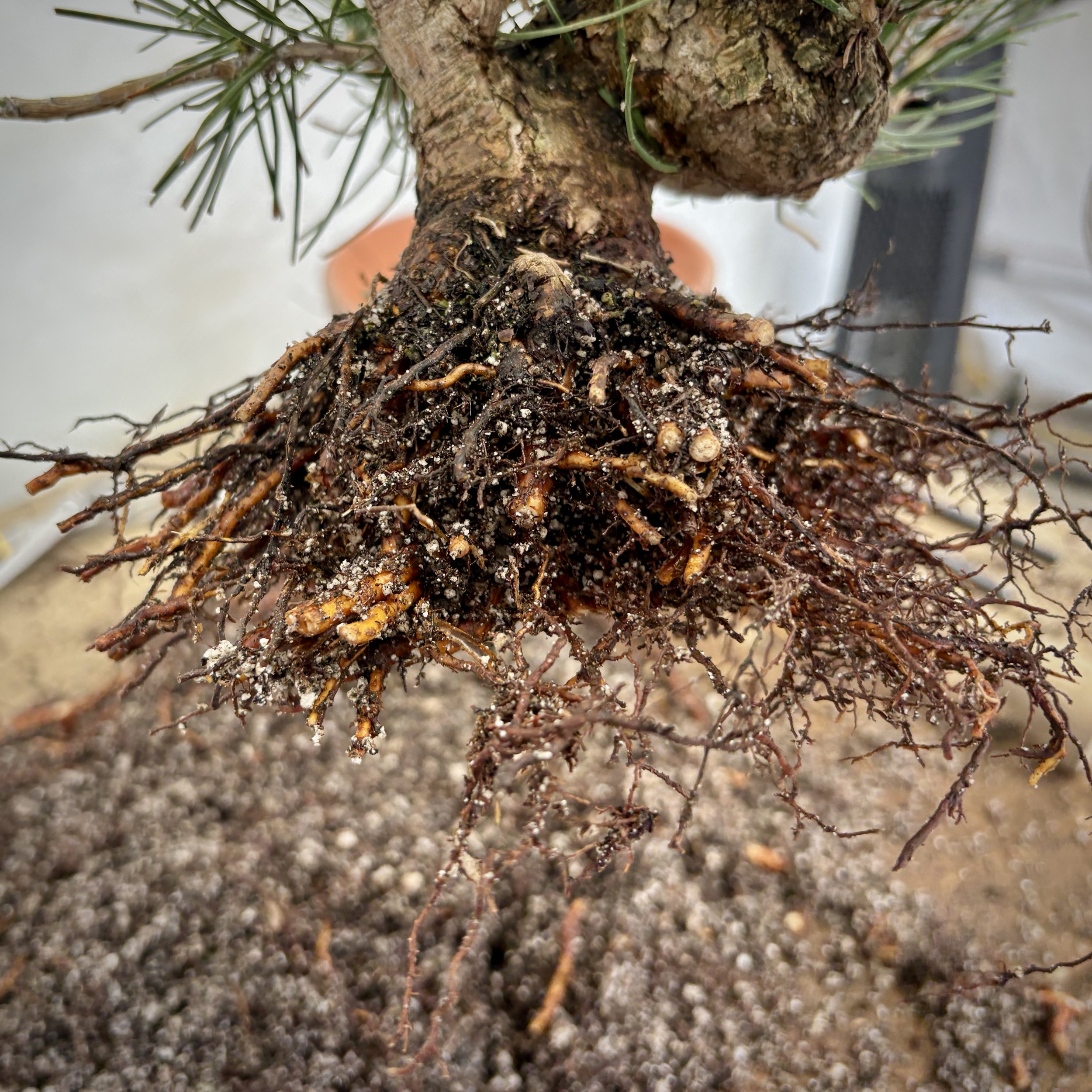
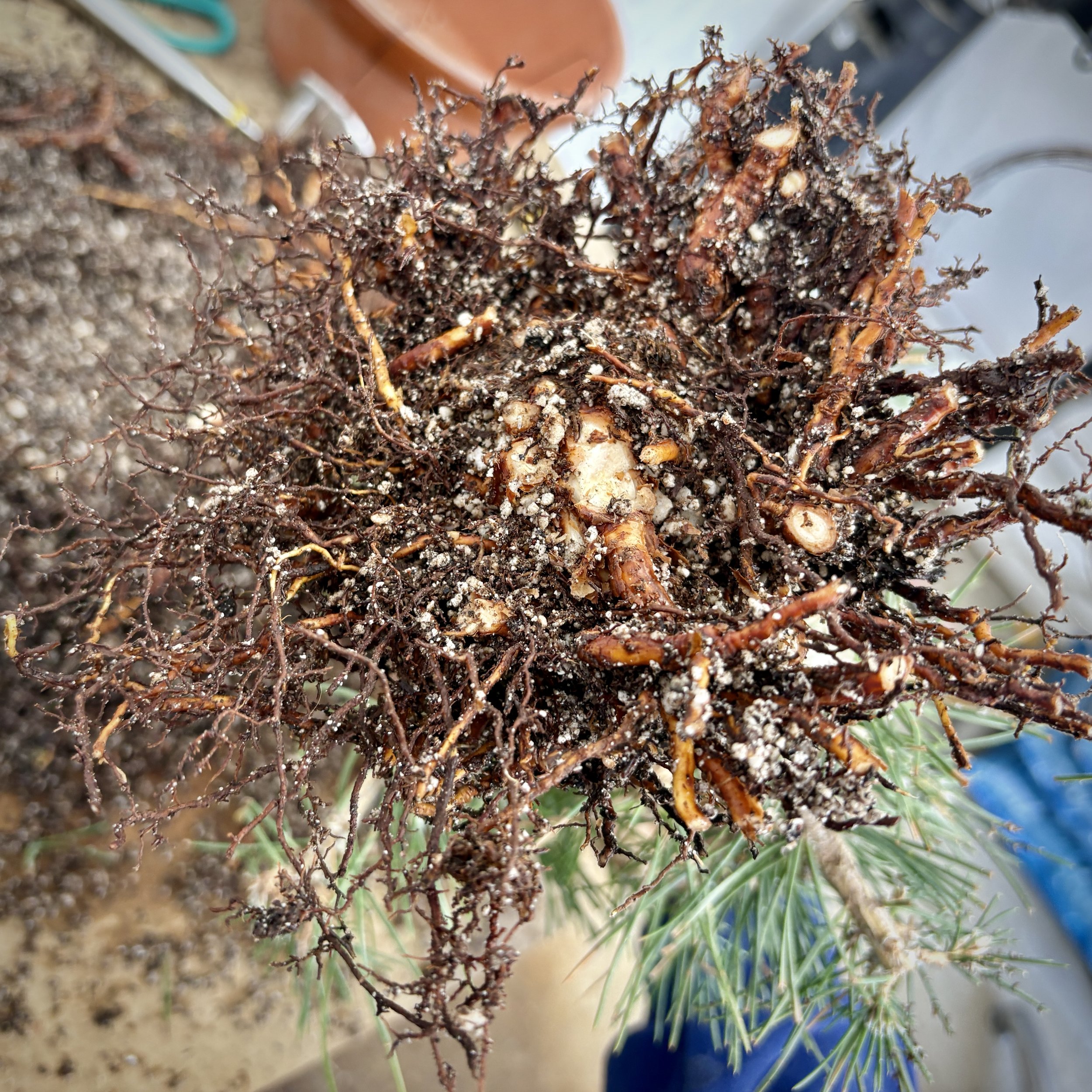
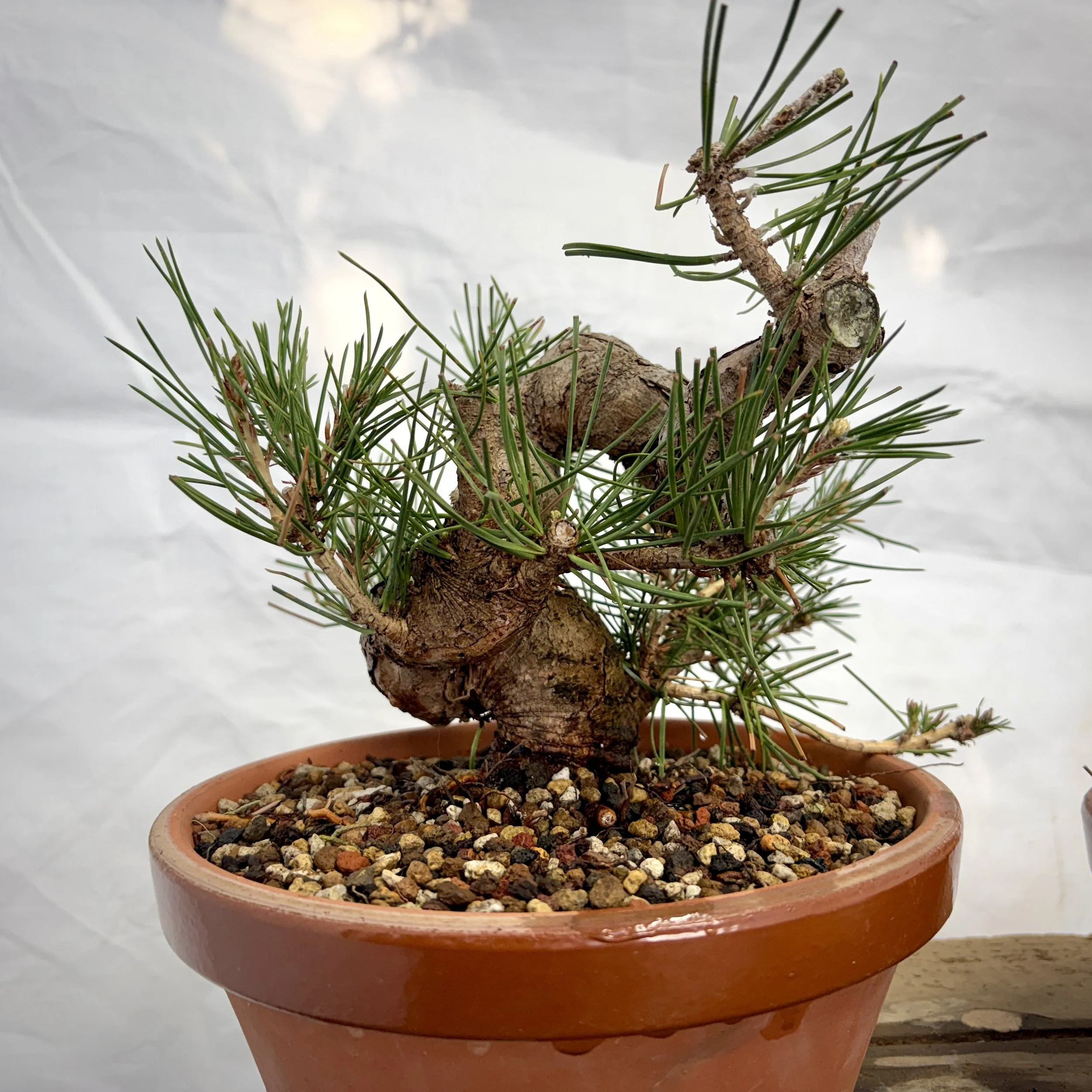
JBP Repot — Cedar Rose
#7 Training pot.
Many possible fronts, good tree with lots of potential.
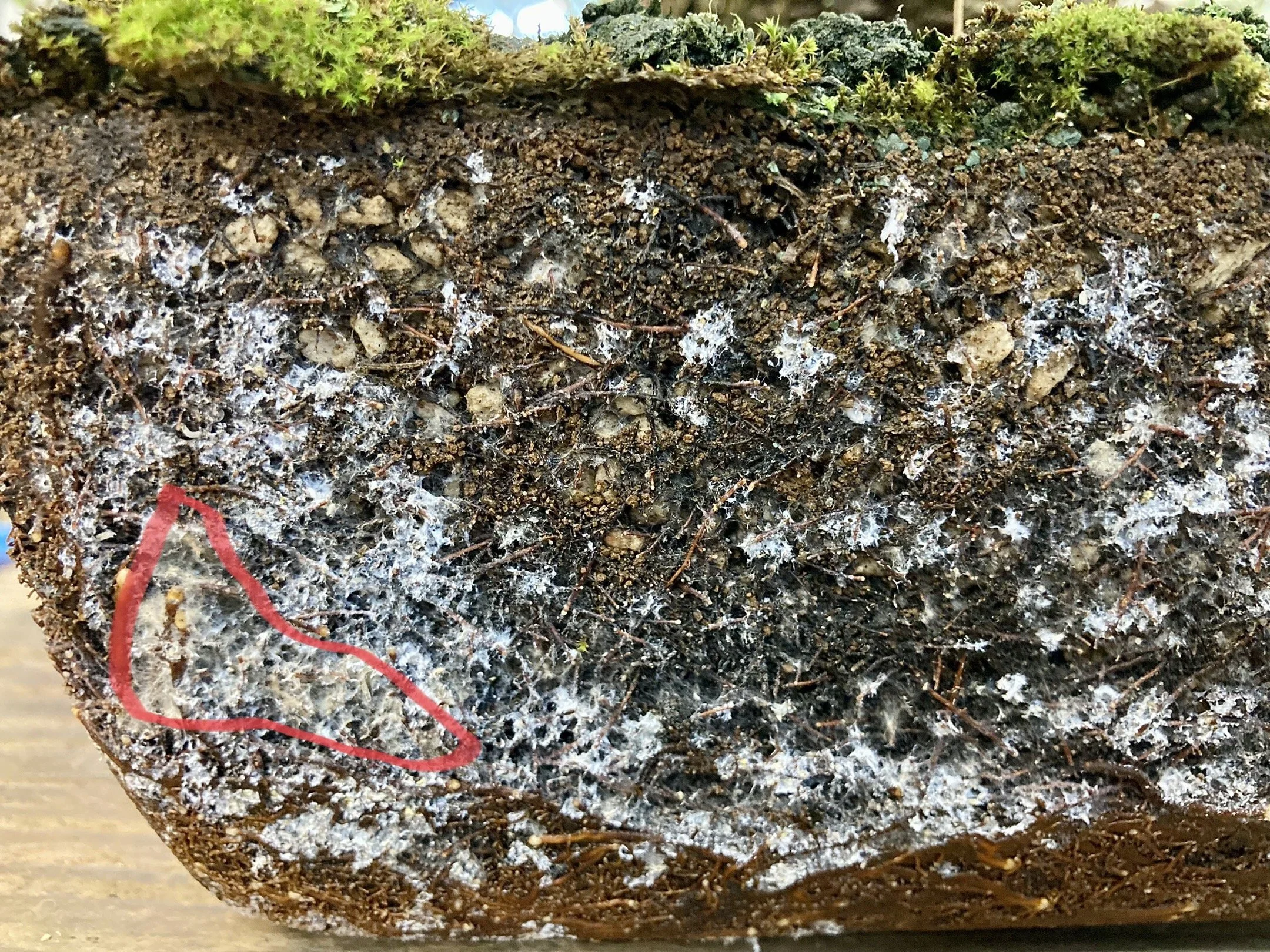
In the pond basket, the bottom had root aphids. Said to be of a cooler purple hue (I could not see); whereas Mycorrhizae is beige.
Adam shared Mycorrhizae soil to break up and place against the roots to stimulate more Mycorrhizae. So during repotting if found, then save it for the next repotting.
Was aggressive in root pruning, which Adam tends to practice. We’ll see how well it recovers, but does not recommend two major stresses on a tree in one year, so we may not decandle in summer.
Quince Repot
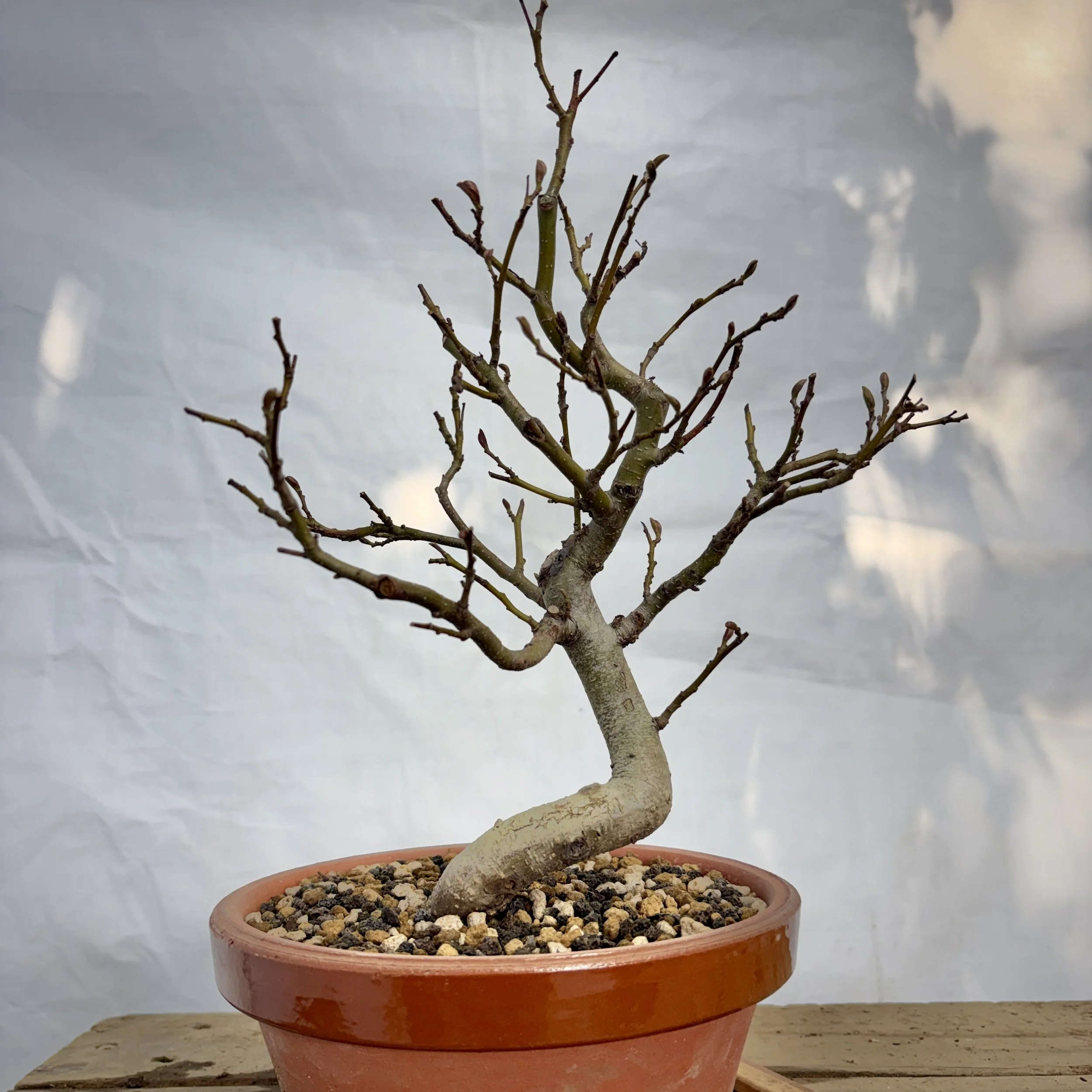
Dormant, but looks sickly, no buds yet, loosely in nursery pot.
Looks good. Recommend to repot when you start to see buds and growth.
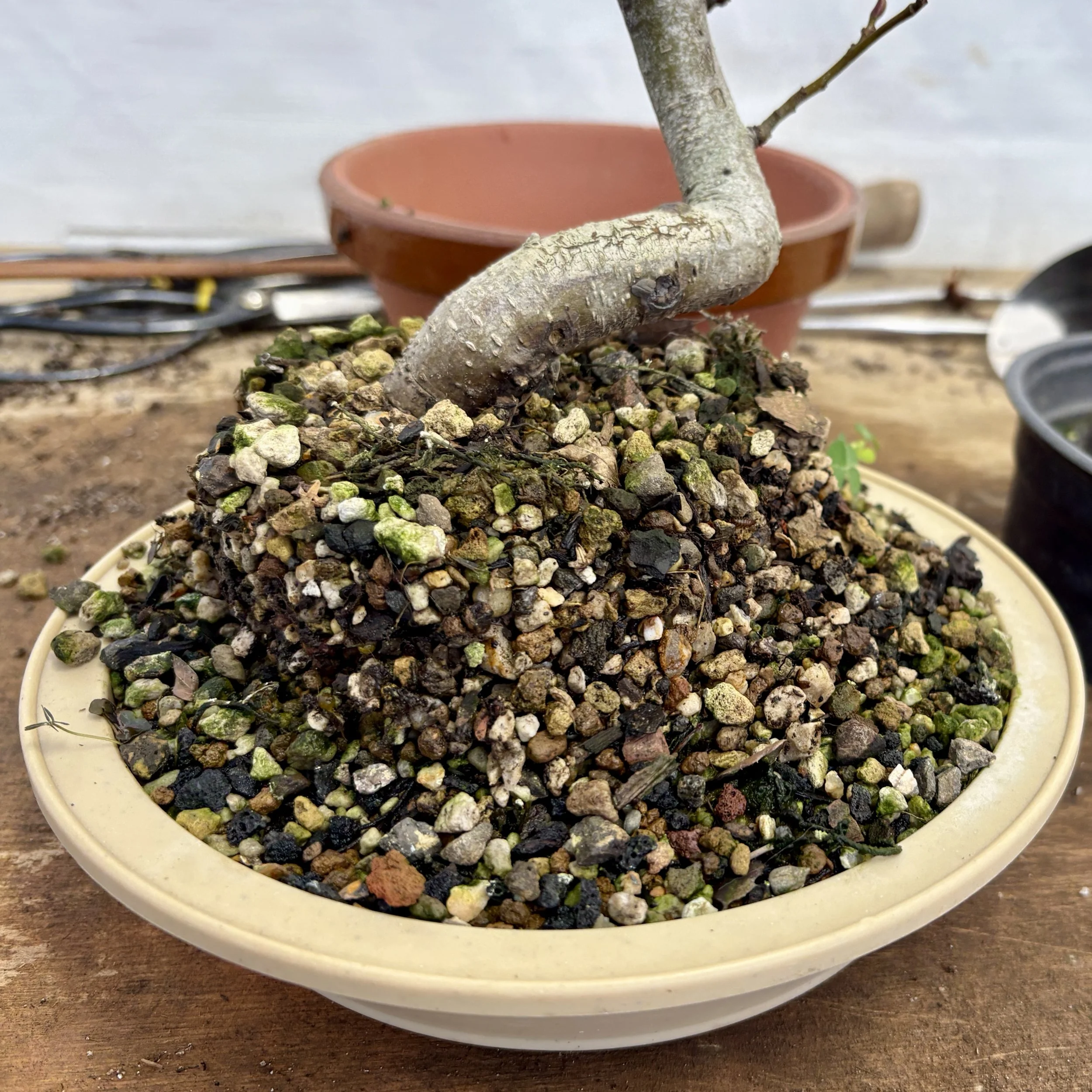
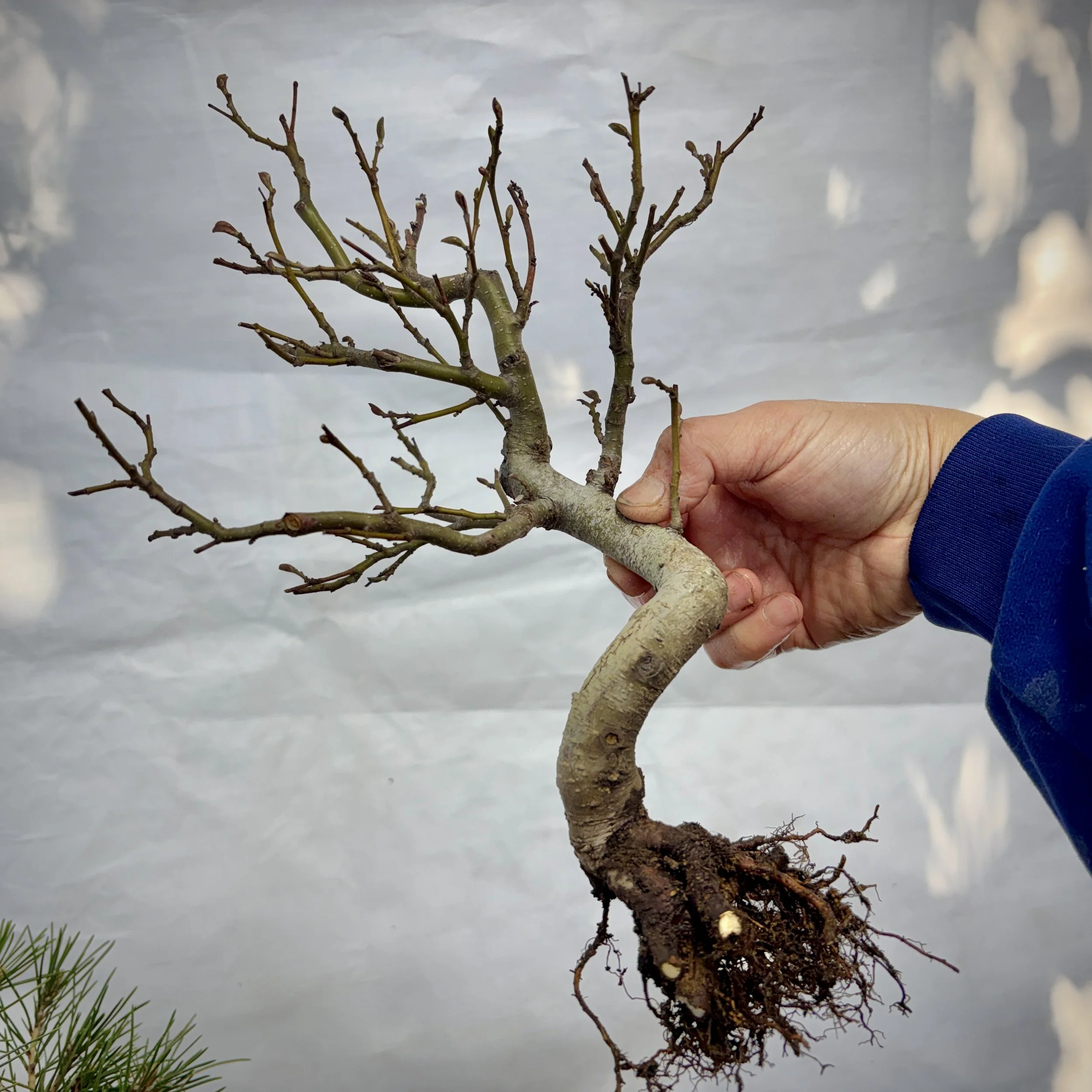
Red Alder Repot—Partial Ground Layer
Looks good, movement in trunk is good. Repotting deeper and covering up all the roots is recommended, using a Japanese training pot and medium soil.
Let it grow out.
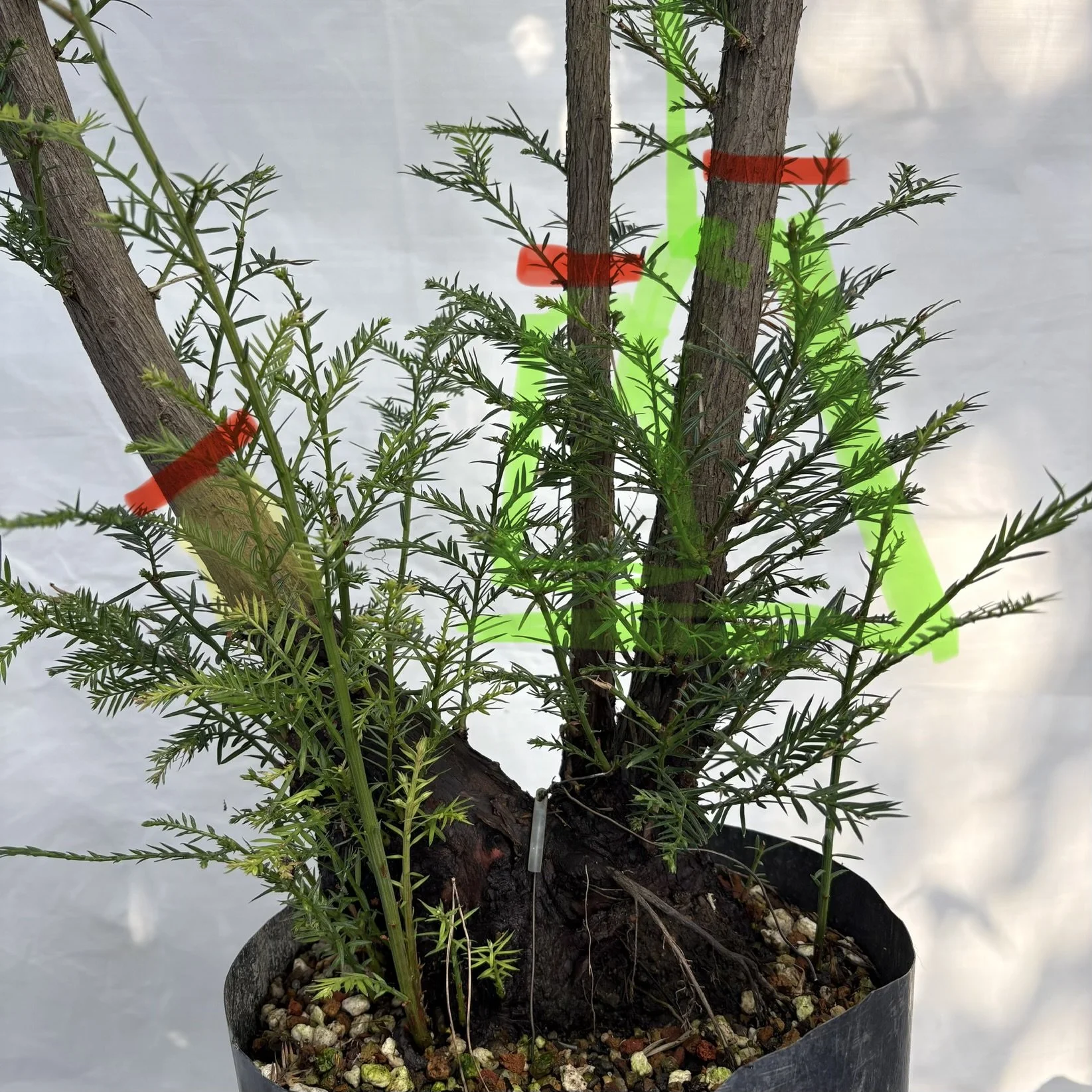
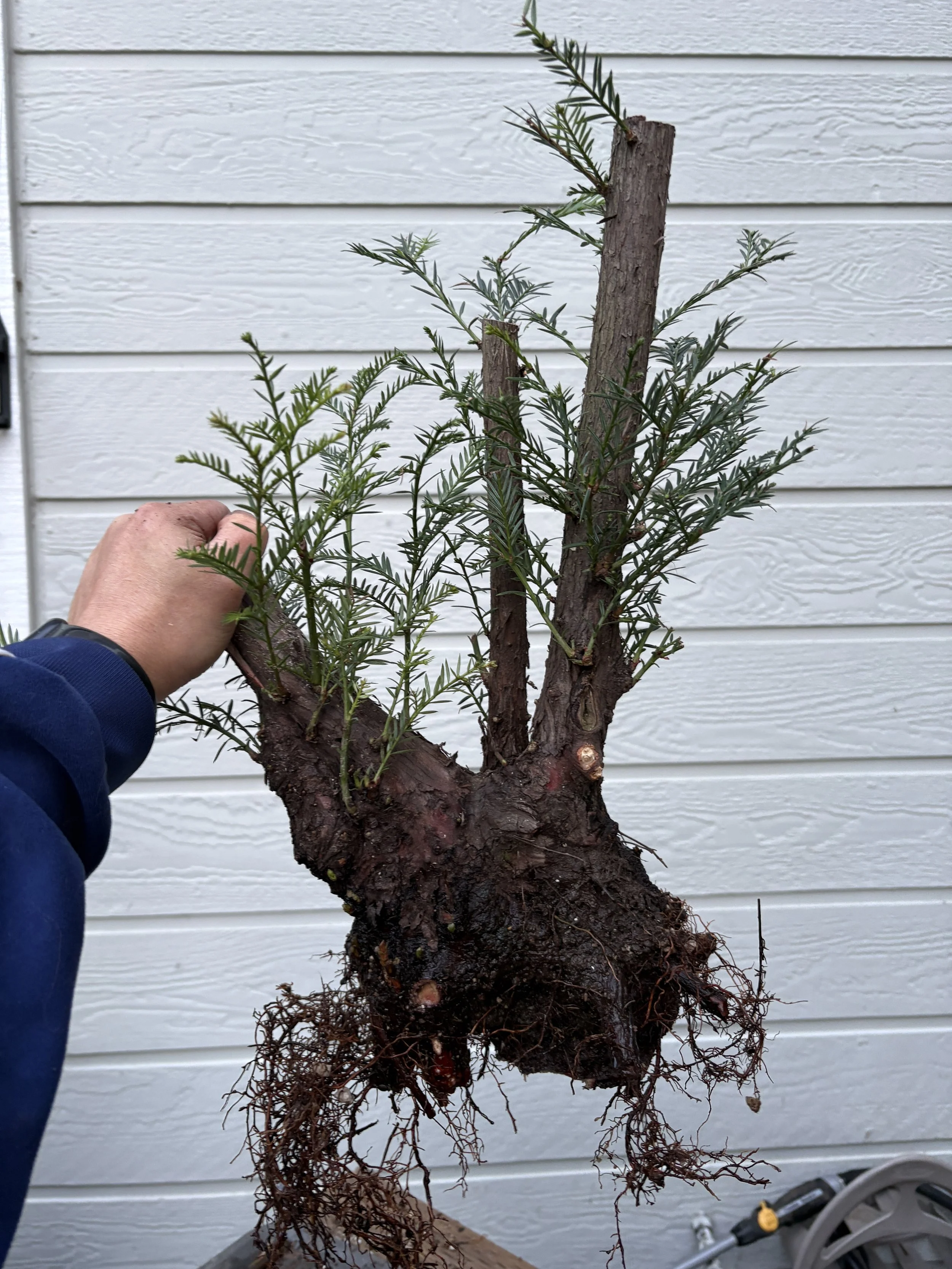
Redwood styling, collected
The angled trunk on the left is usable, but not as three long trunks. Adam prefers shorter trees, but it’s up to me. If I like the mother daughter straight trunks, then they will be upright, and the left angled trunk can be shortened and Shari or hollowed.
For the two upright trunks, will cut the front trunk to about 10 or 12 inches and grow a new liter. The smaller rear trunk can be shorter for depth and accentuating the difference in height and grow a new leader.
Always recommend to repot and prefers terra-cotta training pots if I have an appropriate size
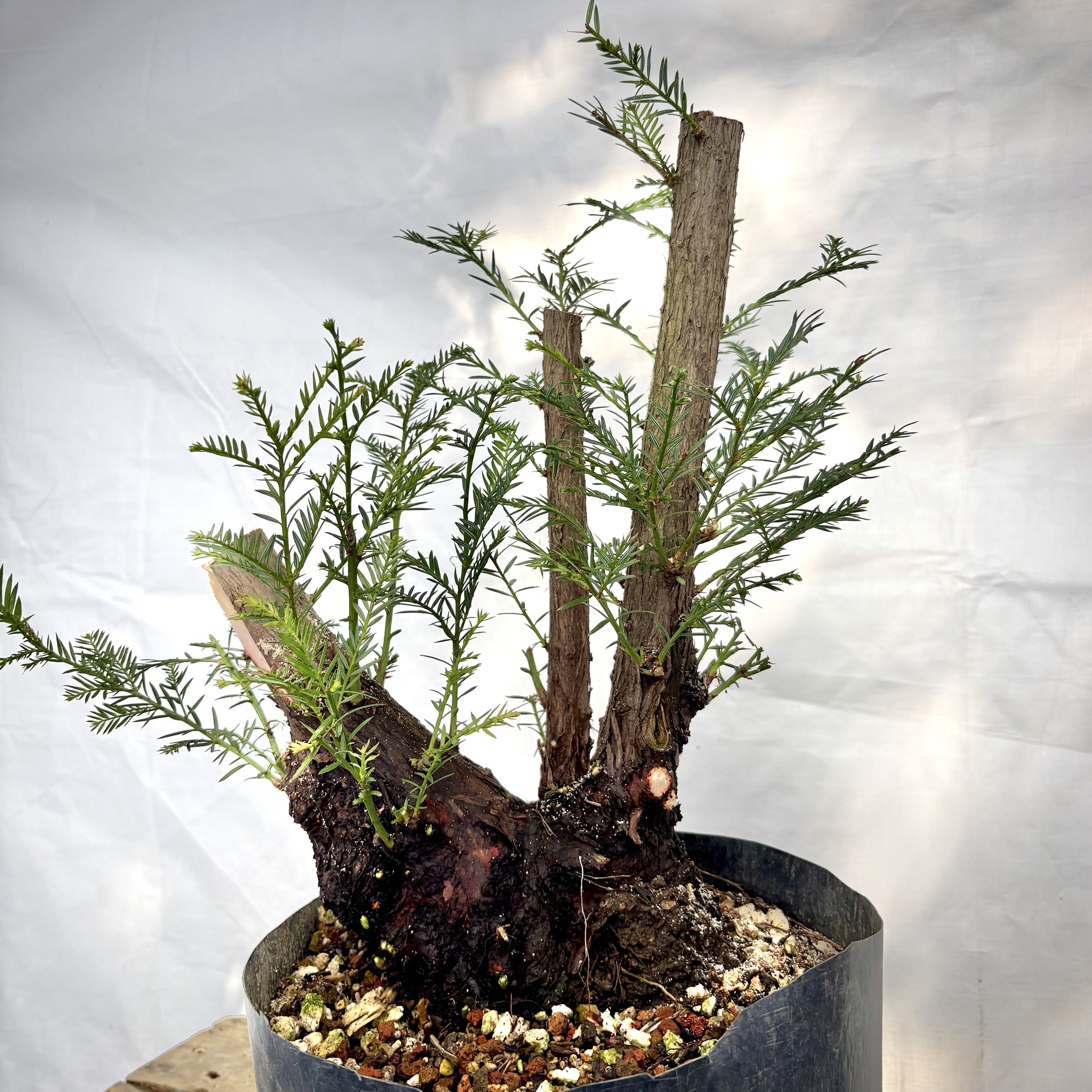
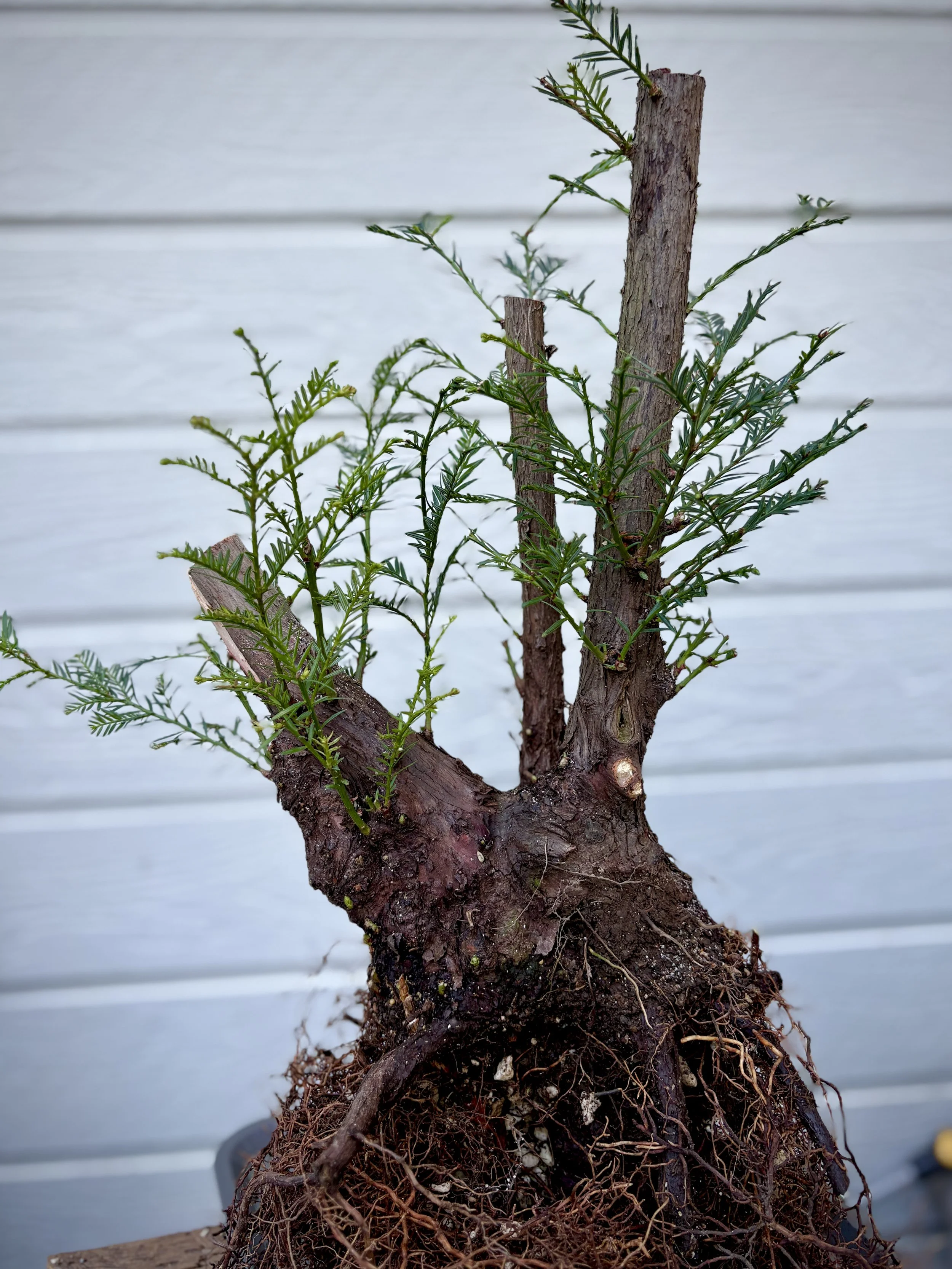
Base was too tall, so cut off 2 inches, losing most fine roots but not all. Next time I should cut the the final height after collection. But large pumice did result in a lot of roots after 2 years.
Work/Practice
Repotted two of Adam’s junipers.
Root Aphids or Mycorrhiza
[M.Hagedorn blog]
Mycorrhiza; The milky, soft-looking, off-white patches are outlined in red.
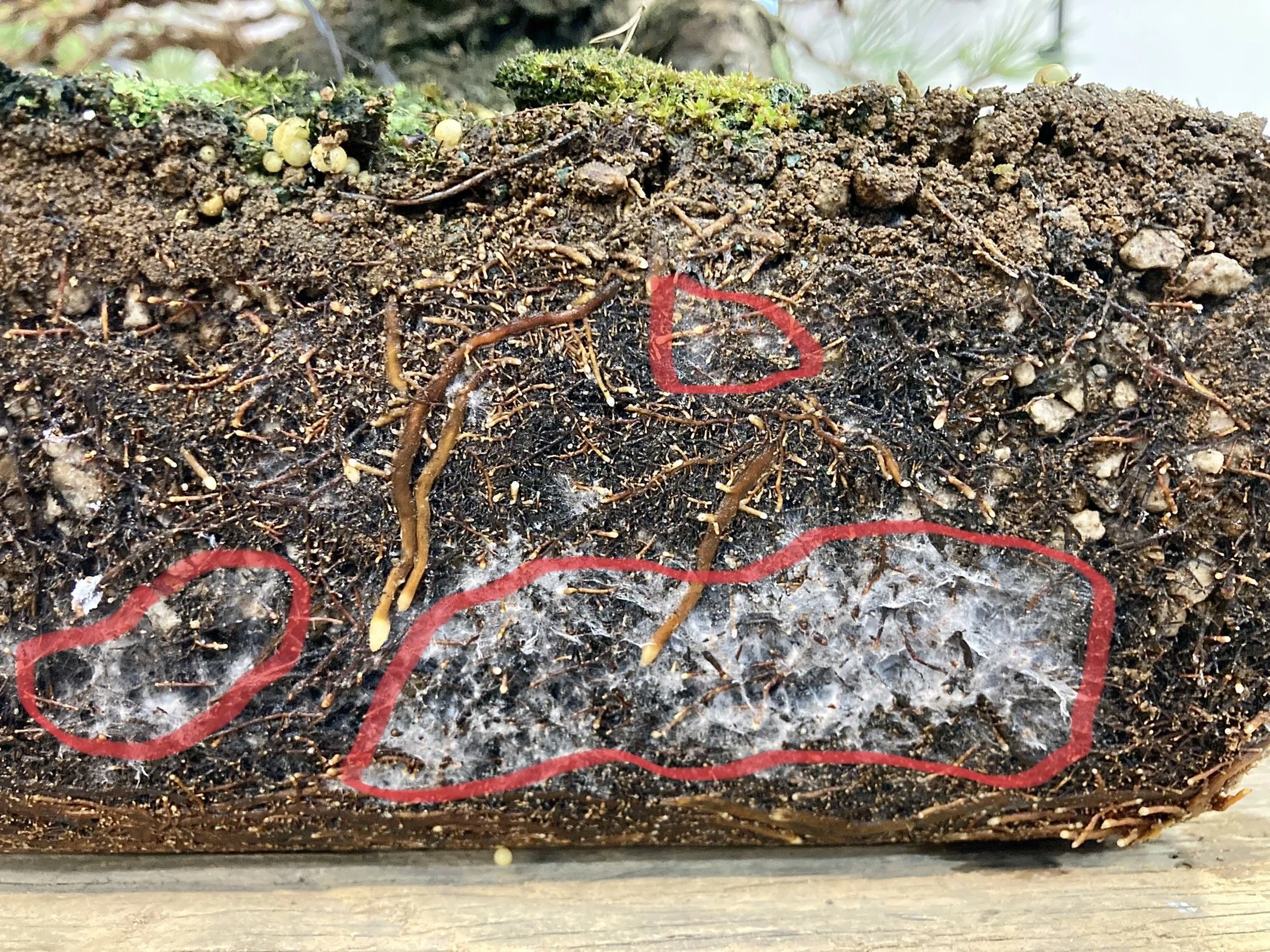
But only that outlined in red is Mycorrhiza. The rest—the bright white patches—are root aphids.