Reflecting on Redwood Development
I am still a student and the Redwood trees are my teachers. I have been inspired by great examples of redwood bonsai, and my eye is getting better at seeing great potential in tree stock. These are my current reflections, and I’m open to adjust my development technique from how my redwoods respond as well as listening to other’s experiences.
Resilience
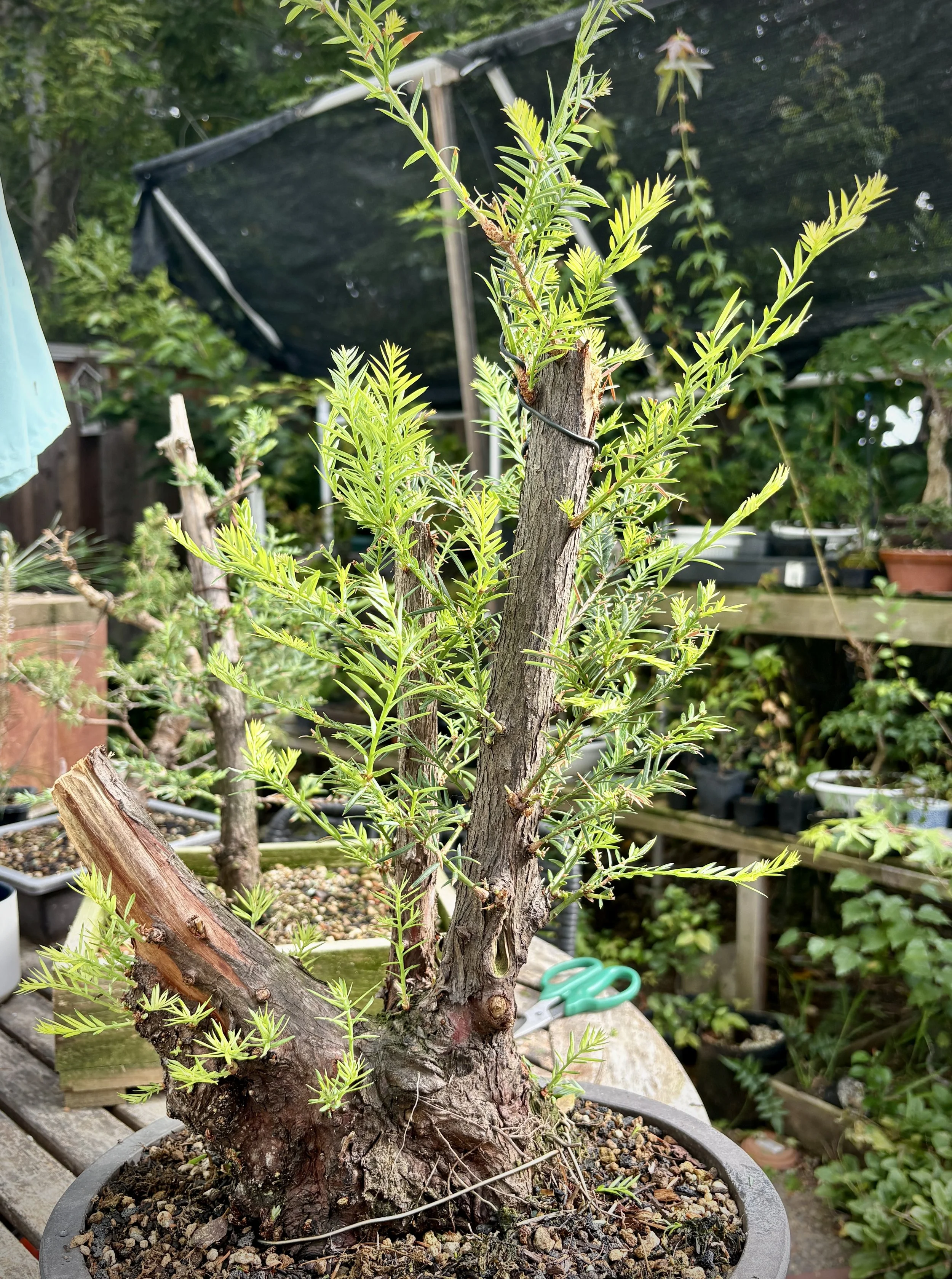
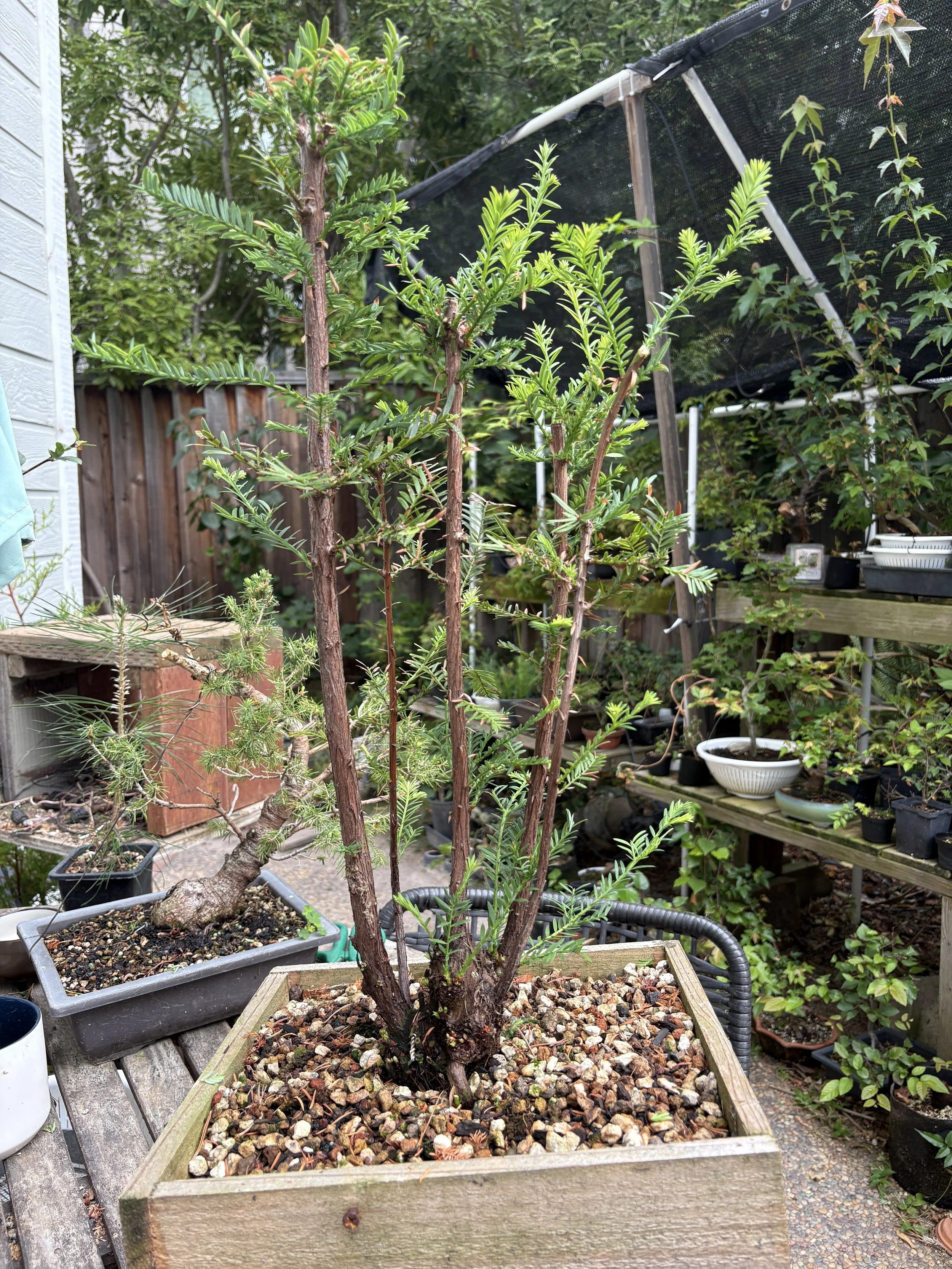
As they have a history, centuries old, through fires and climate changes, they are fast growers and respond well to transplanting and pruning. New growth springs from old wood, branches and trunks—if the scale of a branch or density of foliage is out of proportion, then removing or thinning can allow a reset to help your design.
If any concern, it is the continuous new growth and elongated branching if not continuously pinched to shape—or pruned back. Or when desiring an older appearance, the contrast in color and fragility of new growth needs to be managed by smaller akadama and slower growth techniques.
Form
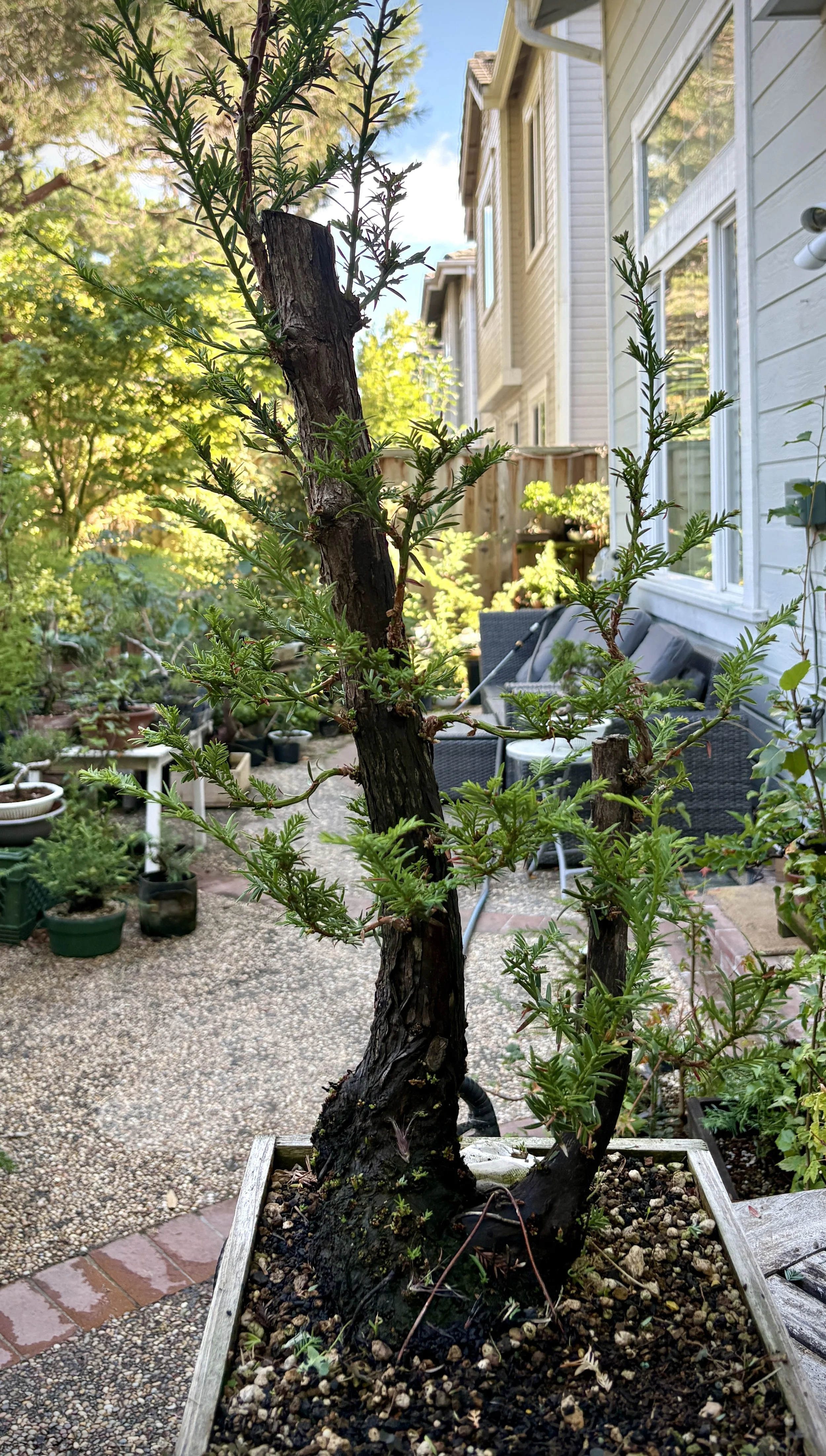
Taper at the base is most valued, but with many years a nebari can be developed—I have yet to see that. I have air layered with moderate success—and seeking ground roots. When (if) collecting, do not overlook a slender tree if the soil/mulch below is hiding a wider base. Often a previously cut or damaged tree would continue to thrive with a new leader and blend with the base over time.
Taper along the trunk length is desired when collecting. Movement or natural bends often occur for trees growing on a slope—where once the trunk extends from the slope will grow up towards the sun. Desired in other trees, redwoods in full scale are often upright or leaning. One can use any material and creatively sculpt/carve