Pine Health—June
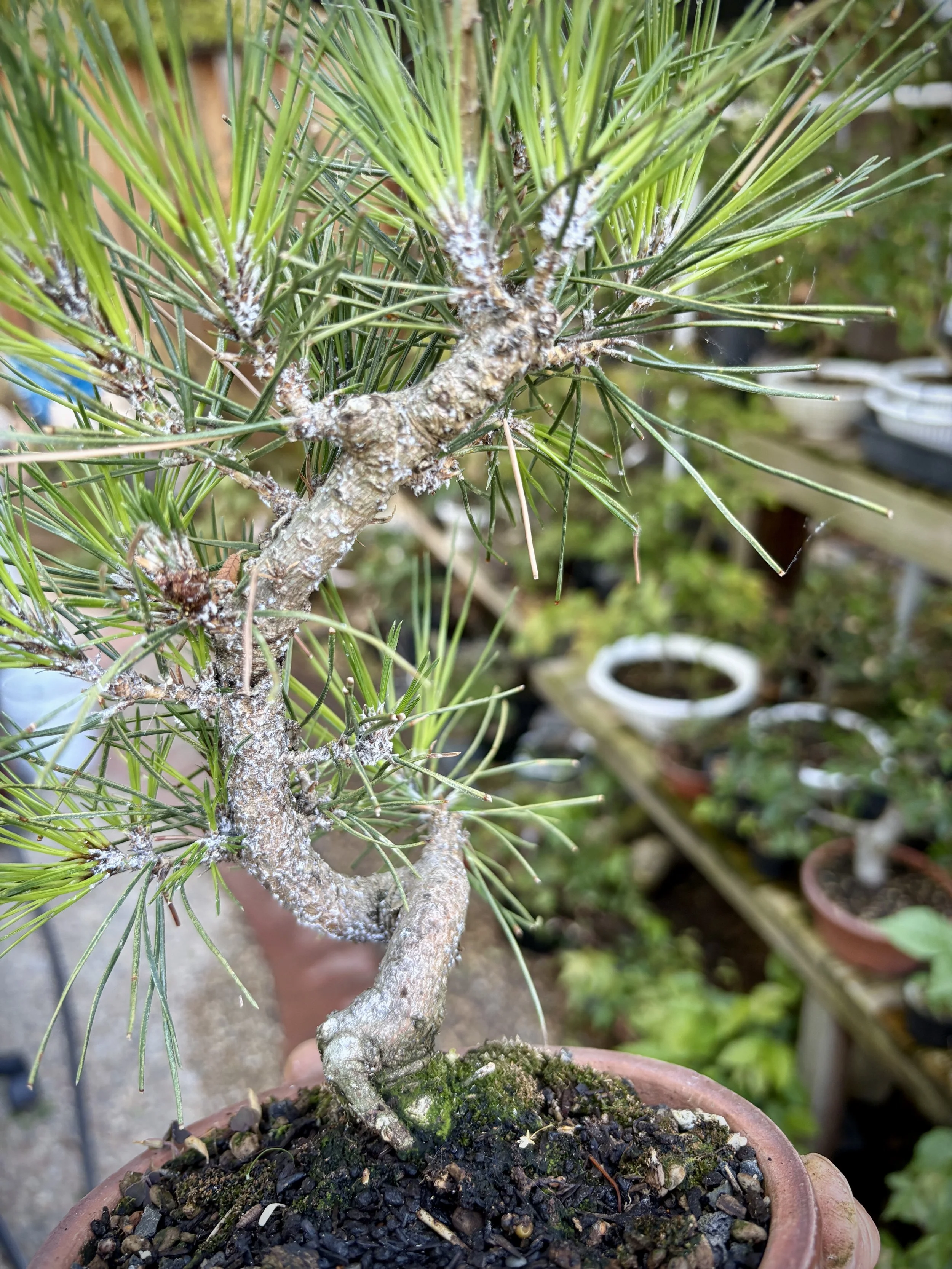
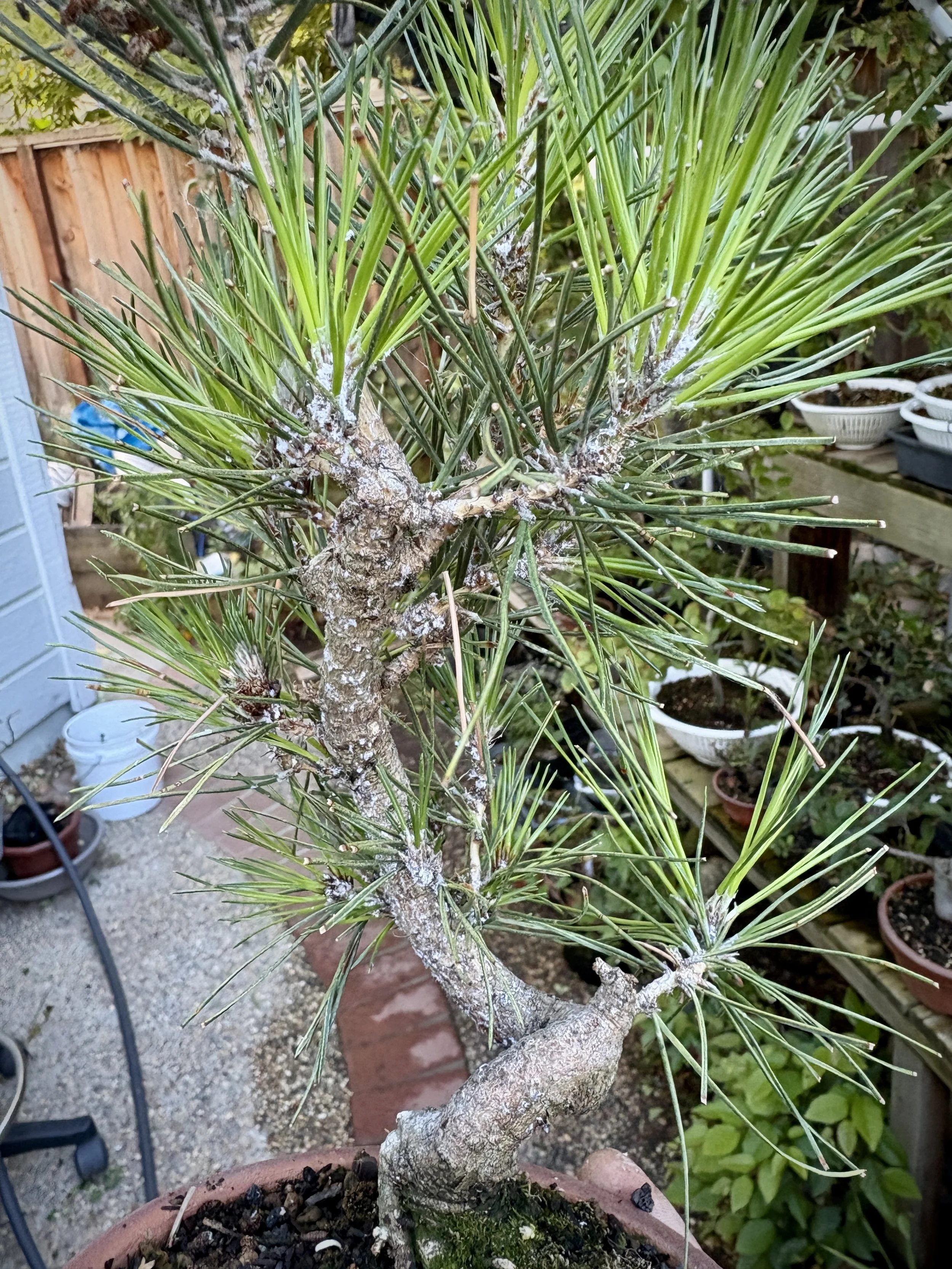
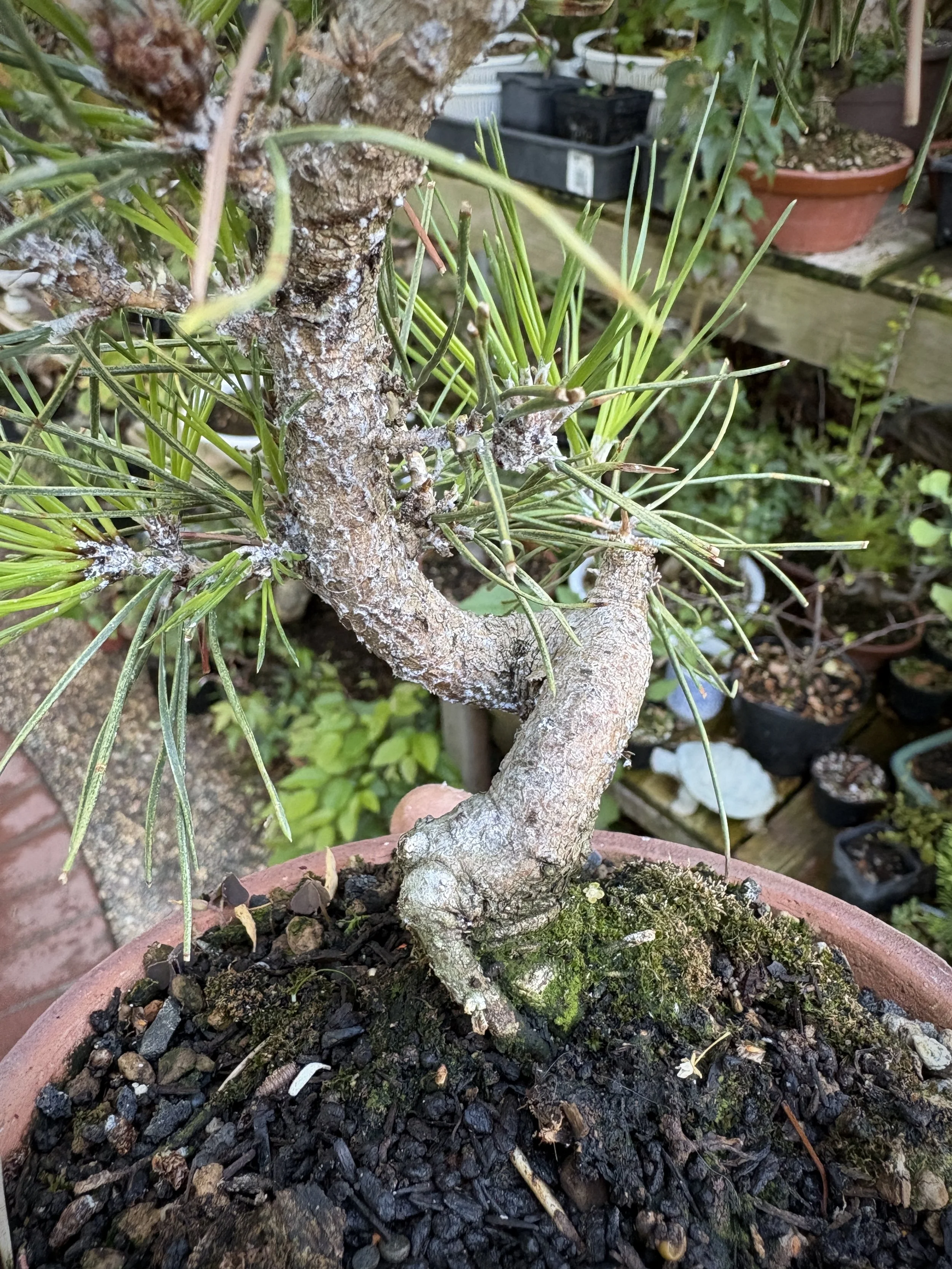
Had not noticed anything with this pine until I looked closely. Overall looked healthy…
Adam’s Assessment
Seen in person
Has this himself, wooly aphids
Soft toothbrush or high pressure wash to remove, followed by a spray
Oil is not strong enough. Recommends the following
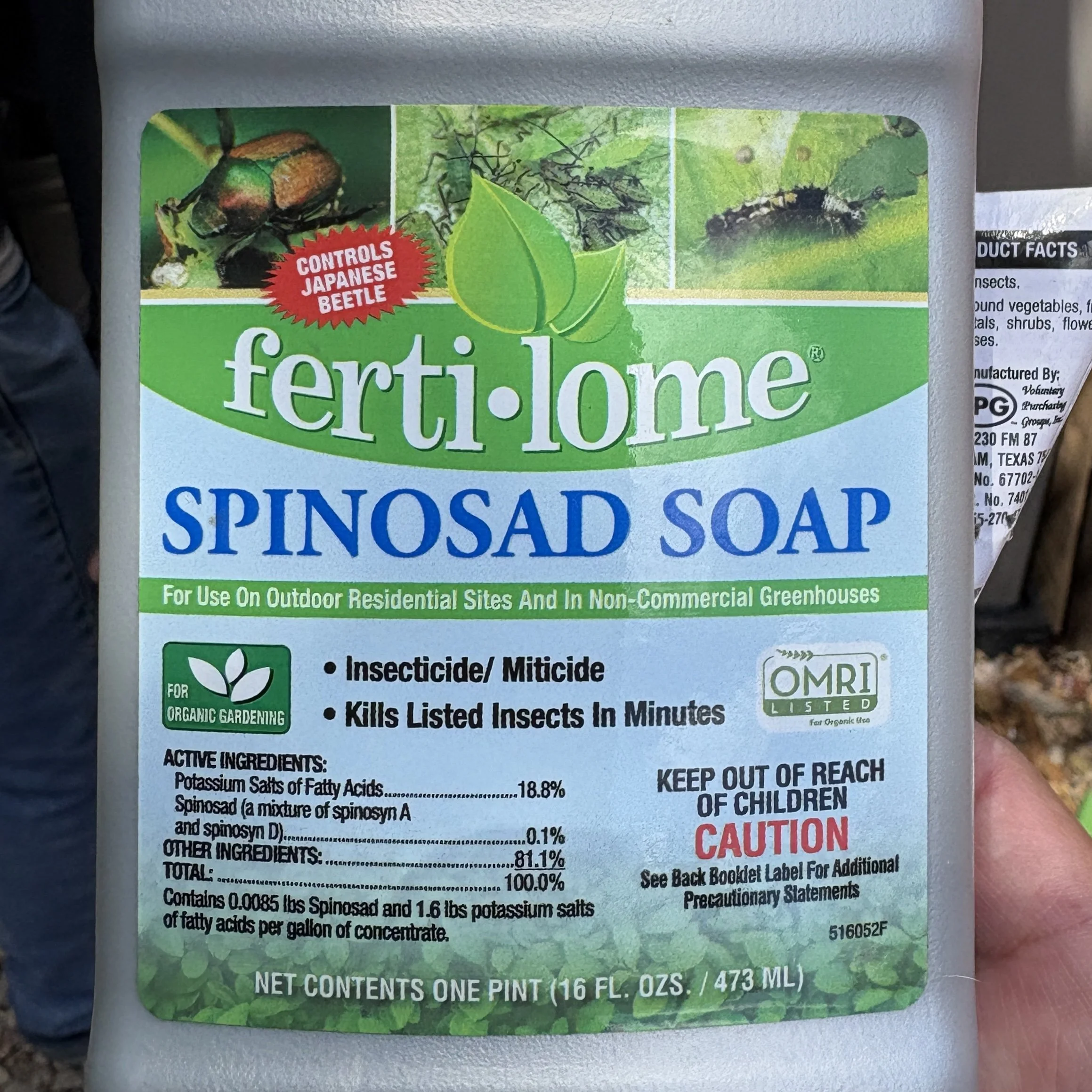
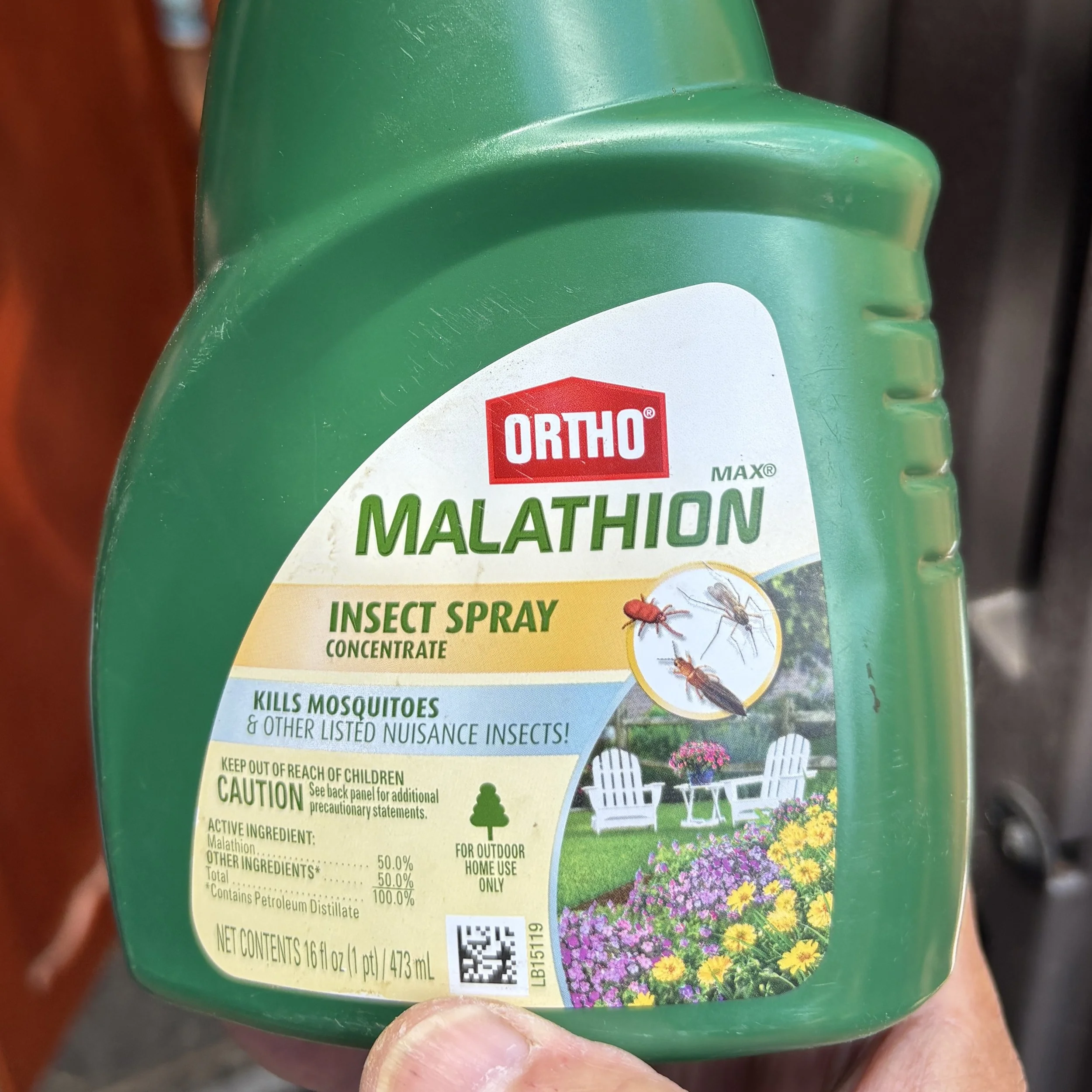
Val M (from photos):
My guess is adalgid (sp). They are aphid related and make a webby covering.
The merit granules in the soil will get these along with all other sucking insects.
Also, needles are indicative of overwatering, so an adjustment there might help the tree combat the insects
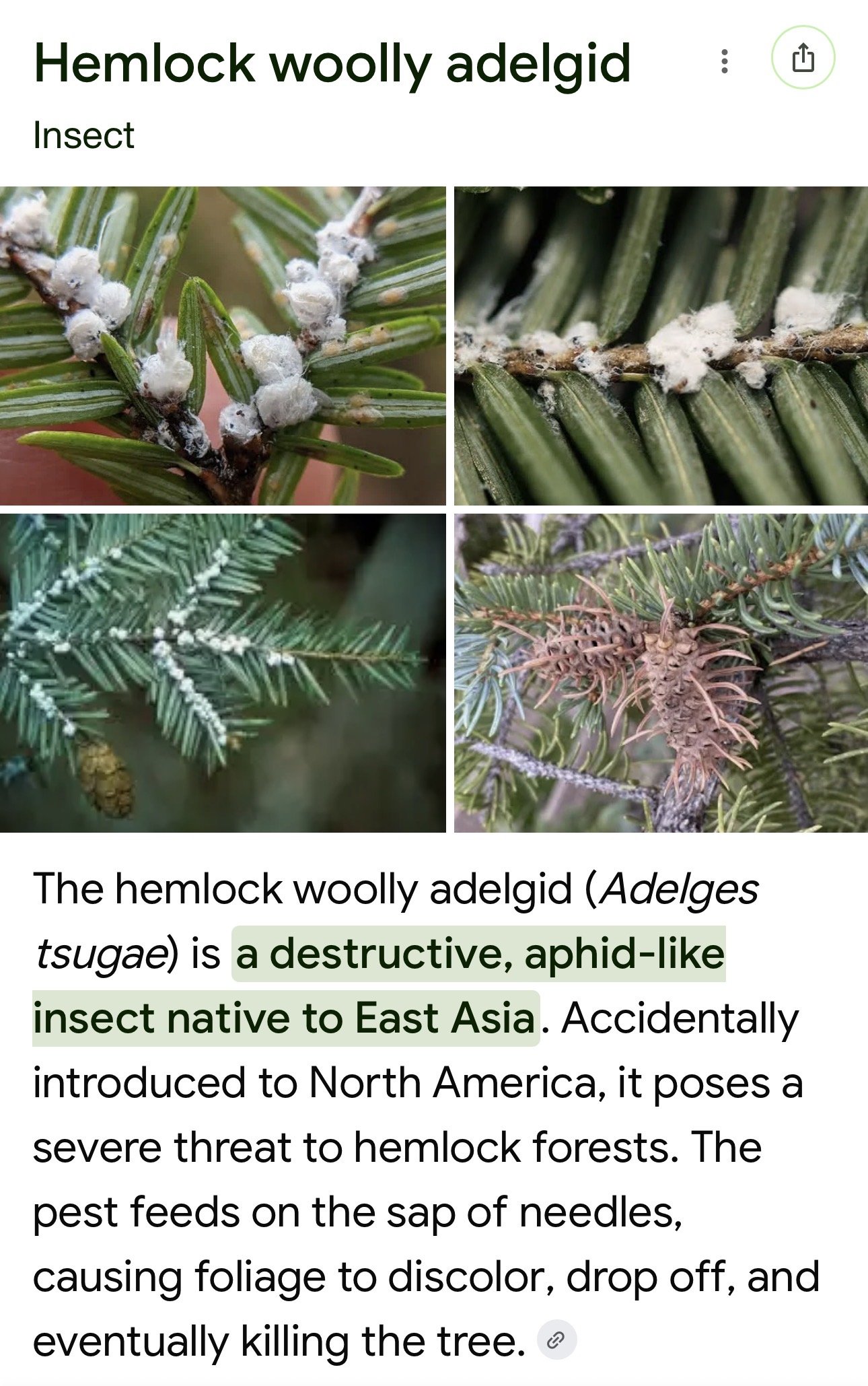
Chat:
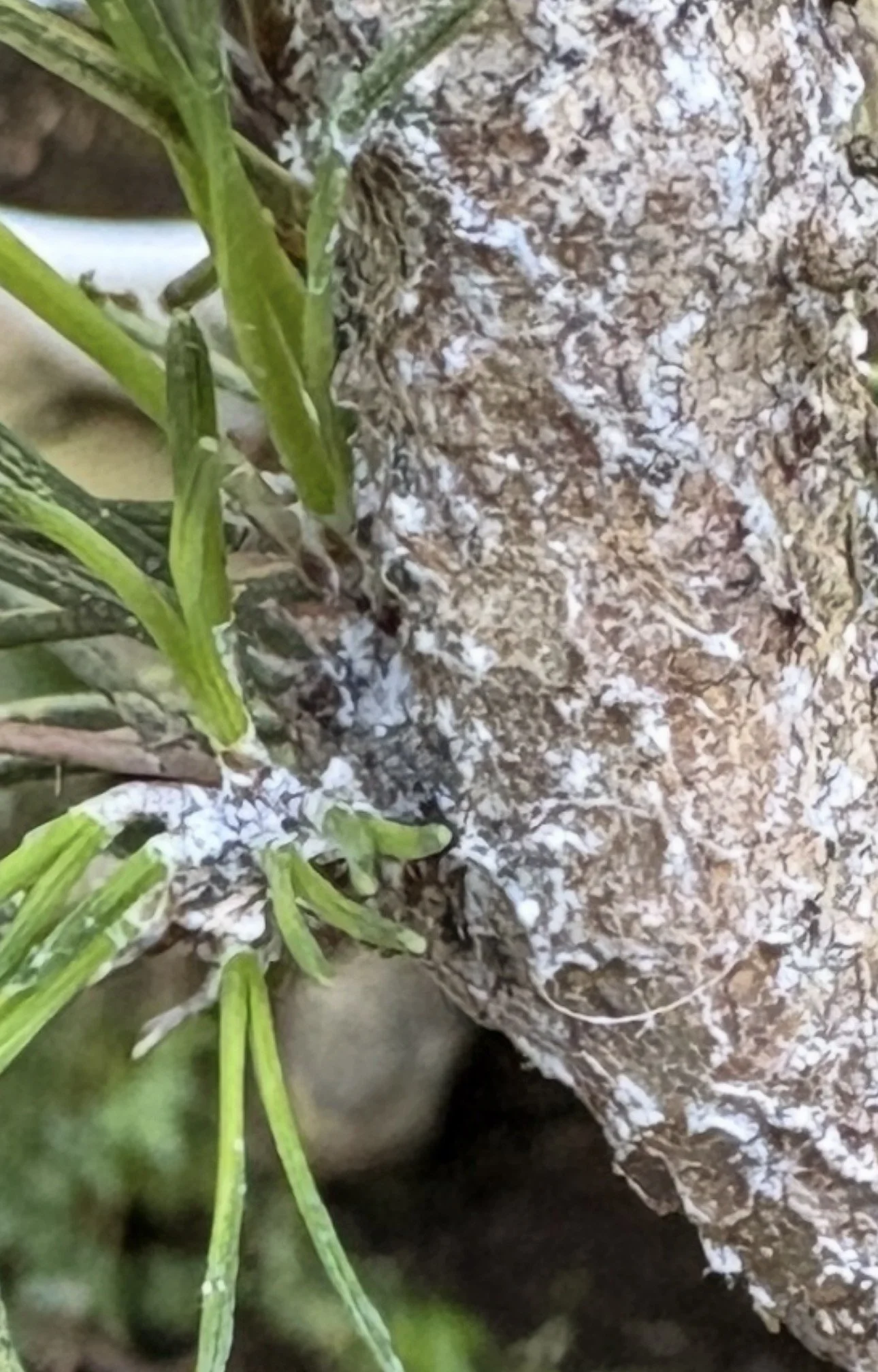
This close-up changes my assessment somewhat.
The white material does not strongly resemble scale insects in this image. Instead it looks more like a surface crust or film on the bark itself, with the bark fissures showing through the white layer. I don’t see the distinct oval shells, clustered insect bodies, or cottony masses that I would expect from a significant scale infestation.
For Japanese black pine, the most likely possibilities are:
1. Beneficial/harmless lichen (most likely)
The pattern is very similar to a pale gray-white crustose lichen:
tightly attached to bark
follows bark texture
present on older bark
common in humid coastal climates like the Bay Area
Lichen does not harm the tree. It uses the bark as a surface and does not penetrate living tissue.
2. Dried resin mixed with algae/lichen
Japanese black pine often exudes small amounts of resin around:
needle bases
old buds
pruning scars
Over time, resin can trap dust, fungal spores, and algae, creating a whitish crust.
3. Very unlikely: pathogenic fungus
The coating is not:
fluffy
spreading over needles
causing obvious cankers
associated with bark cracking or oozing
That makes a harmful bark fungus less likely.
Simple diagnostic test
Take a toothbrush and scrub a small area.
If it:
comes off as a thin crust exposing normal bark → lichen/algae
leaves sticky resin underneath → resin deposits
reveals insects underneath → scale
Also try placing a drop of water on the white area:
lichen often darkens slightly when wet
dried resin remains waxy
scale insects remain as discrete bumps
Does it explain the tree’s weakness?
Probably not.
Looking back at your earlier photos, the things that concern me more are:
sparse foliage density
weak needle color
reduced vigor
possible root-zone issues
The white bark coating itself appears more likely to be a symptom of an older, slow-growing bonsai that has been sitting in a humid environment for years rather than the cause of decline.
What I would do now
For a weak Japanese black pine:
Leave the white bark coating alone for now.
Do not apply fungicide to the bark solely because of this white material.
Focus on:
root health
drainage
watering practices
candle strength
needle retention
If you want to clean it cosmetically:
soft toothbrush
water only
gently scrub older bark
No need for fungicides or insecticides unless we confirm a pest.
One detail I can’t see clearly from these photos is whether the white material is hard and crusty or soft and waxy. If you scrape a thumbnail across it:
Does it come off as a chalky powder?
A hard crust?
A sticky wax?
Or does it seem embedded in the bark itself?