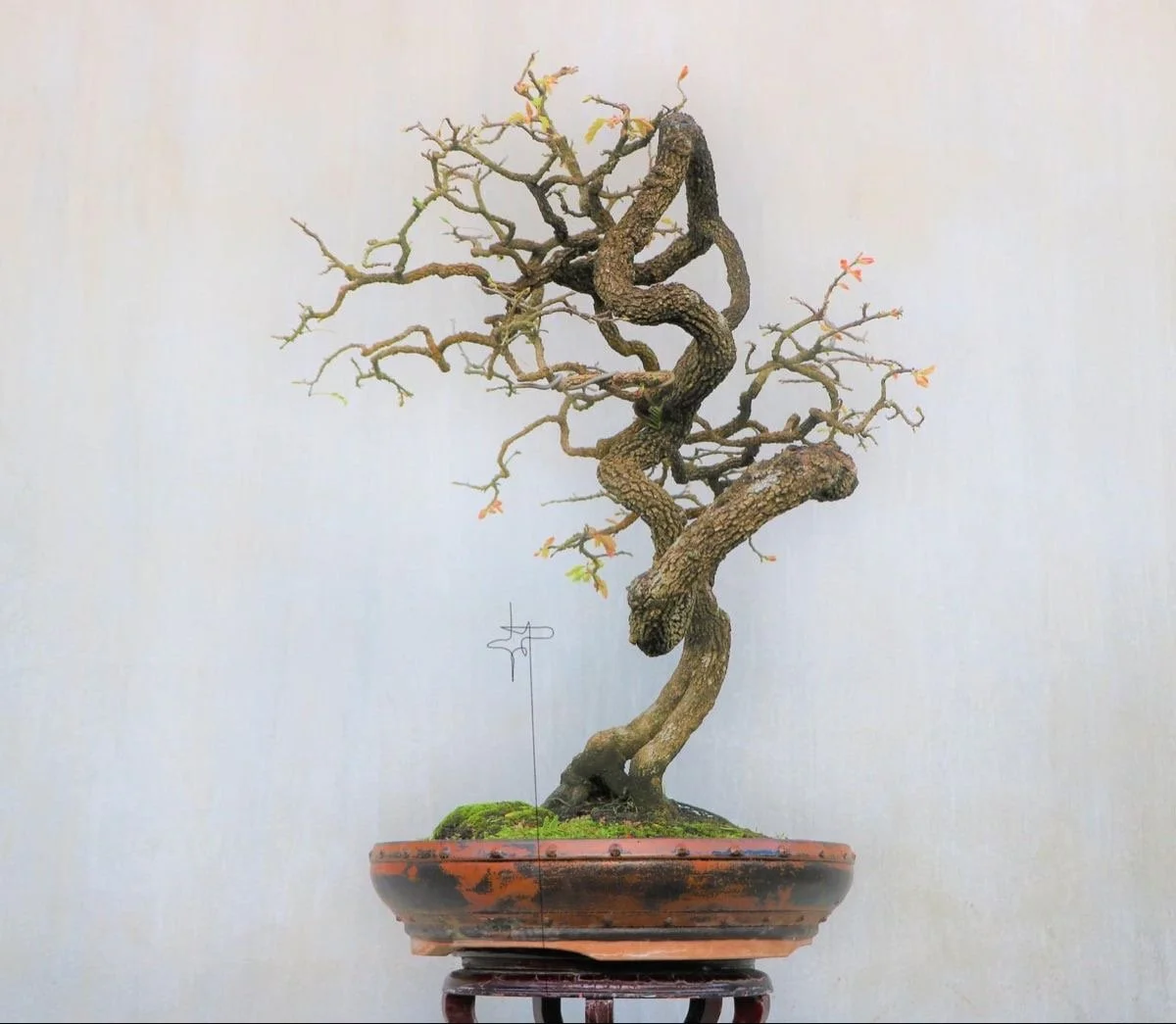
🌸 Wisteria, #2518
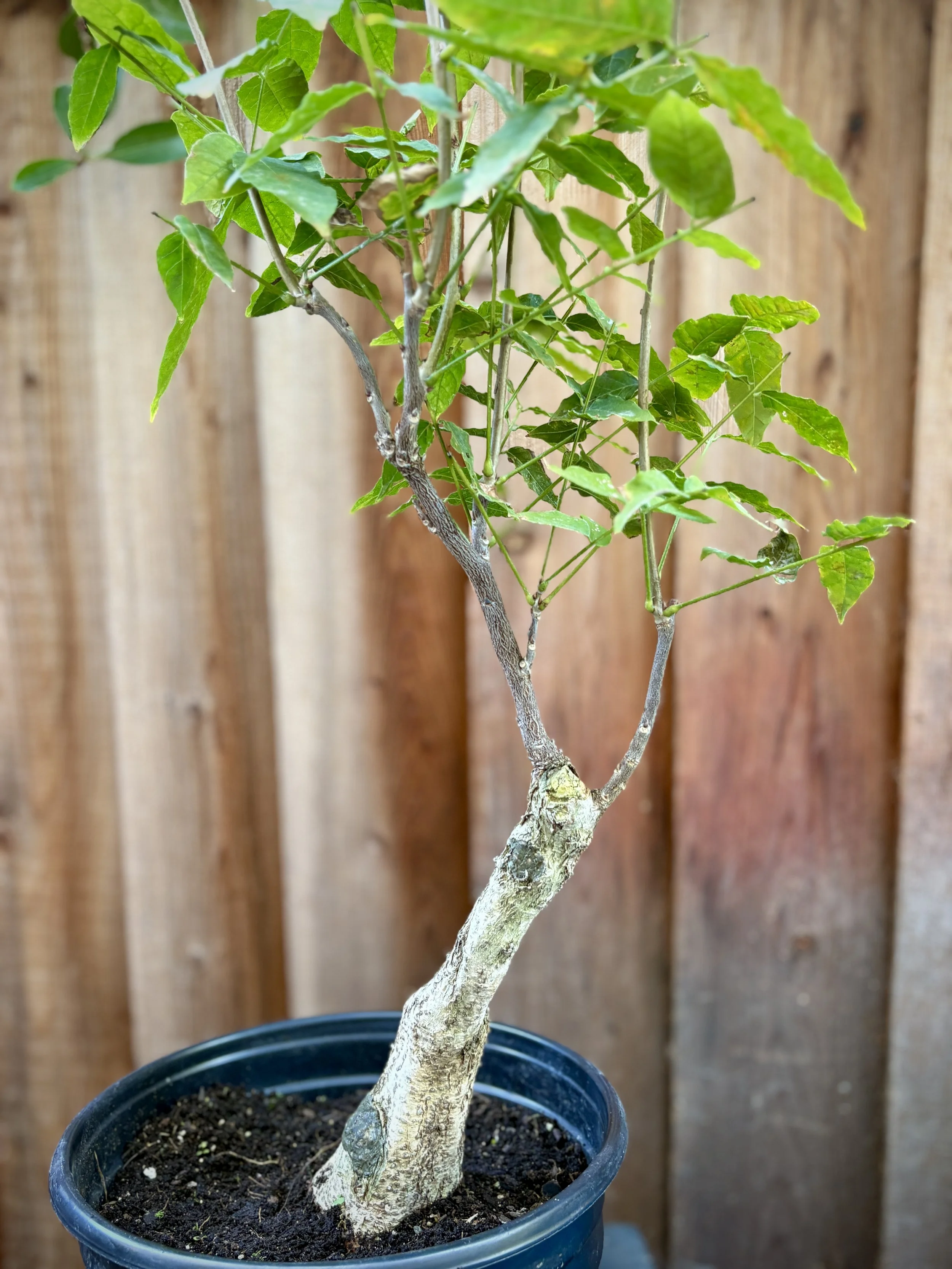
Wisteria floribunda, Wisteria sinensis: Purchased for its trunk base potential. Sept 2025 Jerry C recommends getting bends into the branches early, once older is less flexible.
Potting soil now—study what soil to repot it into.
Mid-May 2026 Full Flush
Will cut back again
Mid-Apr 2026 Cut Back
Cut back long tendrils creeping across the bench
For ramification, cut back to 2 leaves
Mid-Mar 2026
Started leafing out quickly
Has been a warm spring
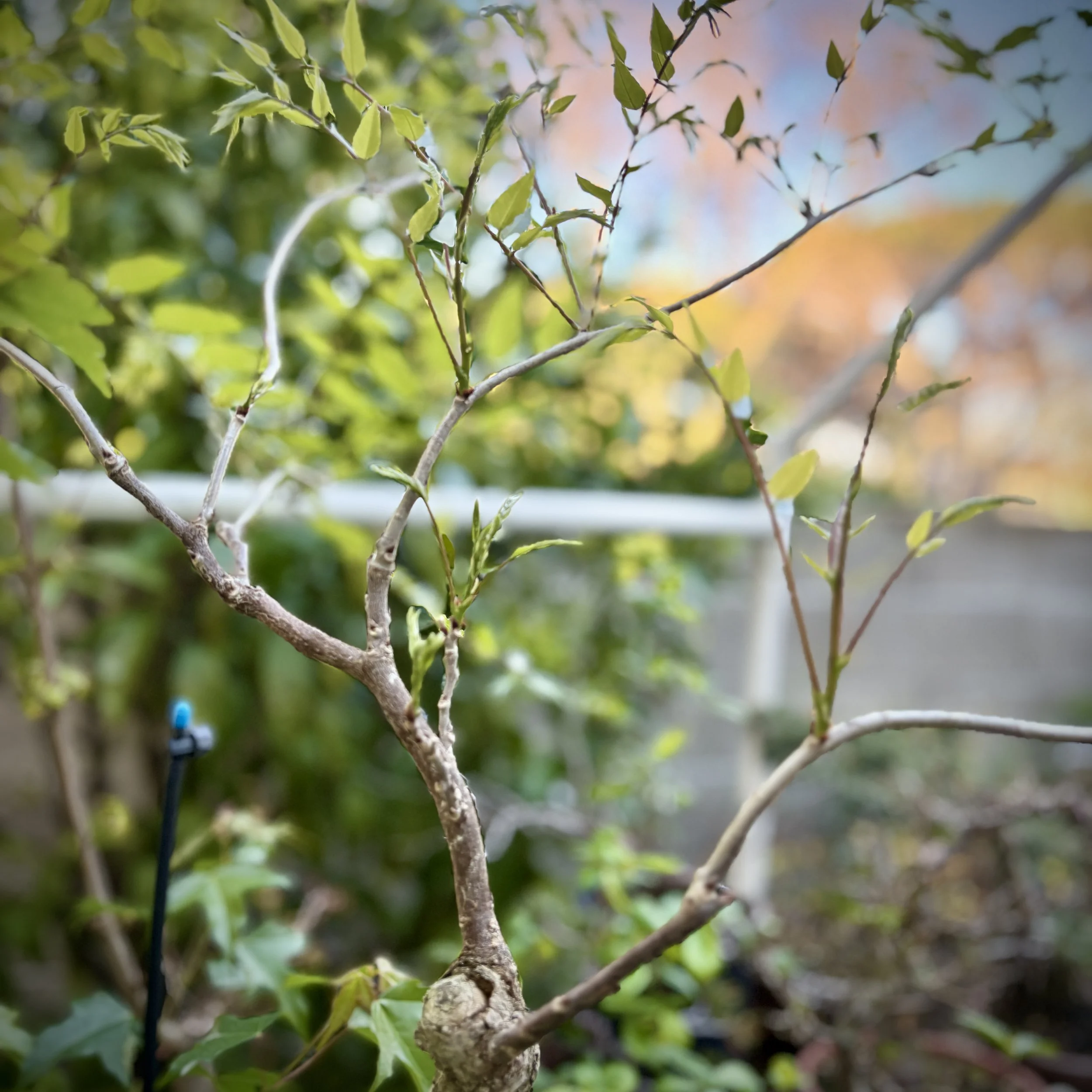
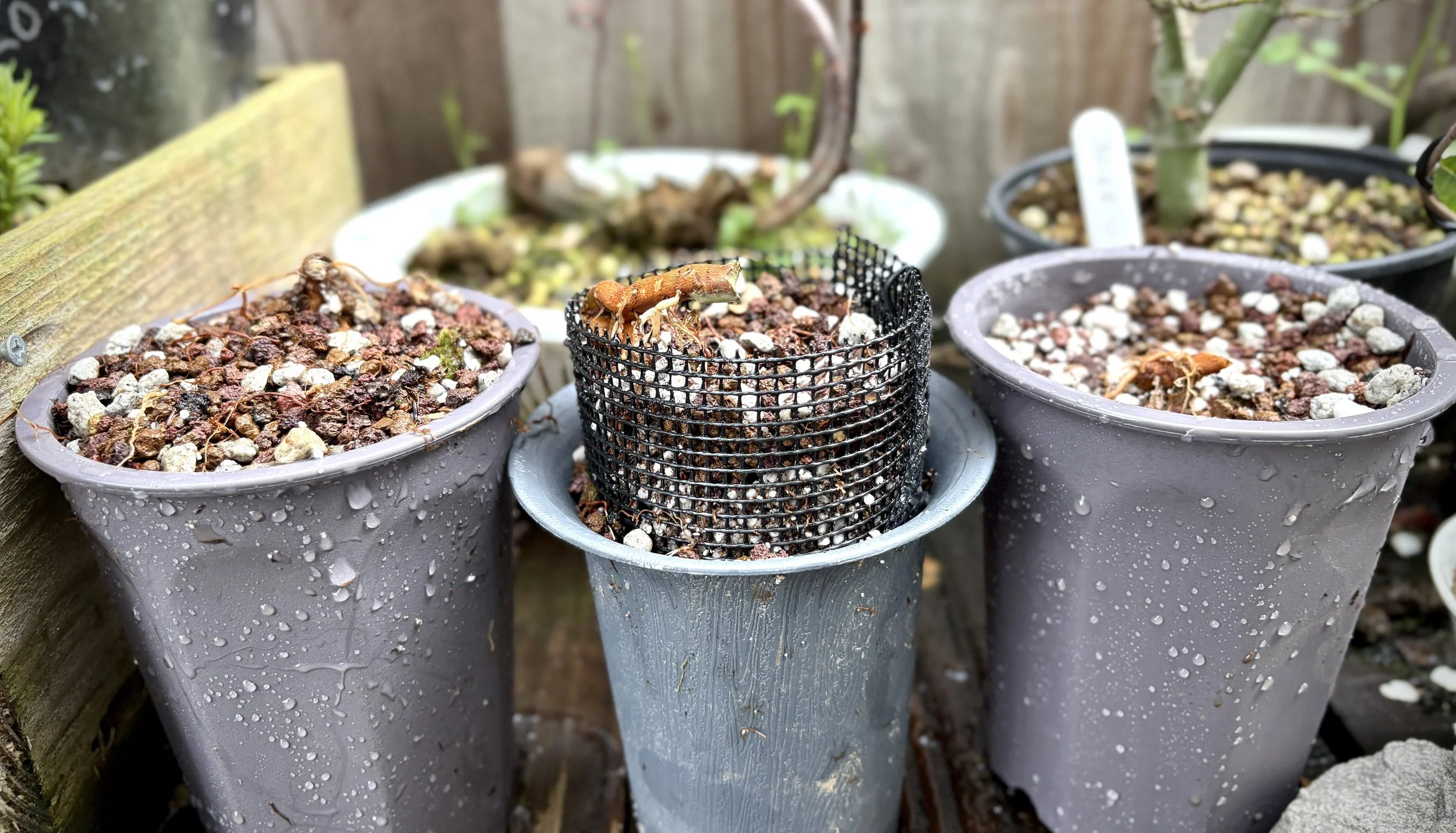
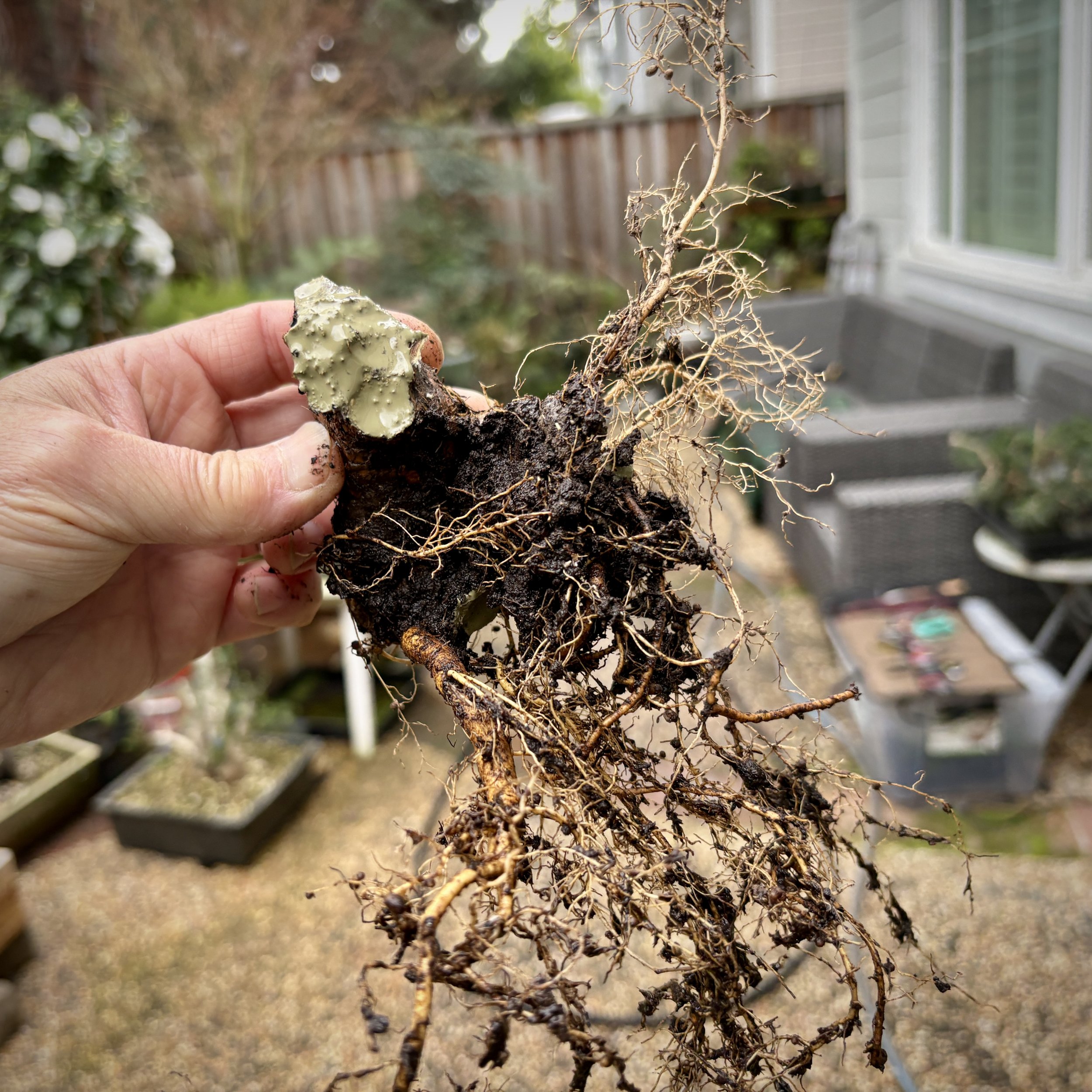
Feb 2026 Repot
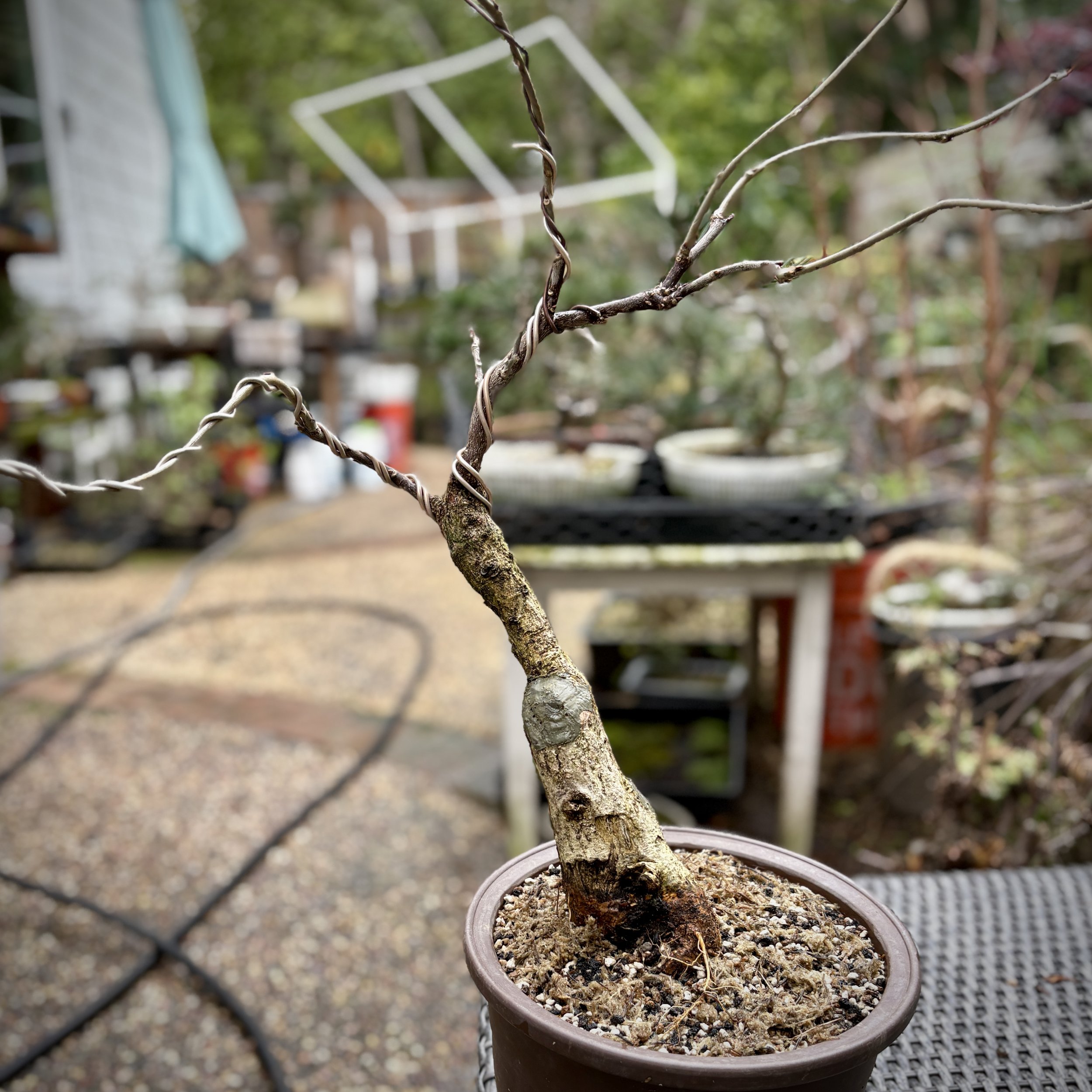
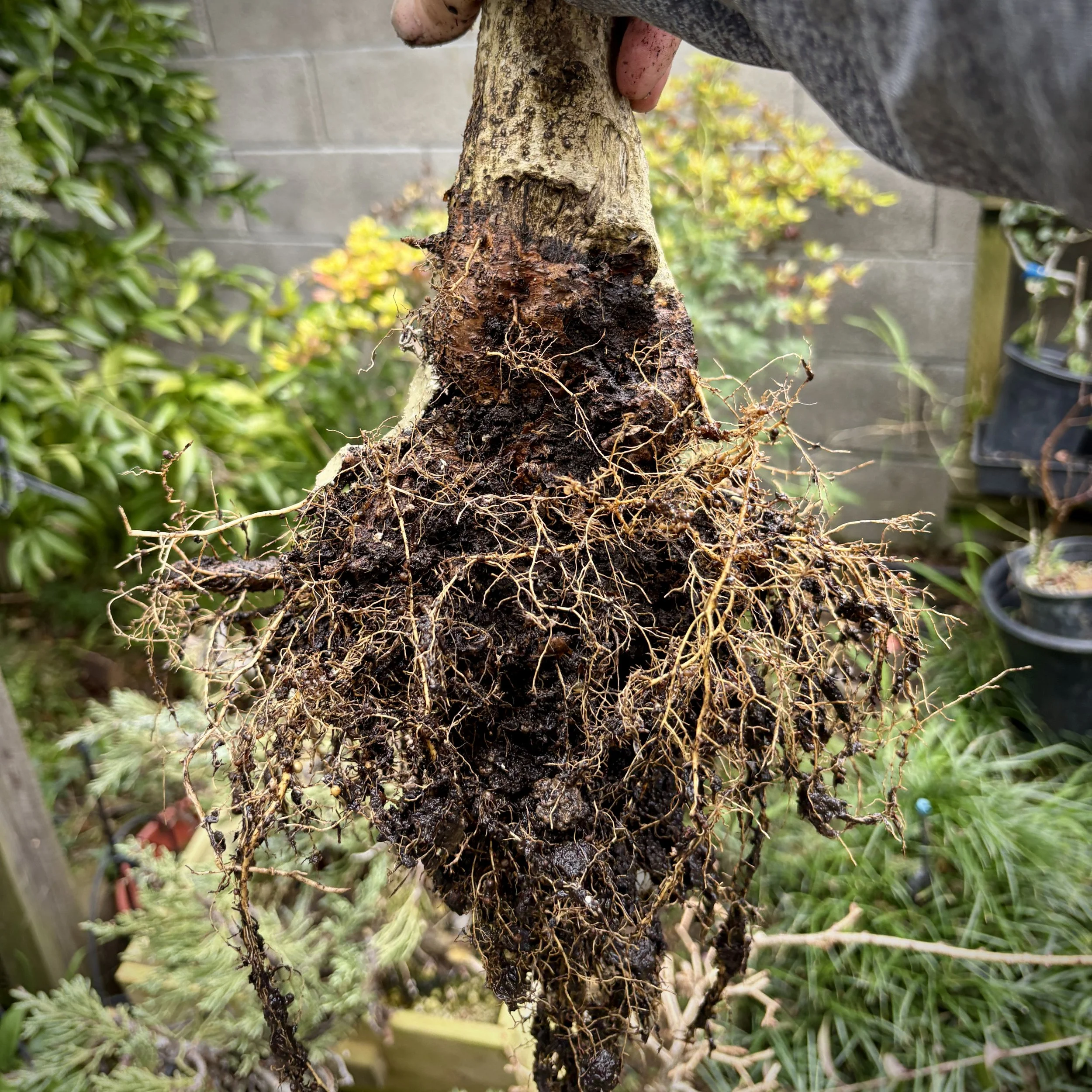
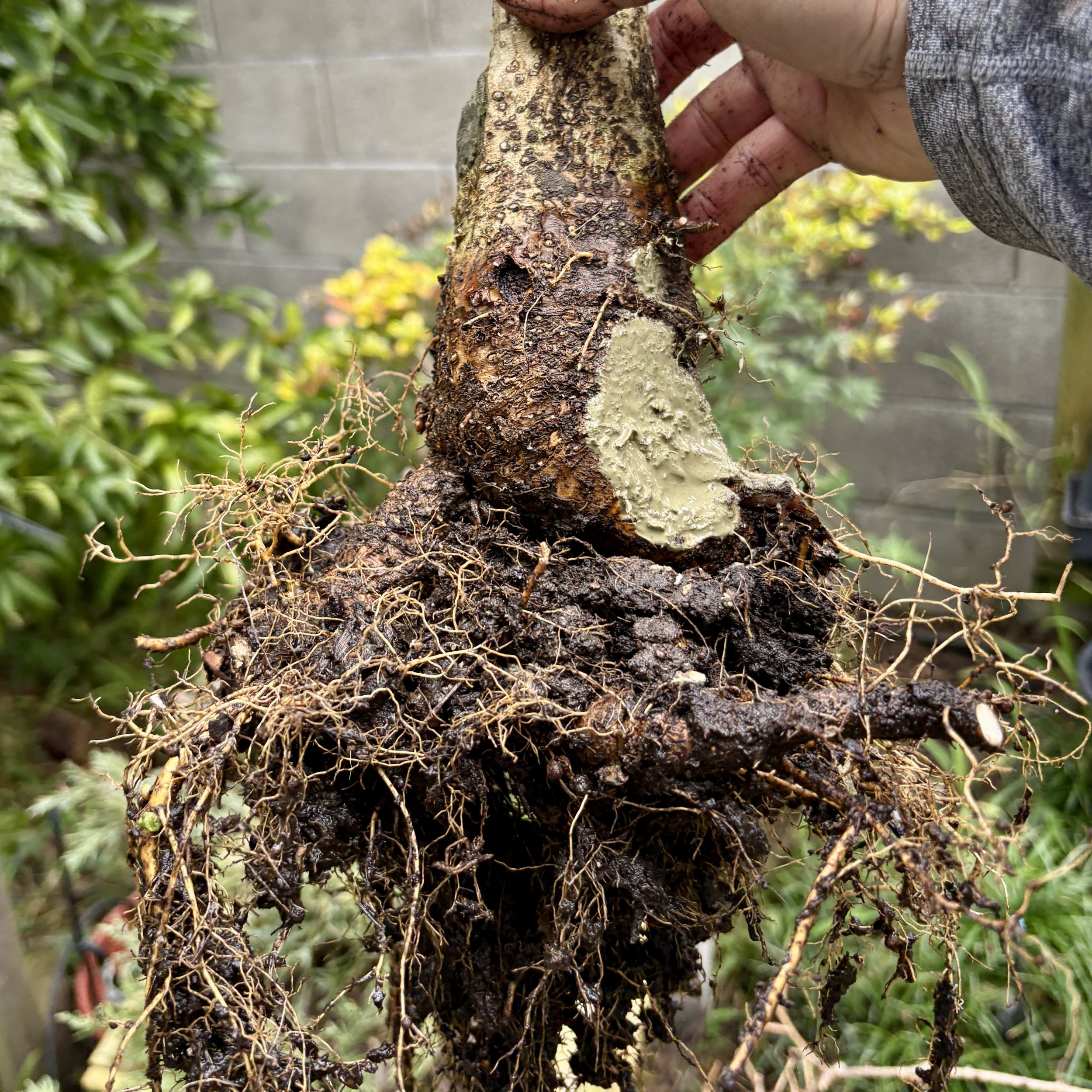
Root cuttings replanted as exposed roots and a huge root removed and potted
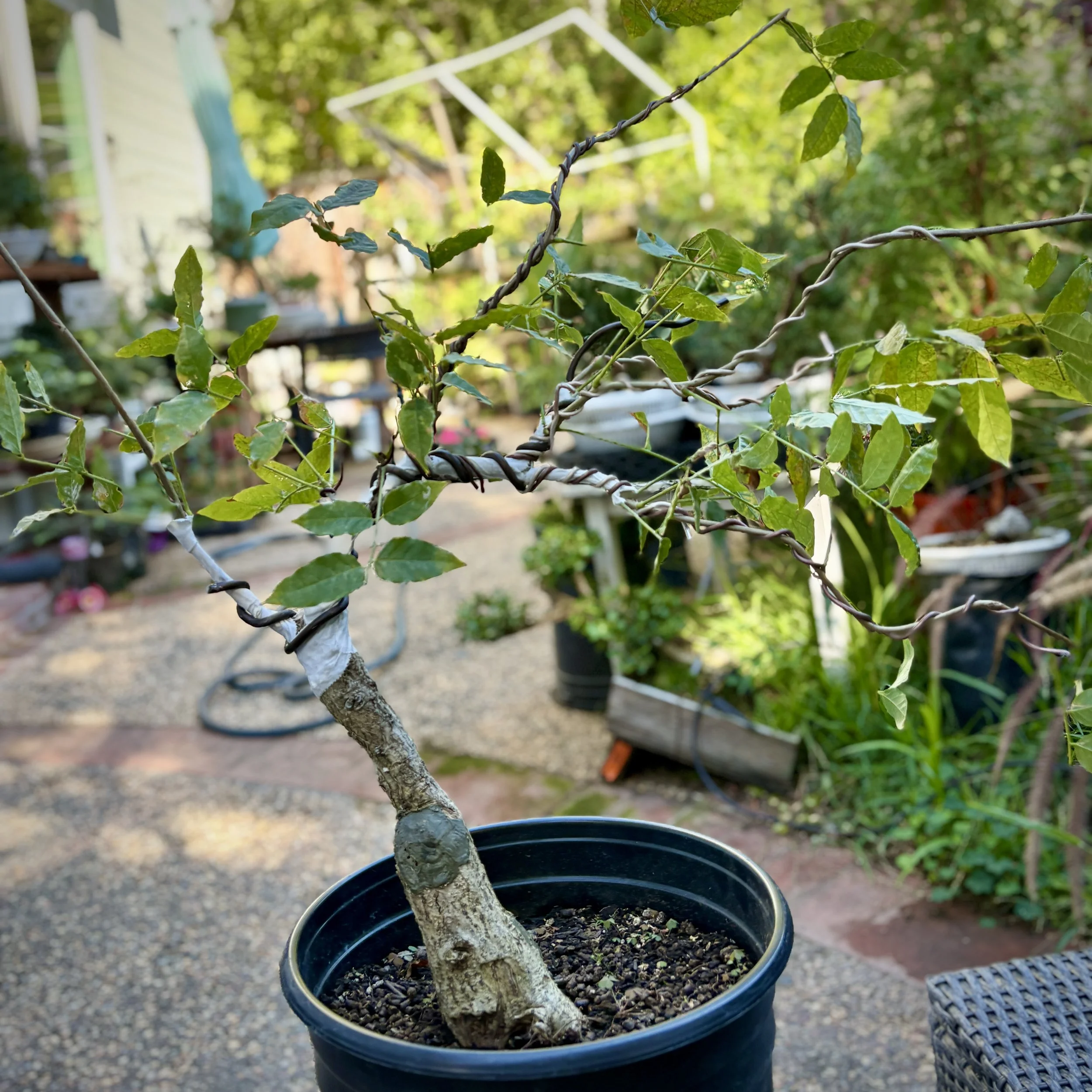
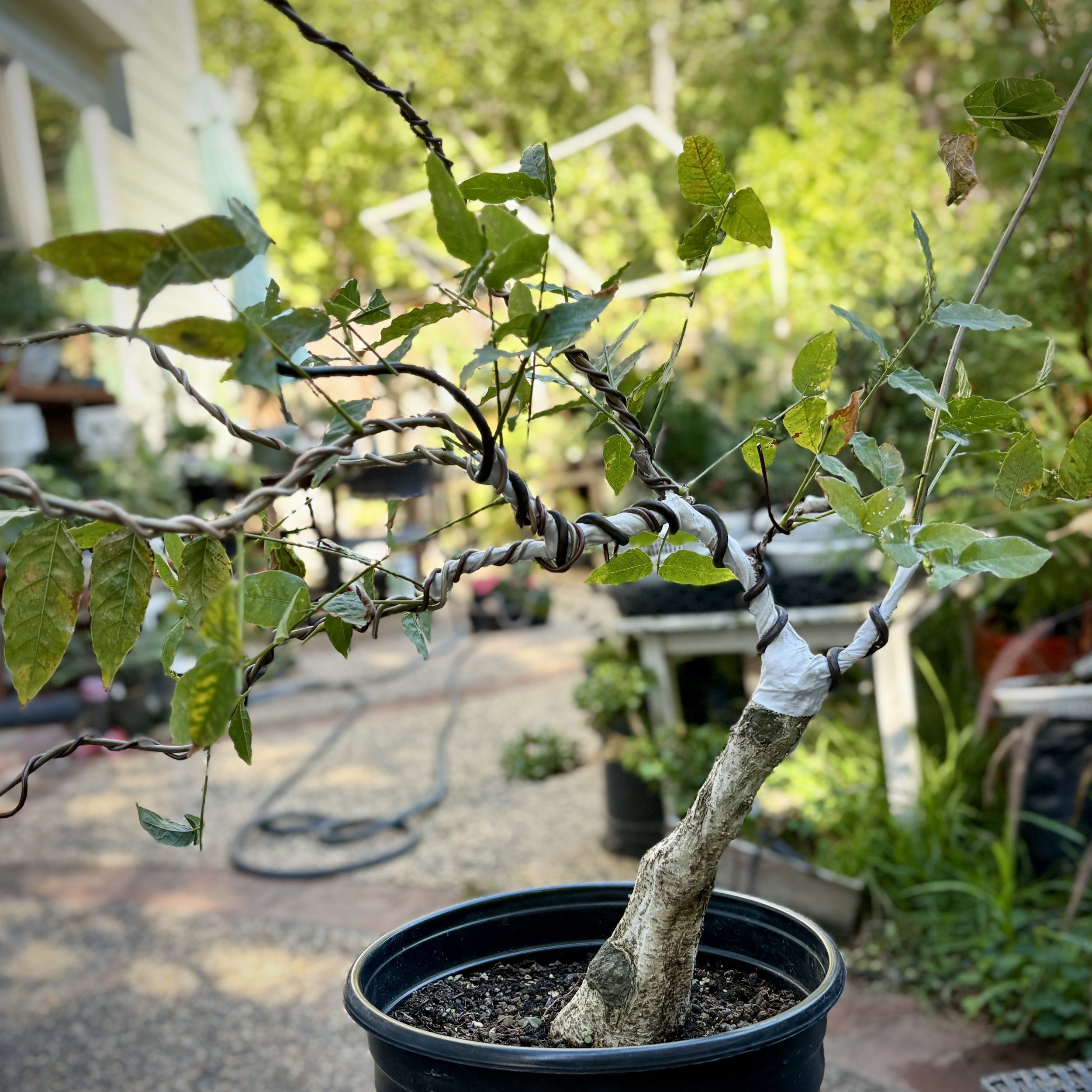
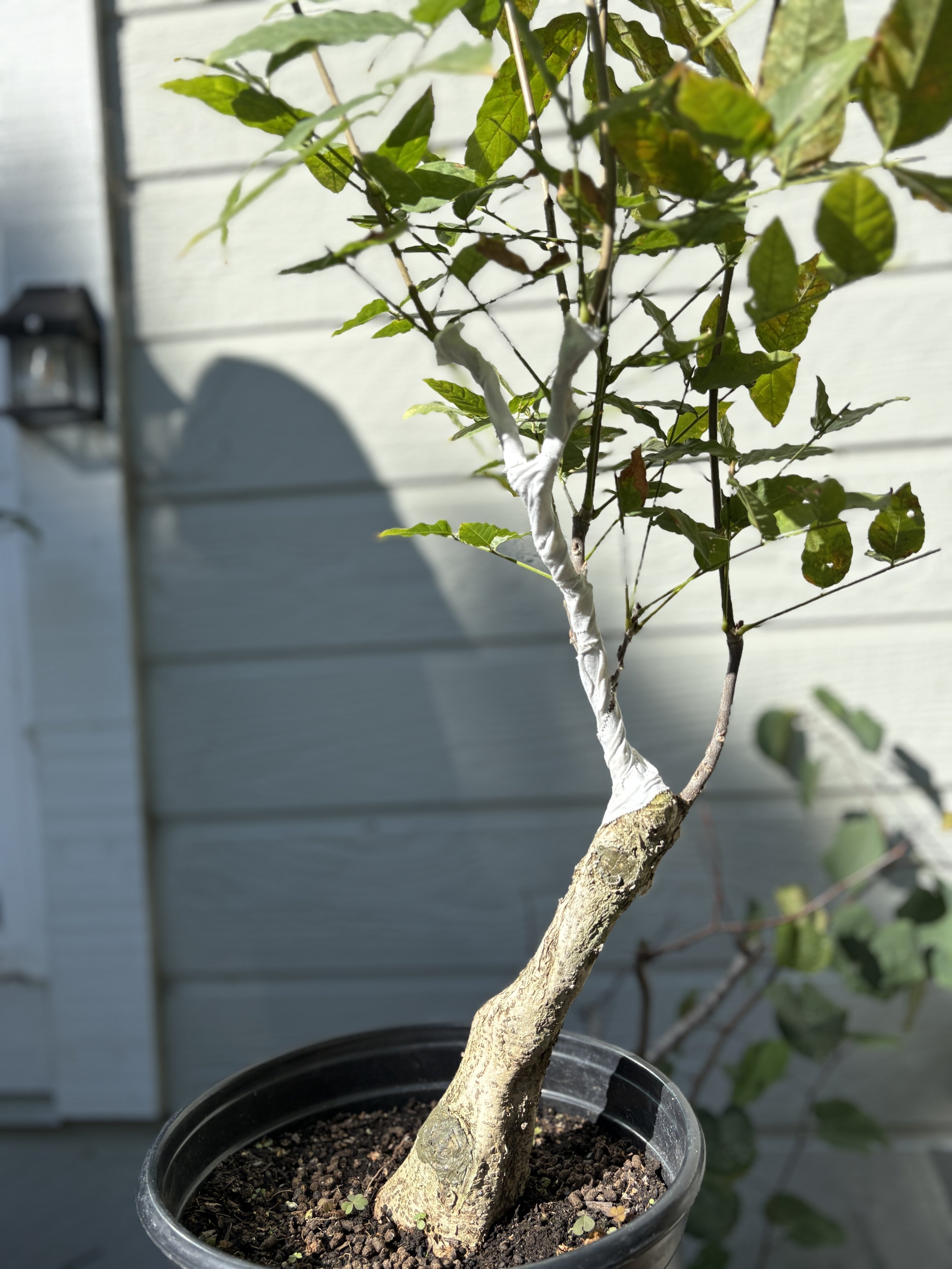
Oct 2025
Protected with cloth tape first, then large aluminum wire
Flexed branches a little, side to side
Bending still resulted in crackling sounds. Attempted to torque the wired branch to prevent a straight break. Will let it heal.
2025045
Care
Full sun, but shade roots from heat.
Soil: free-draining, pH 6.0–7.0.
Repot late winter every 2–3 years.
Control nitrogen → more flowers.
Artificial dormancy may be needed for strong blooms.
Do not prune off short spurs in winter.
Keep in as large a pot as possible (Wisteria flowers more when slightly root-bound).
Watering:
Spring–Summer (active growth/flowering): Keep soil evenly moist, not soggy. Wisteria is thirsty, especially in bloom.
Fall–Winter (dormant): Reduce watering but never let the rootball dry out completely.
Fertilization:
After flowering: Balanced organic fertilizer (e.g., 10-10-10) every 2 weeks.
Avoid high nitrogen before flowering → this pushes leaves and shoots instead of flowers. Use a low-nitrogen, high-phosphorus feed (like 3-10-10) from late winter until after bloom.
Repotting
In zone 10a, this may be late January–February, before active growth starts.
Carefully remove from pot, comb out circling roots.
Prune back 30–40% of roots, prioritizing thick ones.
Refresh soil with fast-draining mix.
Water thoroughly, place in partial shade for 1–2 weeks before moving back to full sun.
Healing (Bonssi Nut)
Does not heal pruning wounds well, especially large cuts. The soft, porous wood is highly susceptible to rot, which can hollow out the trunk over time.
The most effective way to heal a wisteria is let it grow with no intervention, preferably in the ground.
Wisteria aren't trees. They are vines. They don't produce "wood" like trees do, as they don't need it to support their physical weight, as trees do.
They rely on other objects and trees to support them. That means any wood they do make is very weak. Their advantage is their ability to produce a lot of growth in a short time.