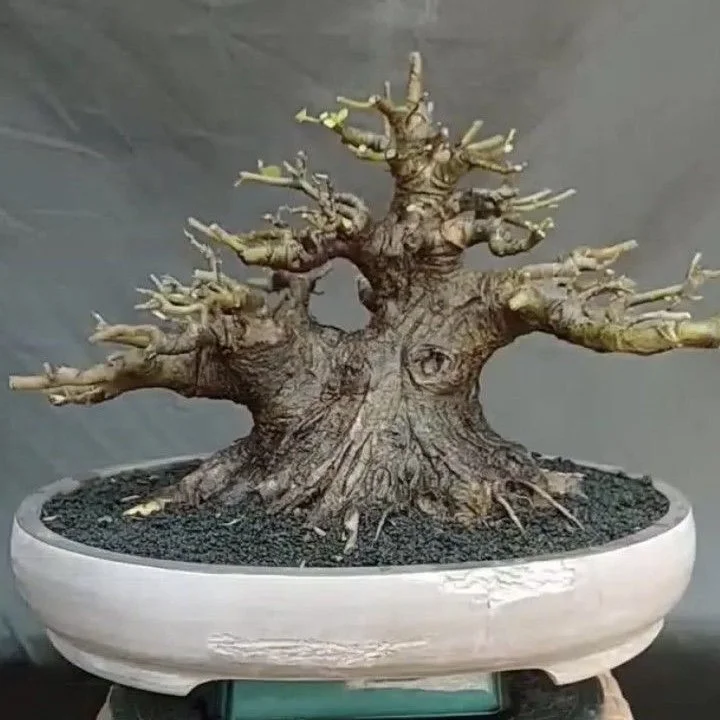
⭐️ Olive Shohin, #2528
Gerry Fields’ estate, Olive in ground, “you dig”. Oct 31, 2025.
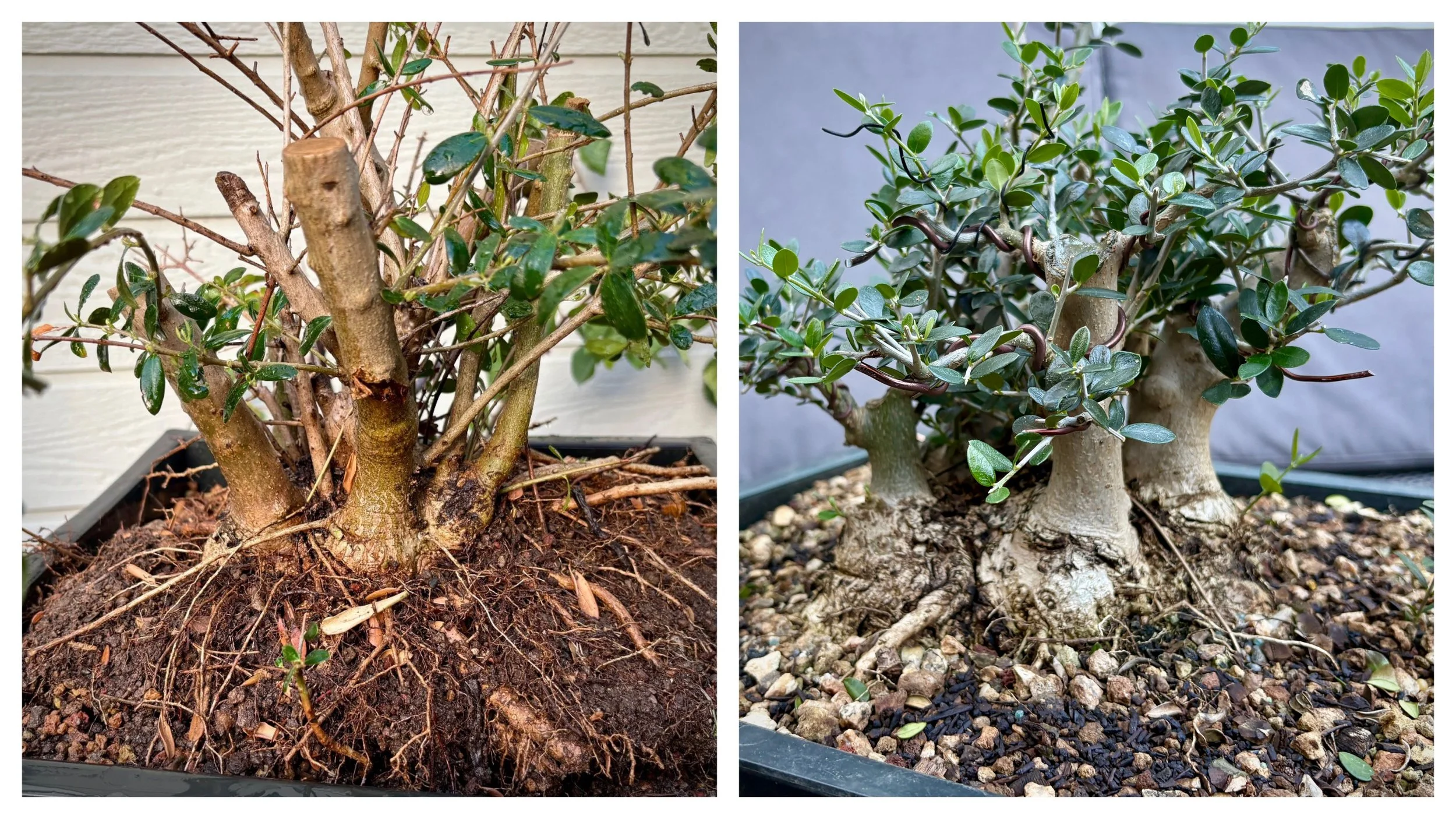
Aug 19, 2026
Wired lateral branches down and with movement
Need to let these grow out; other clump side lacking lateral branches should hold off pruning and wire outwards
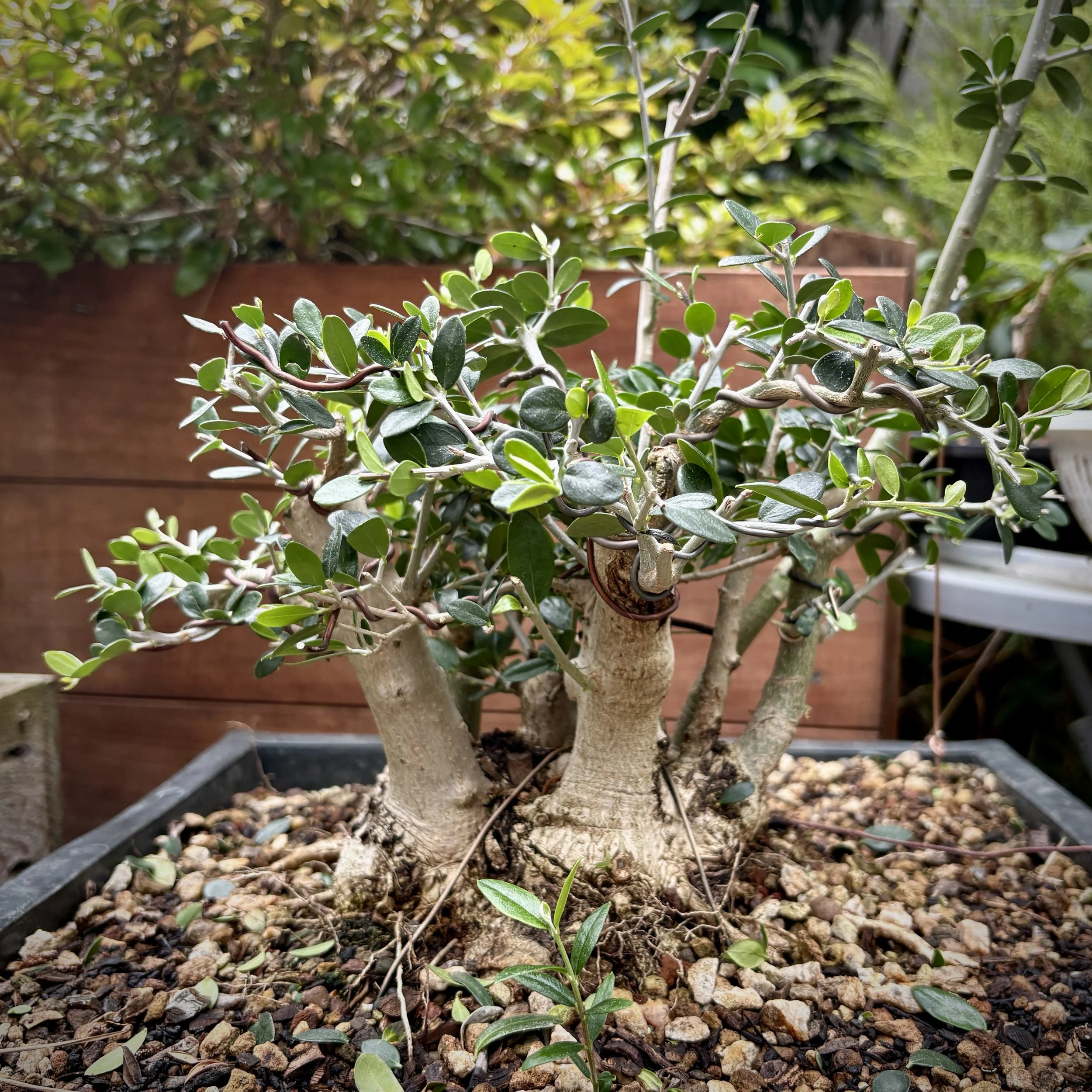
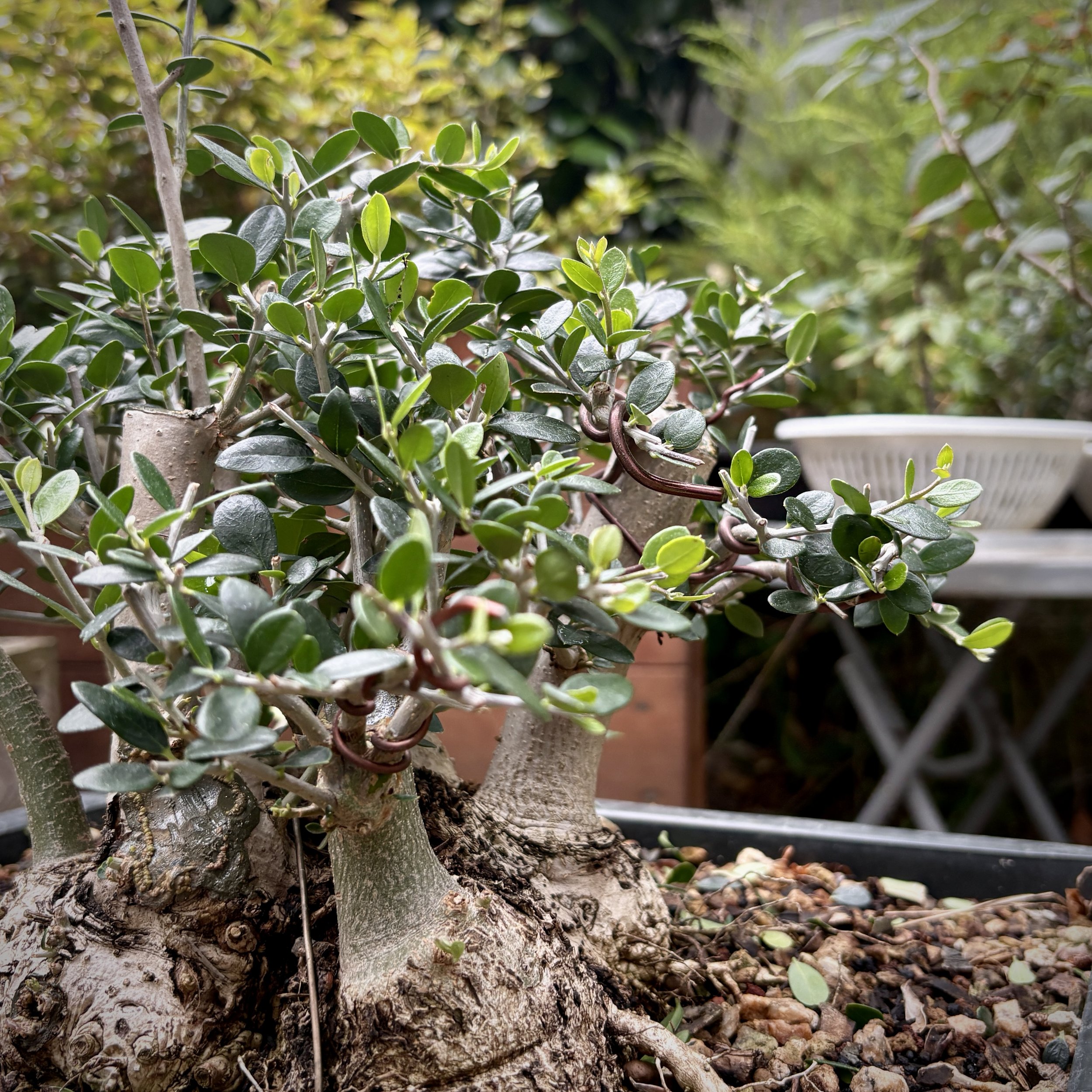
Aug 8, 2026
Need to develop primary branches outwards, and choose one apex.
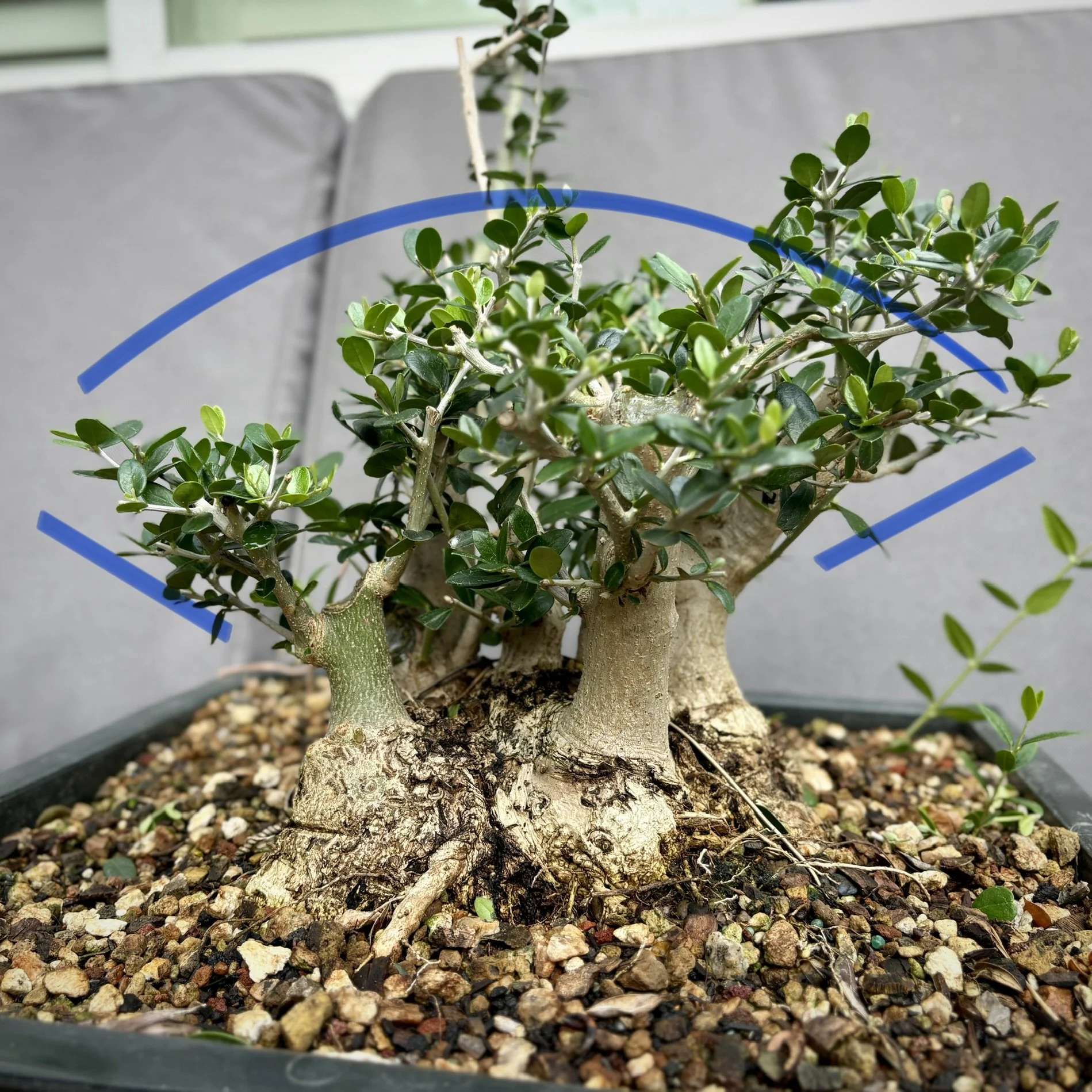
Need to fill out the canopy, so let branches grow longer on the left
Prune back the top right growth
Sacrifice branch in the center is to bulk up a gap in trunks—if needed
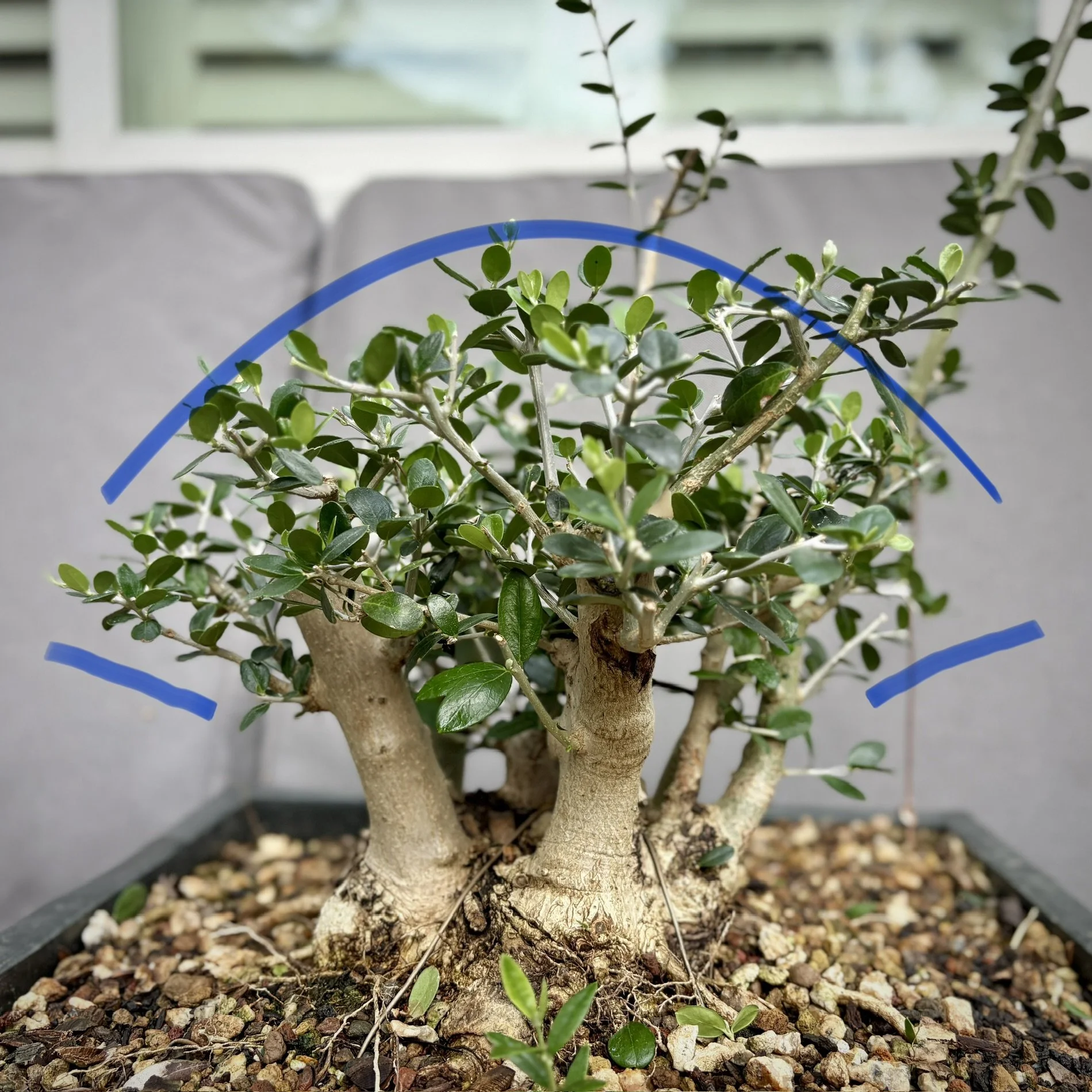
Looking good
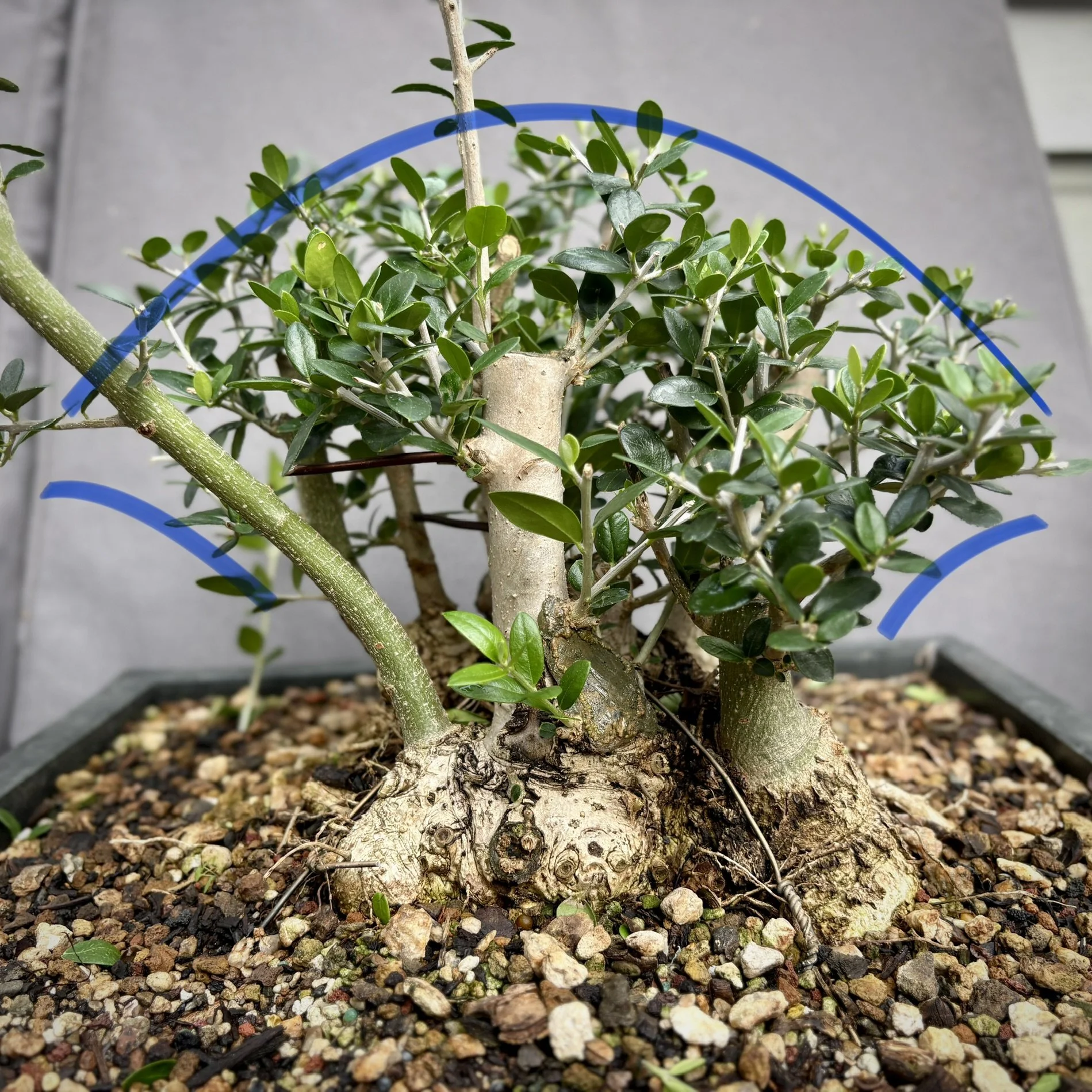
Need to check the height for Shohin, but that large central trunk may be too tall
May 22, 2026
Reduced new growth to 2 leaves
Elongated sacrifice branches are to thicken trunk to balance out with others
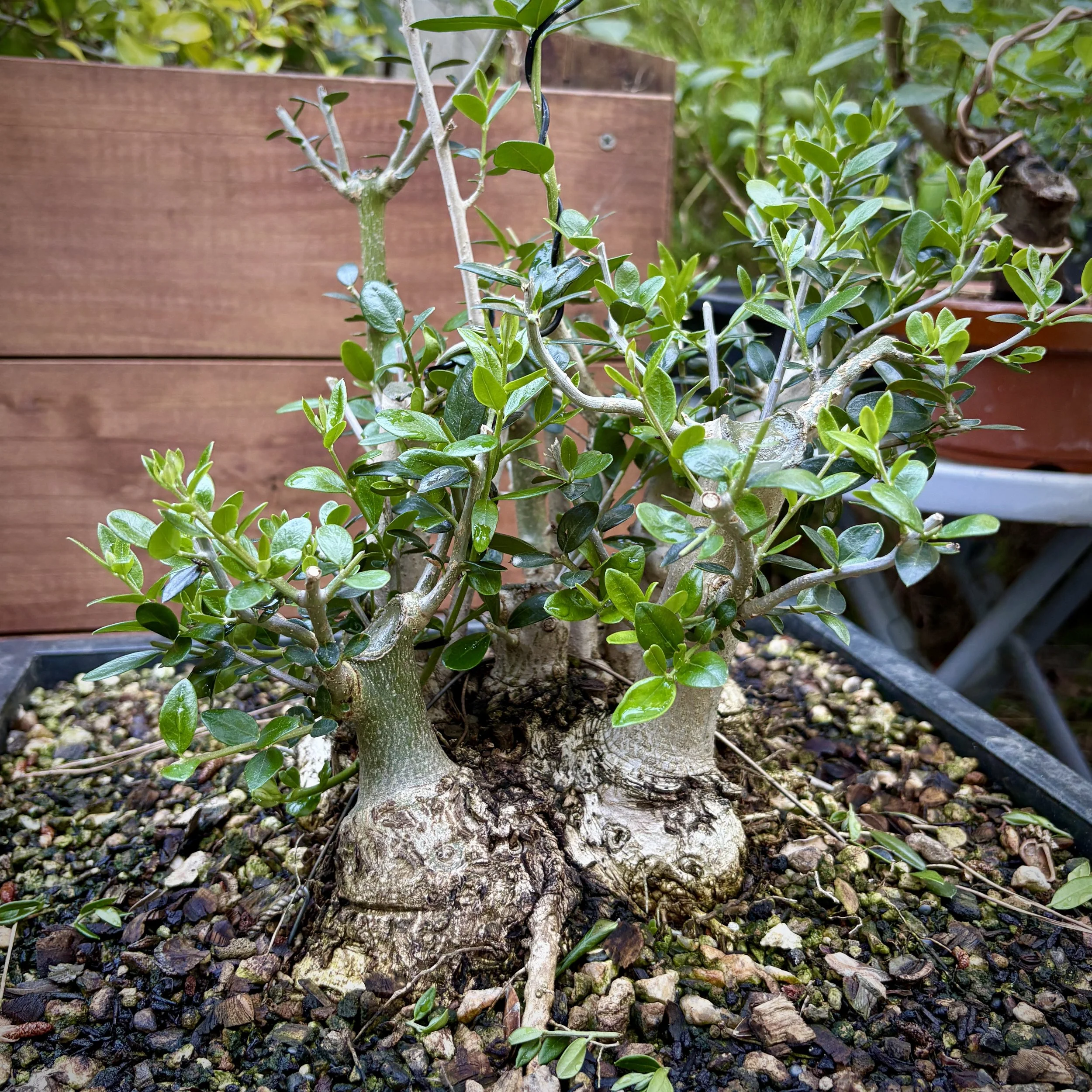
Apr 11, 2026
Removed all wires
A lot of new growth and elongated branches growing vertical
Pruned back to encouraging bifurcation
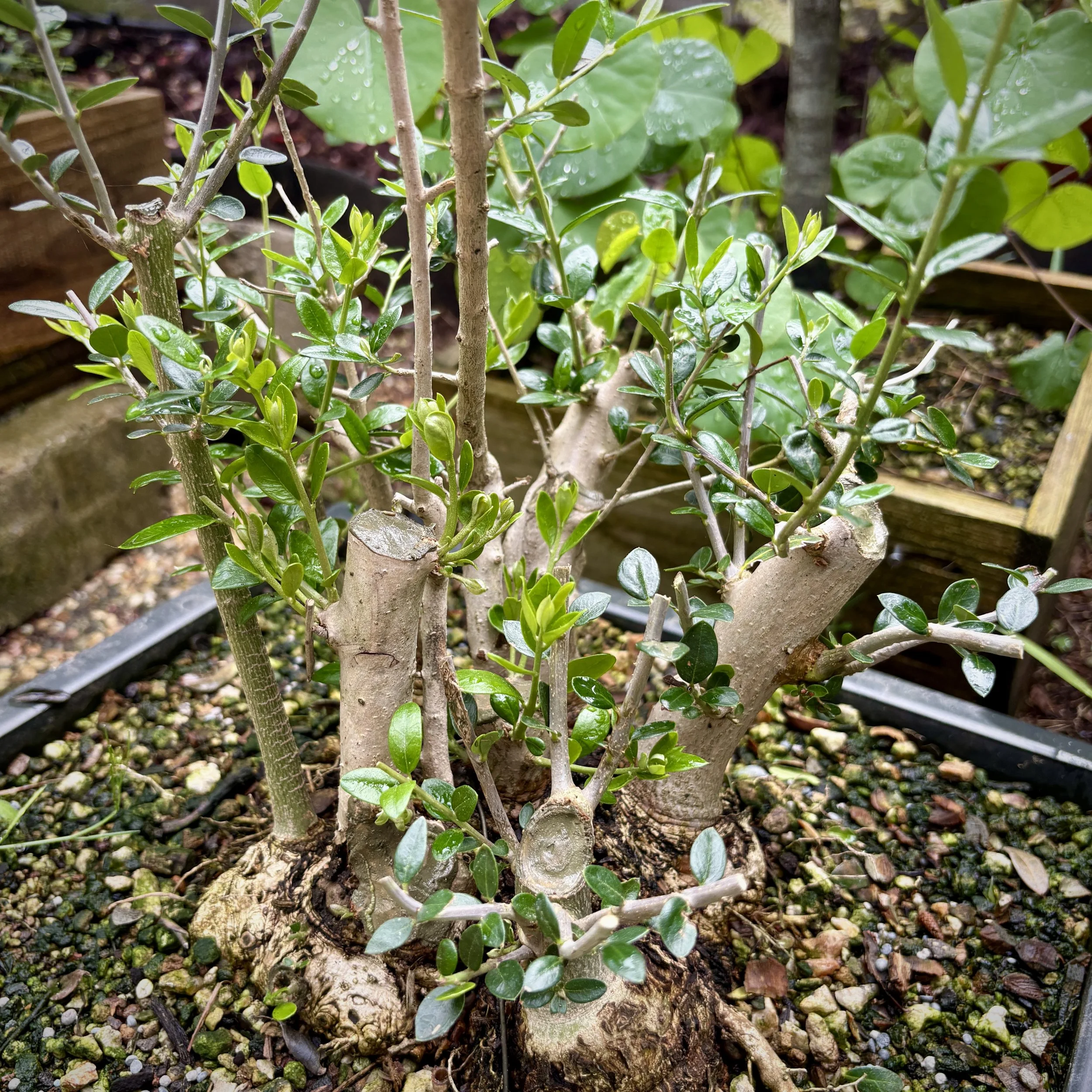
Feb 22, 2026
Removed major wires
Small branches added to spread out from short trunks
Dec 28, 2025 Clean Up
Fresh buds and small branches
Eliminate messy, crossing trunk
Trunk lengths & direction to expect ramification for finally canal it height. Possible Shohin (8”~10”) or Kifu (8”-16”)?
Wire lateral branches
Shape & seal branches
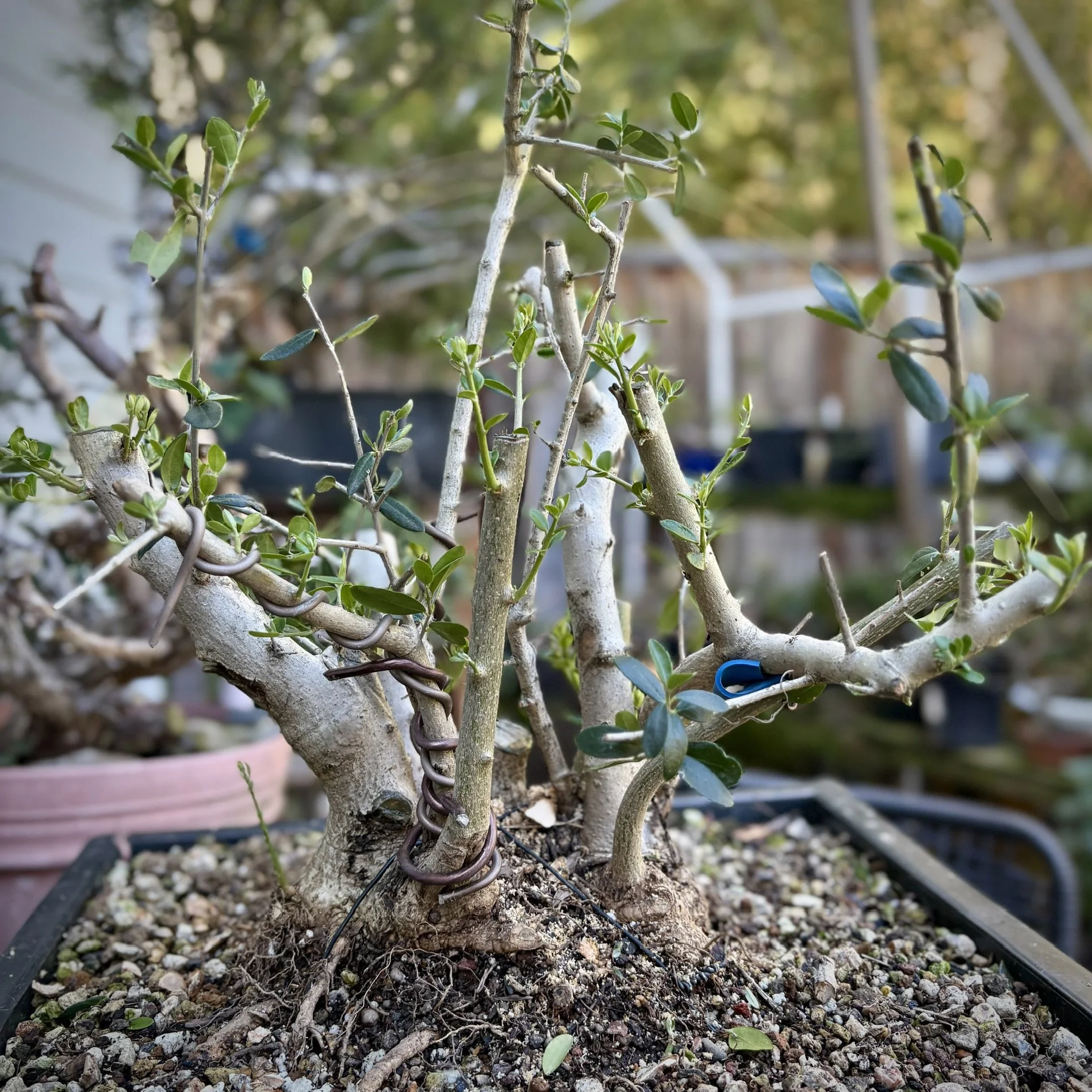
Bent smaller branch “under”’right side branch. Will remove the right side branch in spring.
Removed medium central trunk that bent off center.
Long spindly outer trunks will allow to grow out, then cut back to shape/shorter on the outer border.
Guy wire branches outward, where possible.
Thick trunk on the left should cut short to not grow bigger, but divert energy to smaller branches. Late winter, early spring may be best for this.
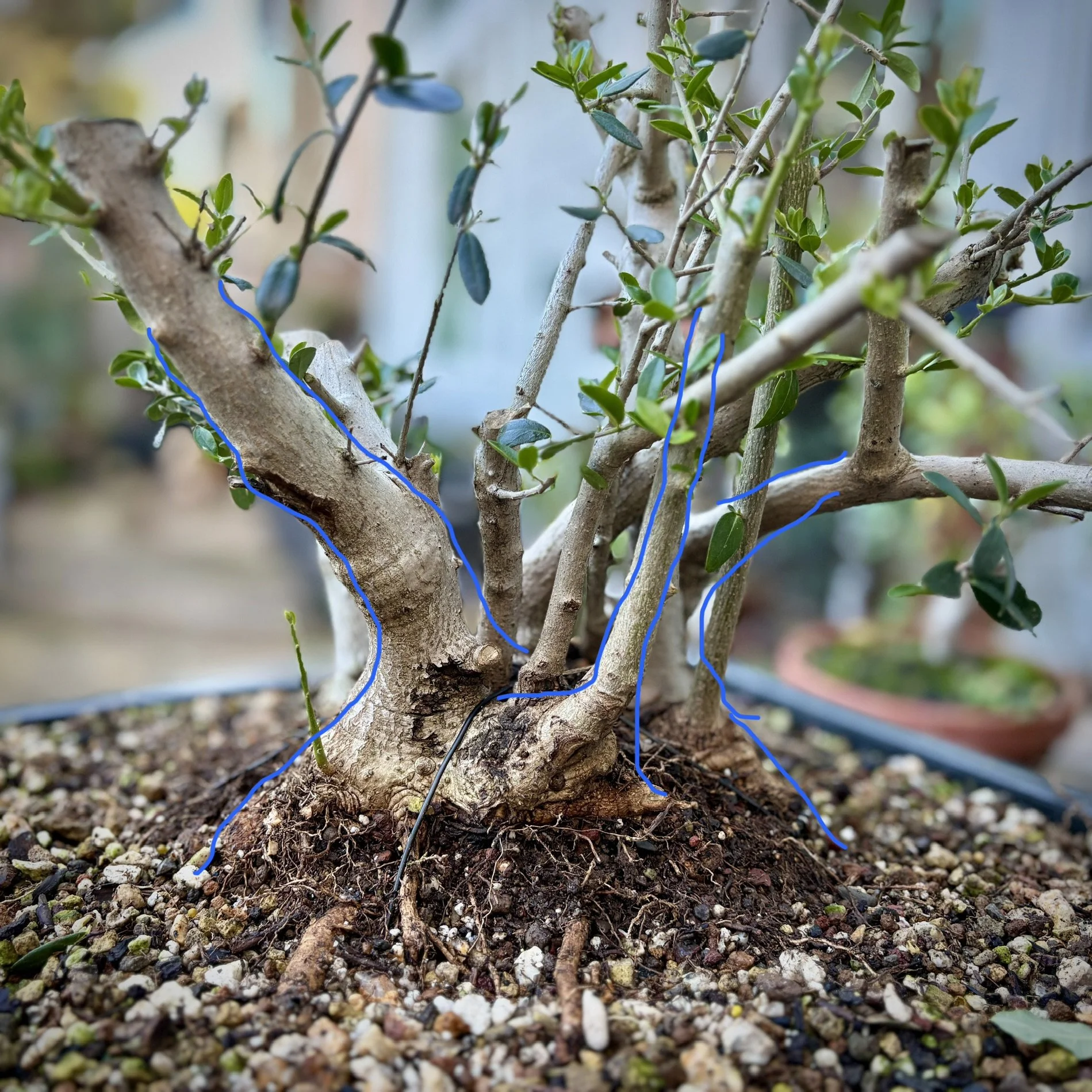
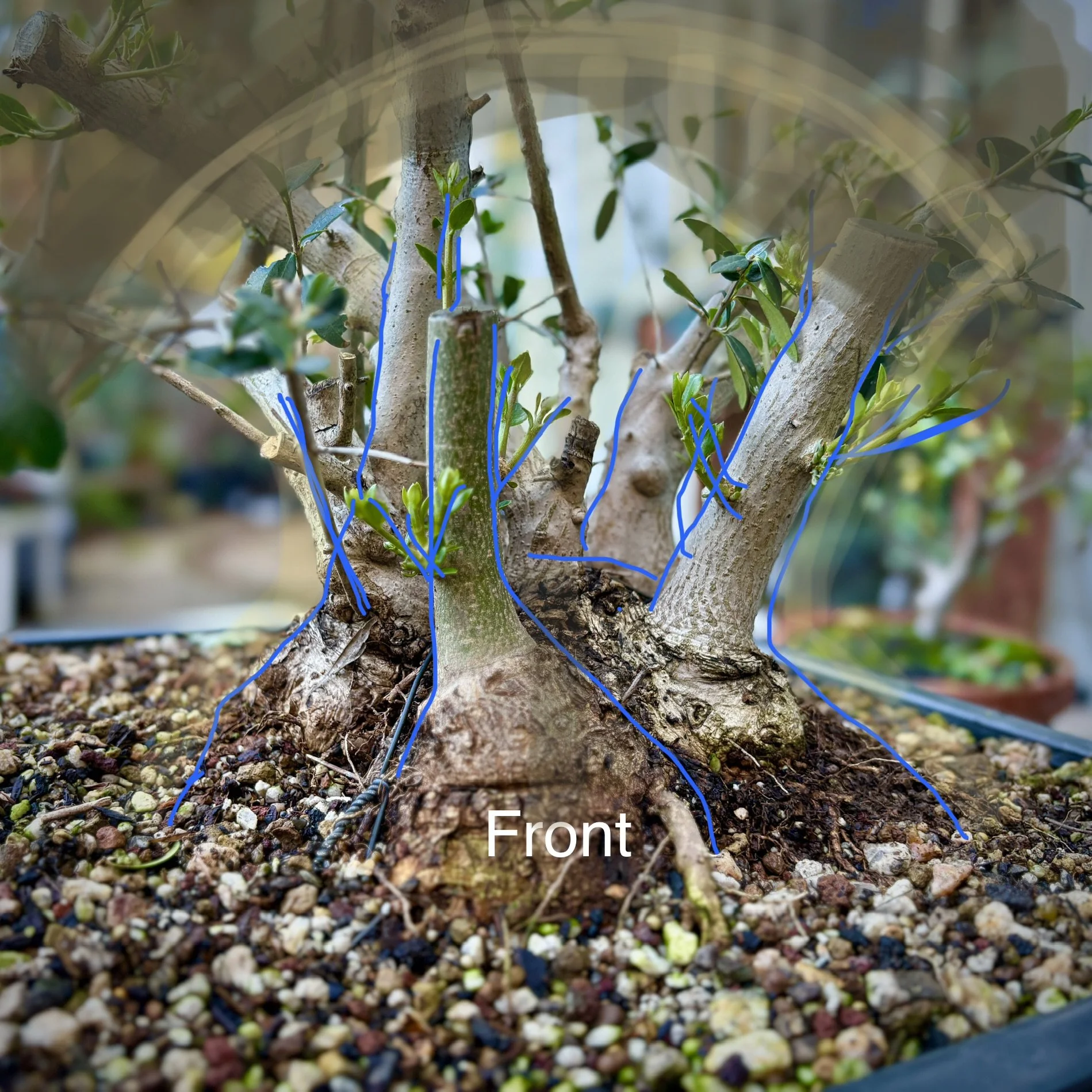
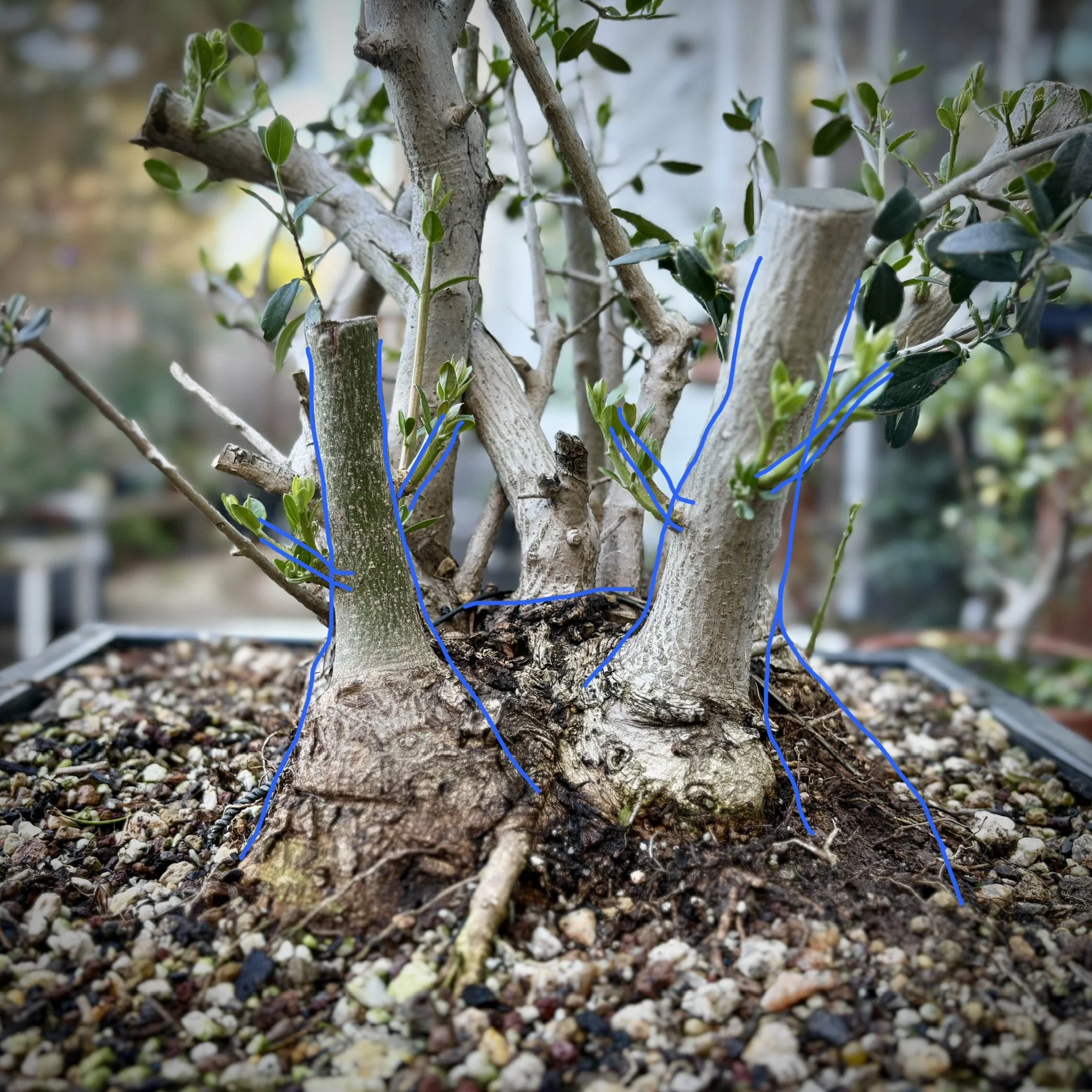
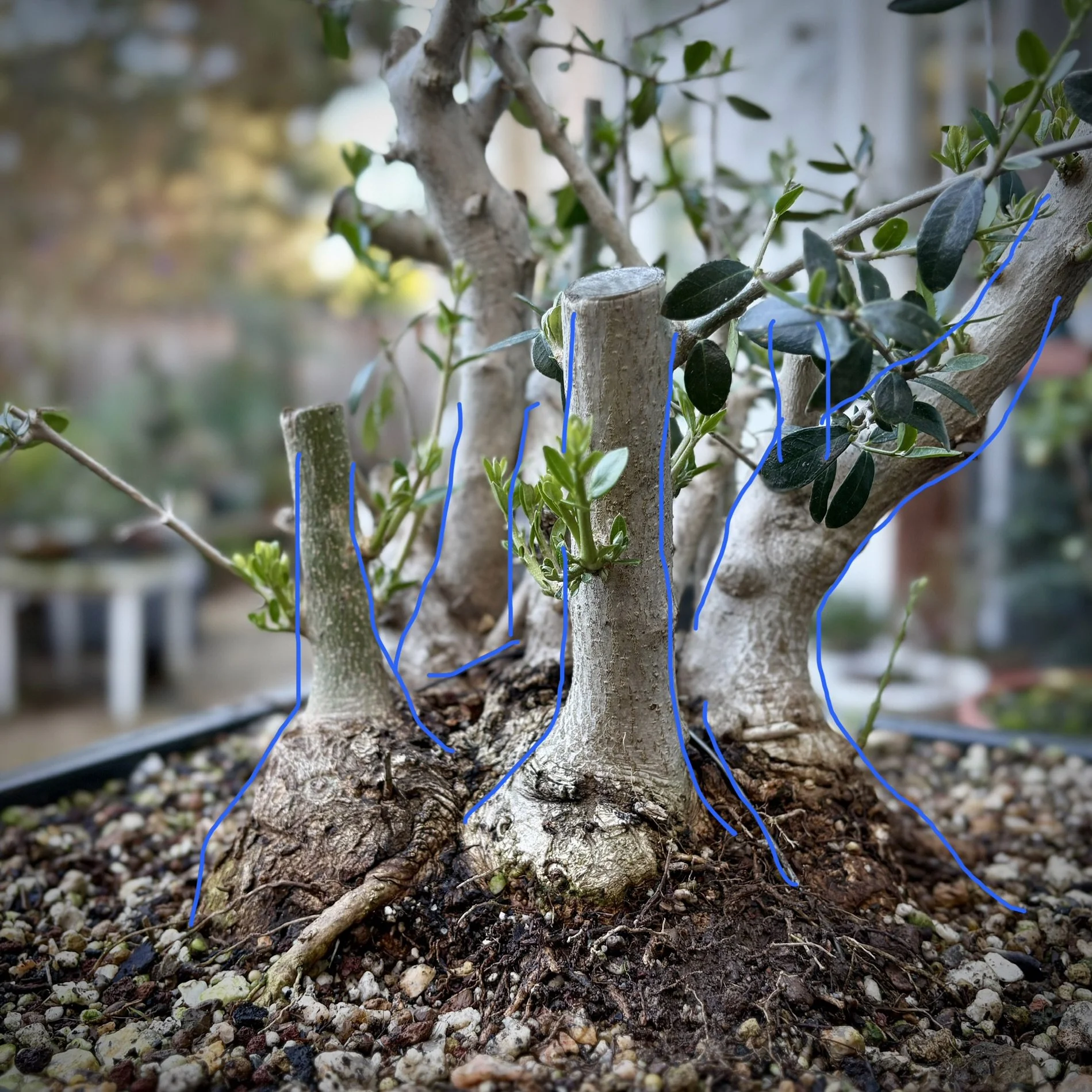
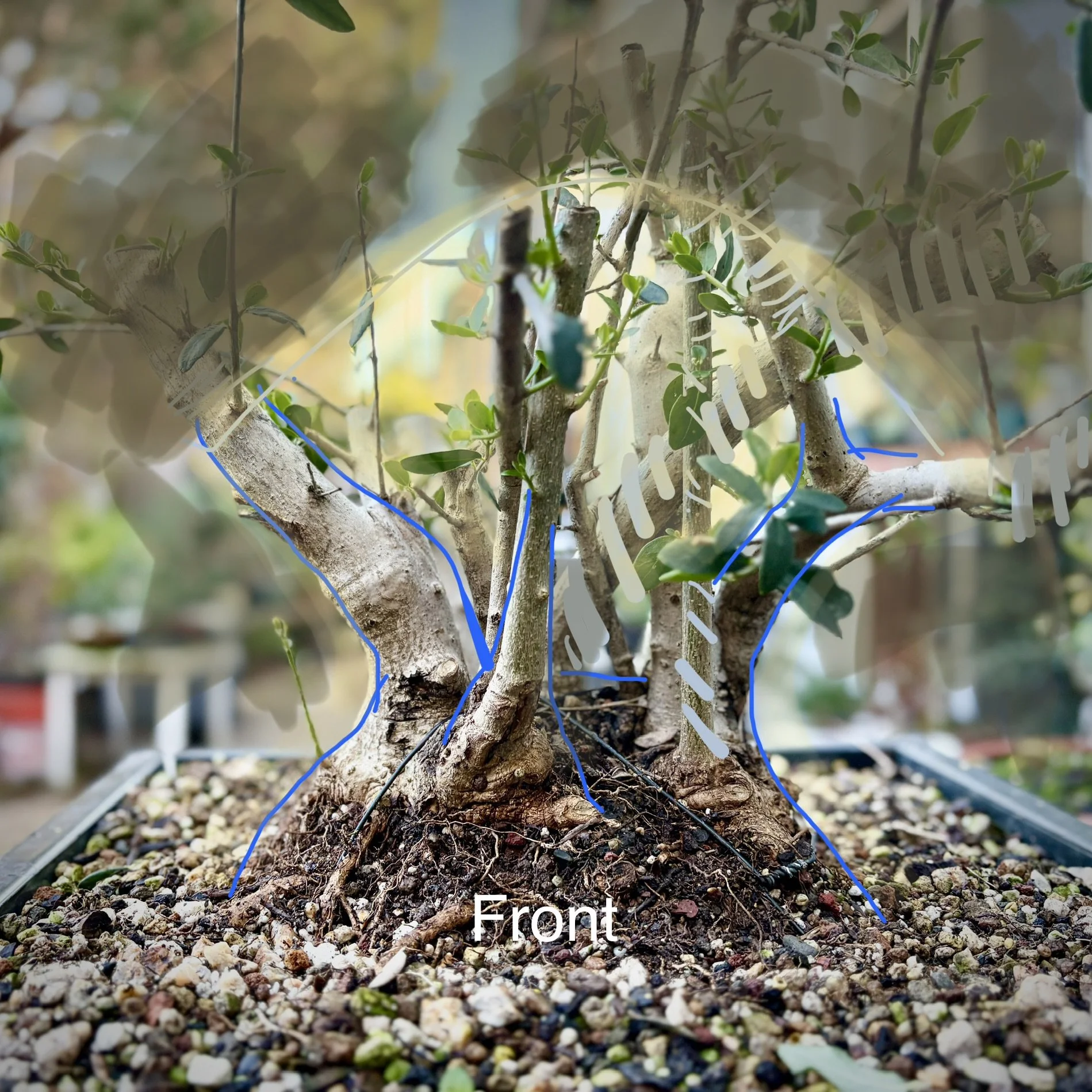
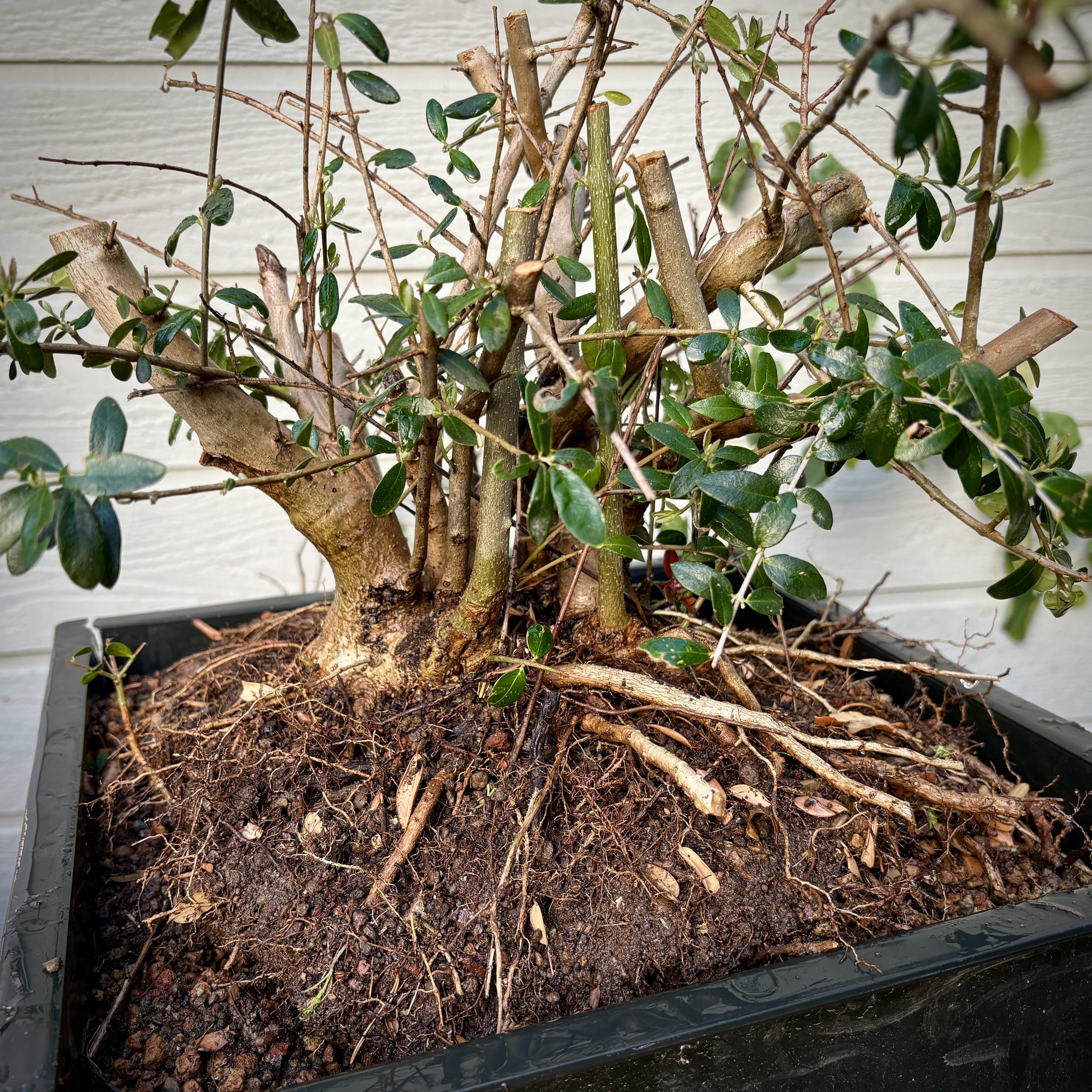
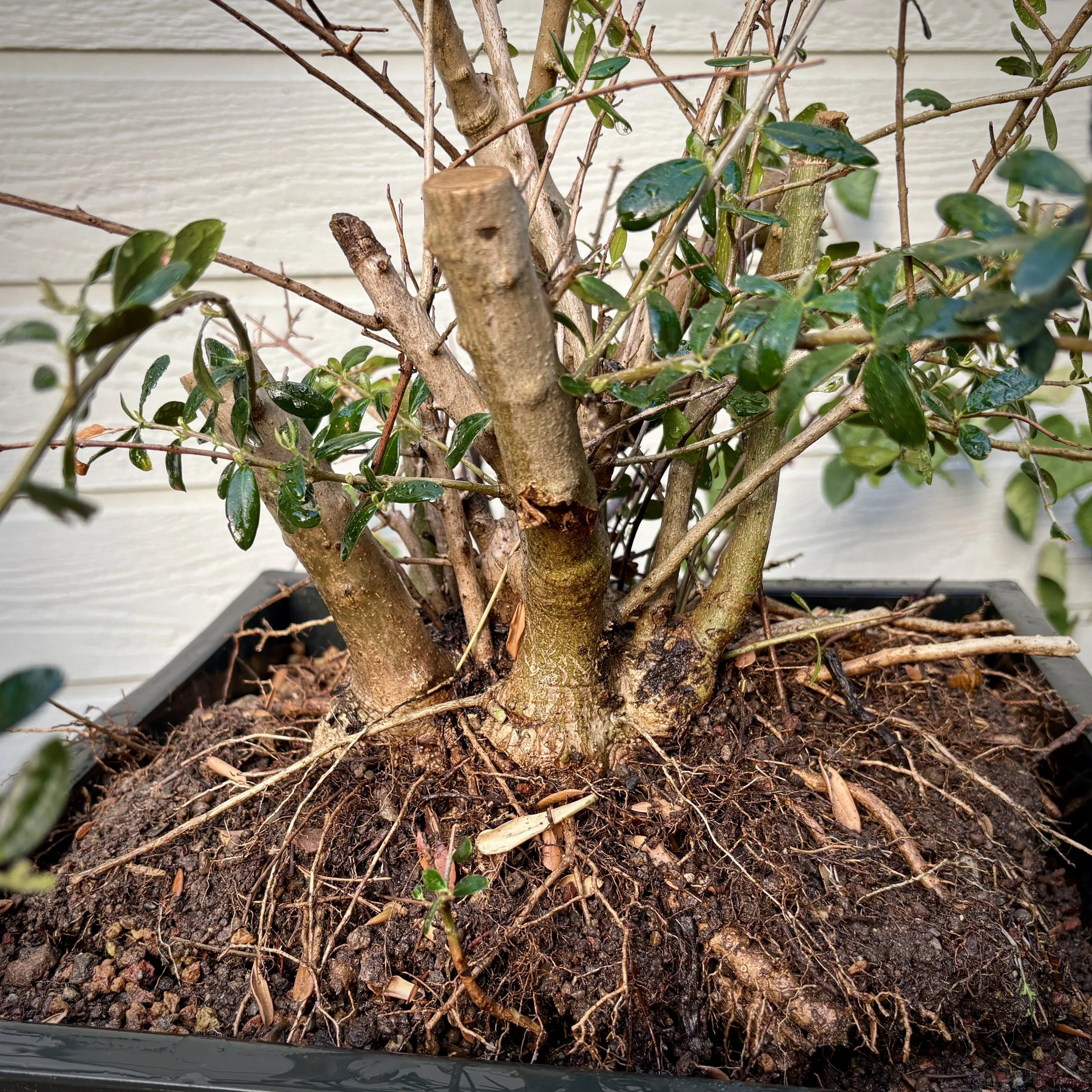
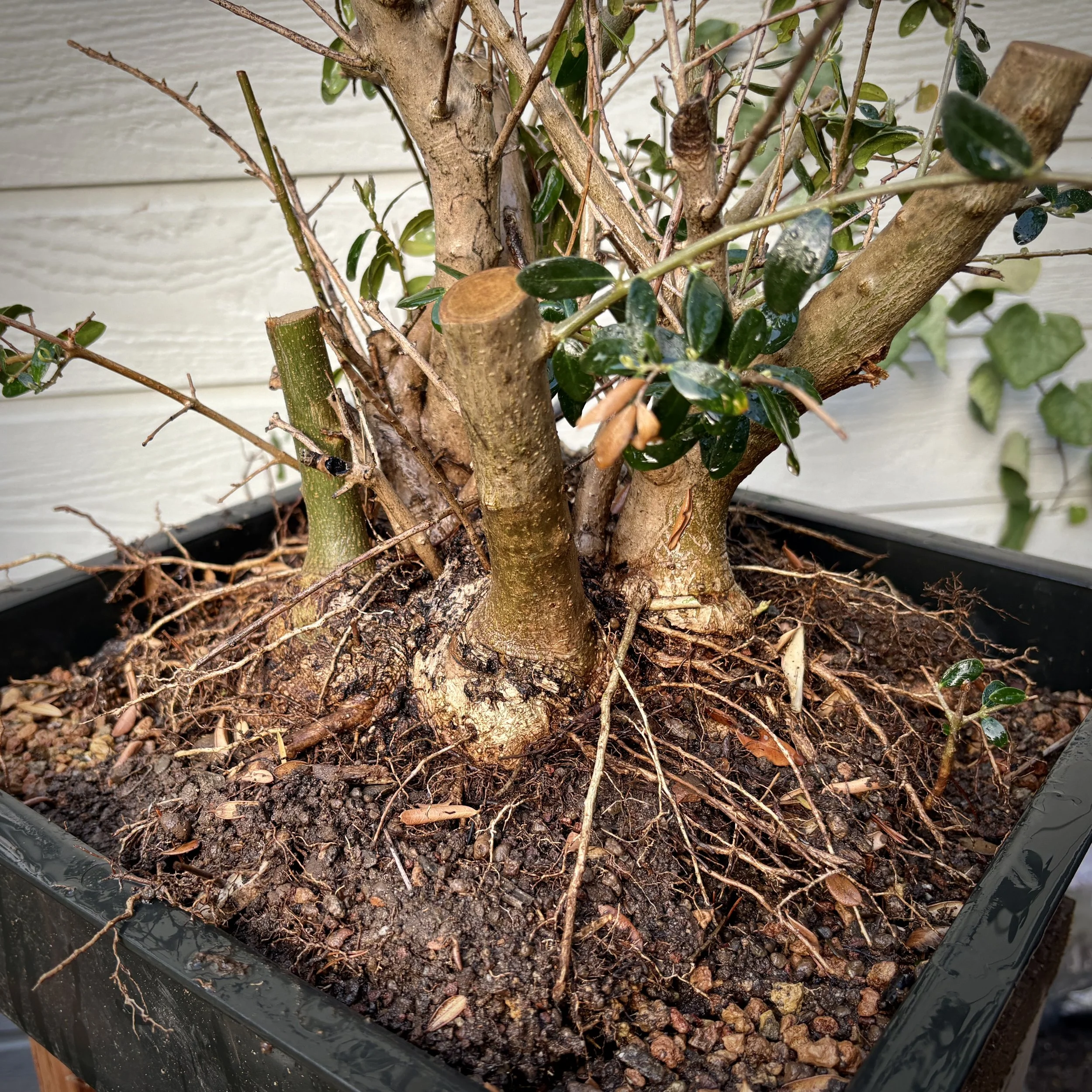
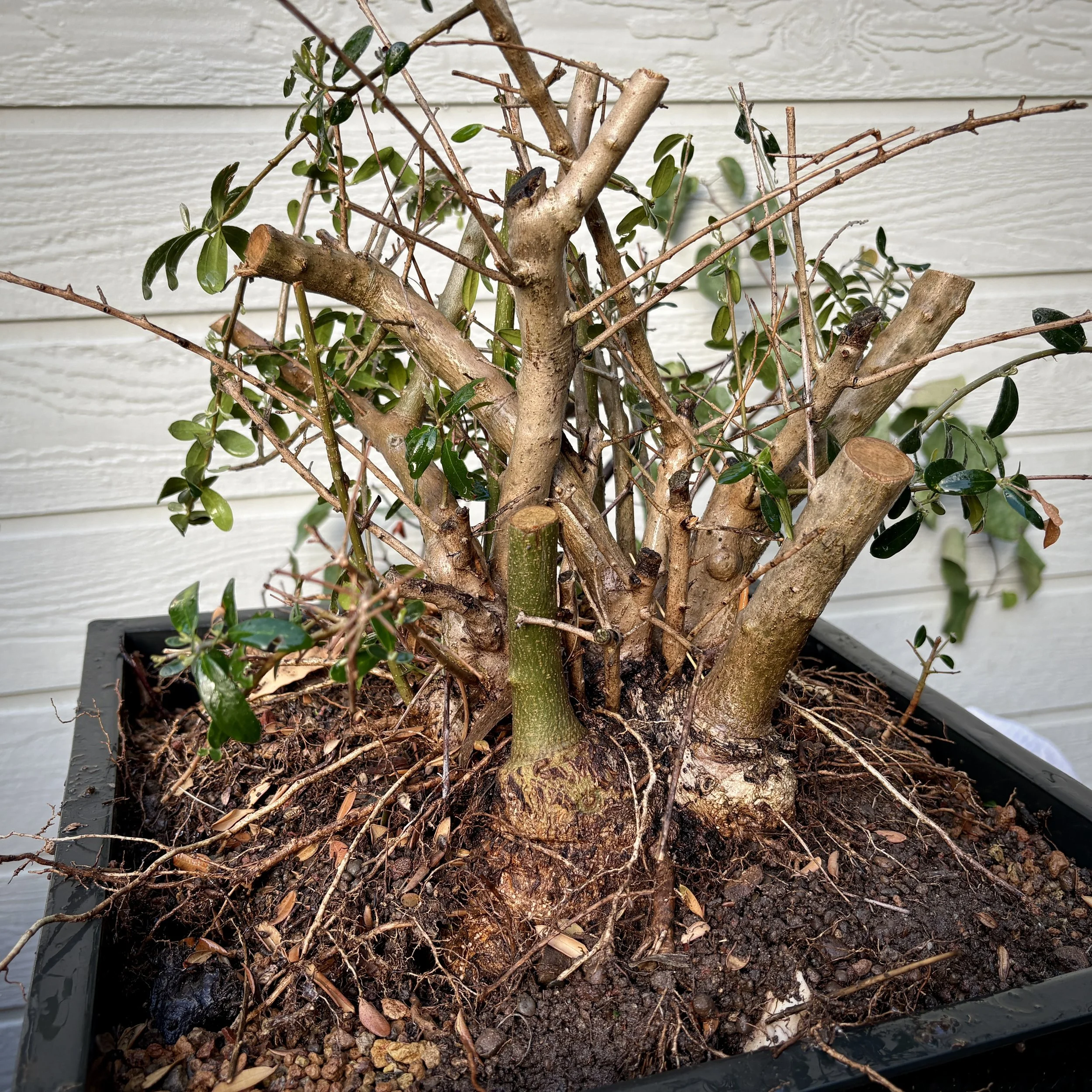
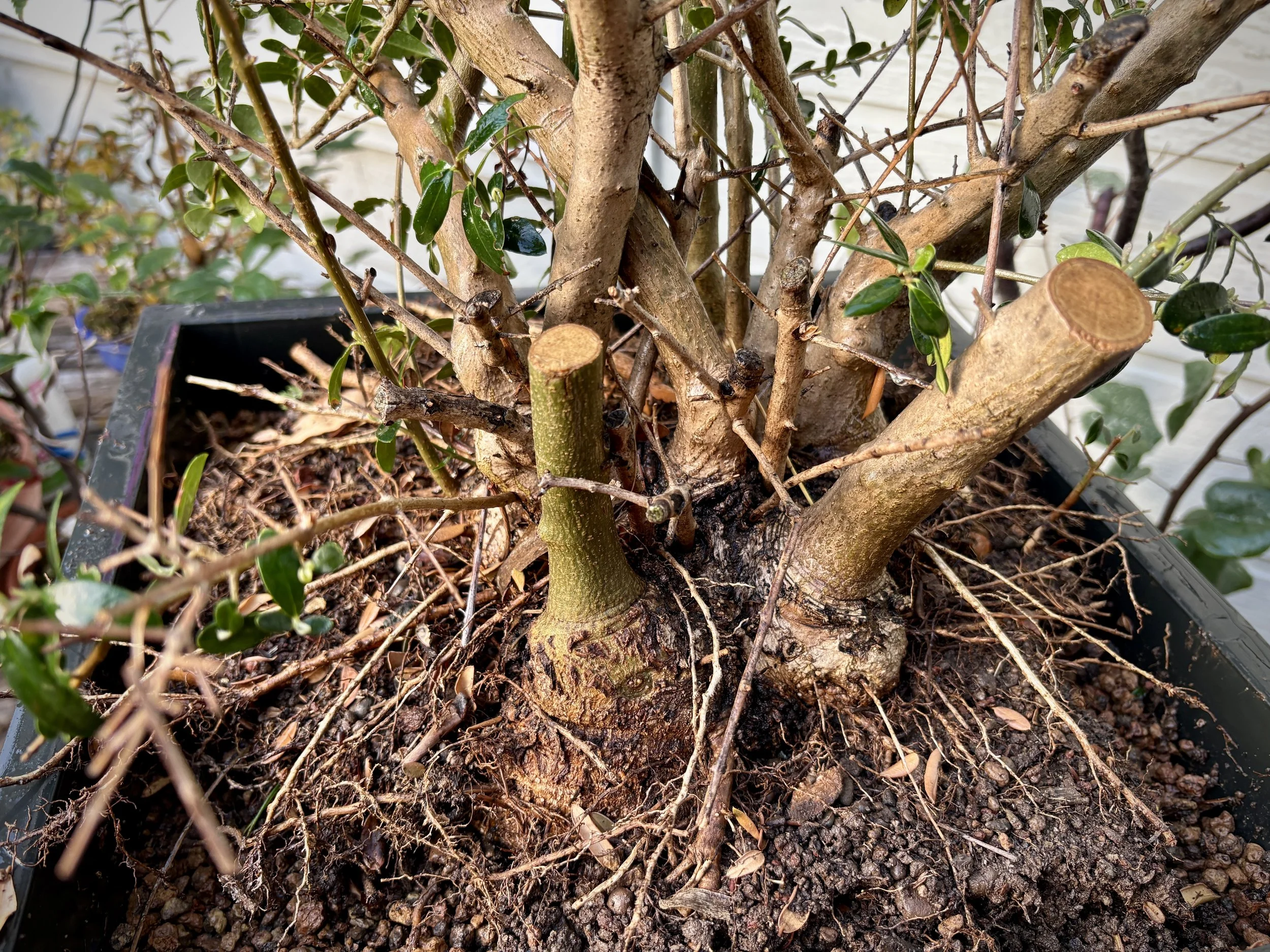
2025040
Consulted Cesar Ordonez of CenCal Bonsai
“hey bro! so you just dug it out right? and you mean repot in spring? i would leave it on there for a year but u can definitely repot it next year but i wouldn’t do spring id so summer after it grows strong, in terms of the design is tough to see in pic but definitely looks like u can use some but not all branches in the design and yeah it can be a single apex but made up of several branches each making their piece of the whole design if that makes sense.”
“if u cut of all branches except one for example, like to make a tree out of one trunk it would be too bit ofa base i think for the trunk it would make it look small for the big base.”0
“yeah it seems like theres alot of roots pretty high up and more trunk base down low! u can always cut those higher ones up when u repot!.”
Key Soil Characteristics
Drainage: This is the most crucial factor to prevent root rot, especially during winter. Use coarse, stable components like pumice or expanded slate.
Alkalinity: Olive trees prefer a slightly alkaline pH between 7 and 8. Pumice is naturally slightly alkaline, which helps with this.
Particle size: For shohin, a smaller particle size, around 1/16 to 1/8 inch, is ideal to fit the small pot and allow for proper drainage and aeration.
Inspiration
Bonsai Tonight (Jonas Dupuich)
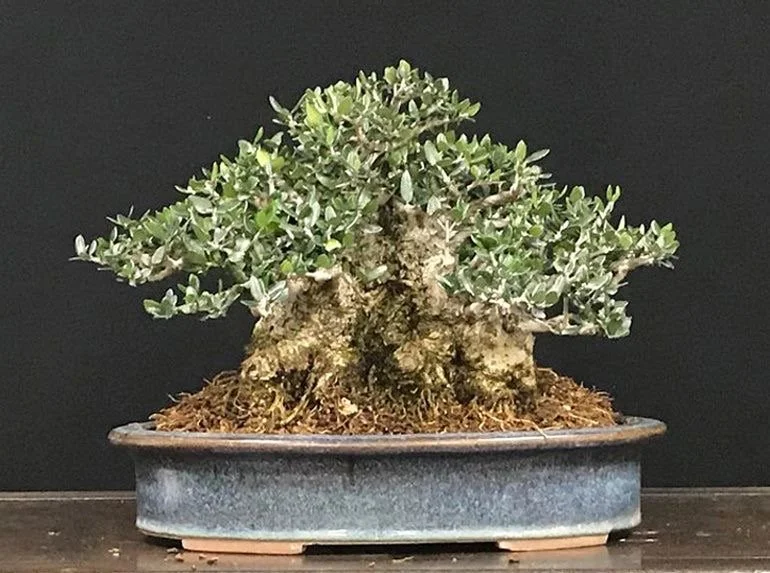

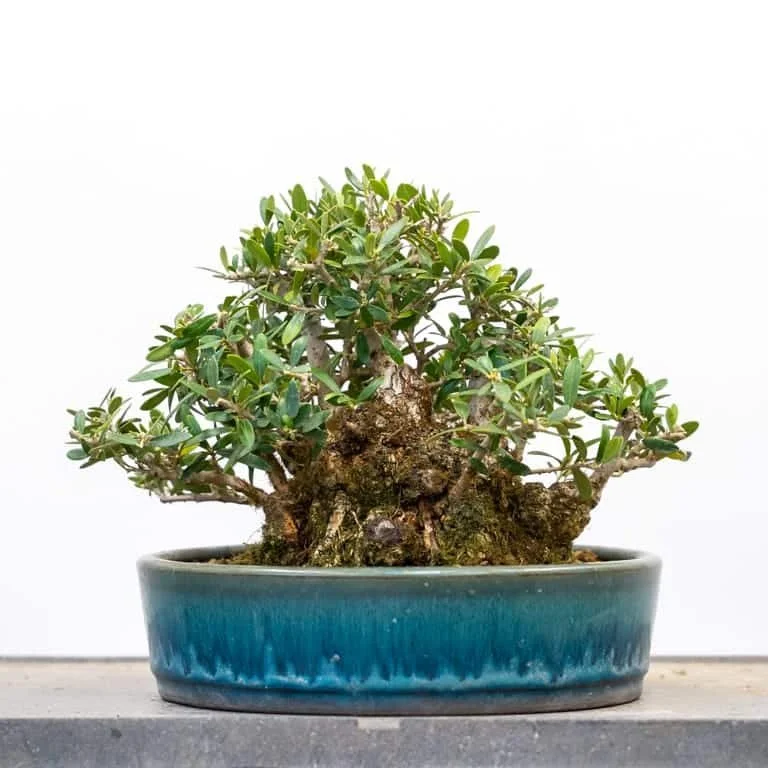
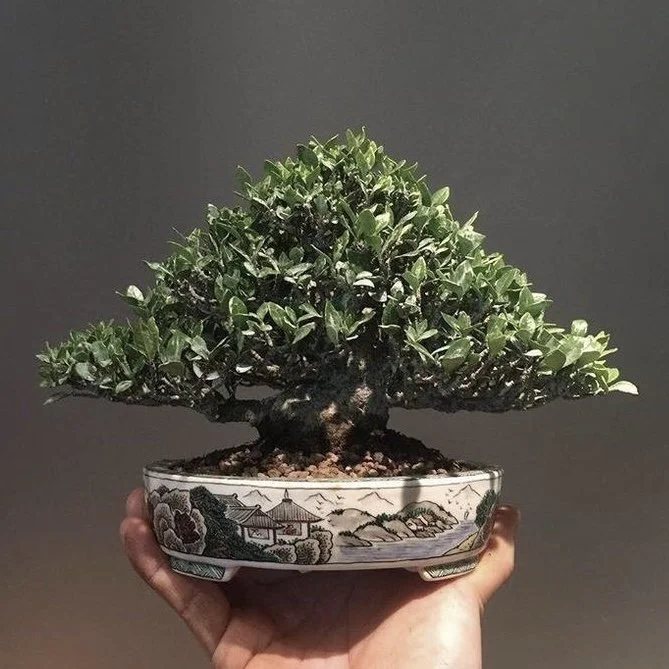


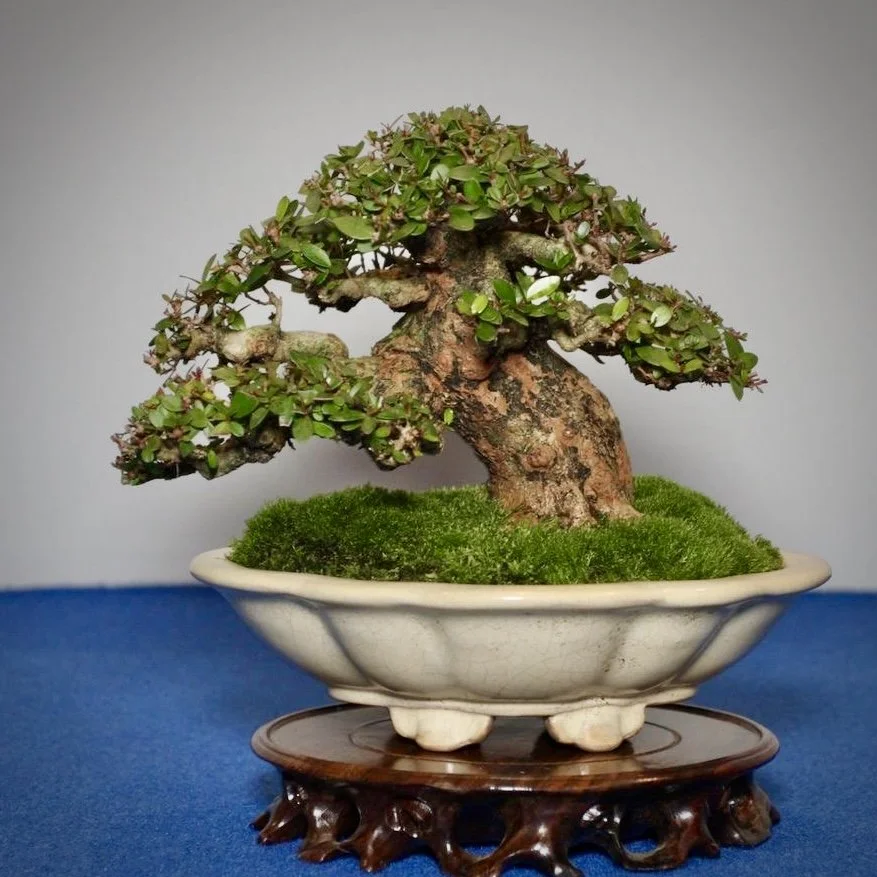
Though not an olive, I assume, below is one way to develop a wide short base into a primary trunk and angular side branches.
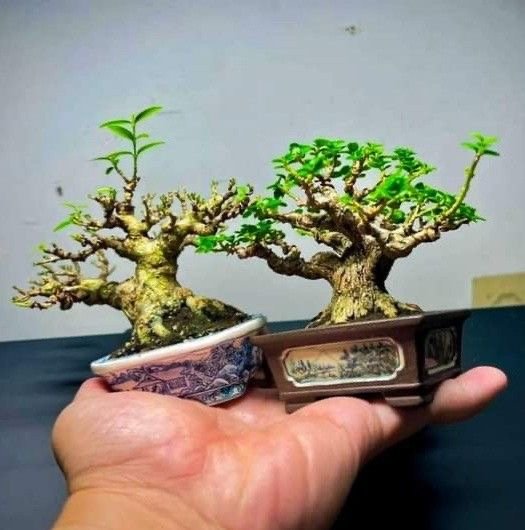
Hardwood Cutting Mame / Shohin
Late spring to early summer, when growth is vigorous.
Wood Type: Semi-hardwood (new growth that's firm but not fully hardened).
Cutting Size: 4-6 inches long, about 1/4 to 1/2 inch thick.
Preparation: Make a clean, angled cut below a leaf node; remove lower leaves.
Rooting the Cuttings:
Rooting Hormone: Dip the cut end in rooting hormone powder or gel.
Medium: Use a sterile, well-draining mix like perlite, pumice, or vermiculite.
Container: Small pot to prevent waterlogging.
Warmth: Crucial for rooting; use a heating mat or warm spot (around 70°F+).
Humidity: High humidity is key; place the pot in a sealed plastic bag (with air holes) or a grow tent.
Light: Bright, indirect light; avoid harsh sun.
Water: Water sparingly, just enough to keep the medium moist but not soggy.
No Fertilizer: Don't fertilize for the first year.
Don't Disturb: Leave them alone until roots are well-established (can take 3-6 months or longer).
Harden Off: Once rooted (check by gently tugging), gradually introduce to normal conditions by poking more holes in the bag over weeks.
Growth: Once rooted, you can repot into a larger pot (not necessarily a shallow bonsai pot yet) to encourage faster root and branch development.