Theory 101
Triads like 1–4–5 are derived from the major scale, not the pentatonic scale.
Why the Major Scale is the Foundation
All diatonic harmony (triads, chord progressions, etc.) comes from the 7-note major scale:
{Major scale degrees: } 1;2;3;4;5;6;7
When you build a triad, you’re stacking every other note (in thirds):
1 chord (I) → 1–3–5
4 chord (IV) → 4–6–1
5 chord (V) → 5–7–2
So a 1–4–5 progression means:
You’re using the I, IV, and V chords from the major scale
Example in C major:
C (I) = C–E–G
F (IV) = F–A–C
G (V) = G–B–D
Where Pentatonic Fits In (and Why It Confuses People)
The pentatonic scale is a subset of the major scale:
{Major pentatonic: } 1;2;3;5;6
Notice what’s missing:
No 4
No 7
👉 That means:
You can’t build full diatonic triads from pentatonic alone
It lacks key chord-defining tones (especially the 4 and 7)
Why Guitarists Mix Them Up
On guitar, especially in blues/rock:
You play pentatonic scales for solos
Over a 1–4–5 chord progression
So your brain links:
“Pentatonic = 1–4–5”
But in reality:
Chords → from the major scale
Melodies/solos → often from pentatonic
A More Accurate Mental Model
Think of it like this:
Major scale = full harmonic blueprint
Triads (1–4–5) = structure (chords)
Pentatonic = simplified melodic language on top
Practical Guitar Insight
When improvising:
Over a I–IV–V progression, the major pentatonic works because:
It avoids “clashing” notes (4 and 7 can create tension)
But the chords themselves still contain those notes
Example:
Over G major:
Chords use B (3) and F# (7)
Pentatonic skips F# → smoother, less tension
Key Takeaway
Triads (1–4–5) come from the major scale
Pentatonic is a simplified subset used mostly for melody
They overlap—but serve different roles
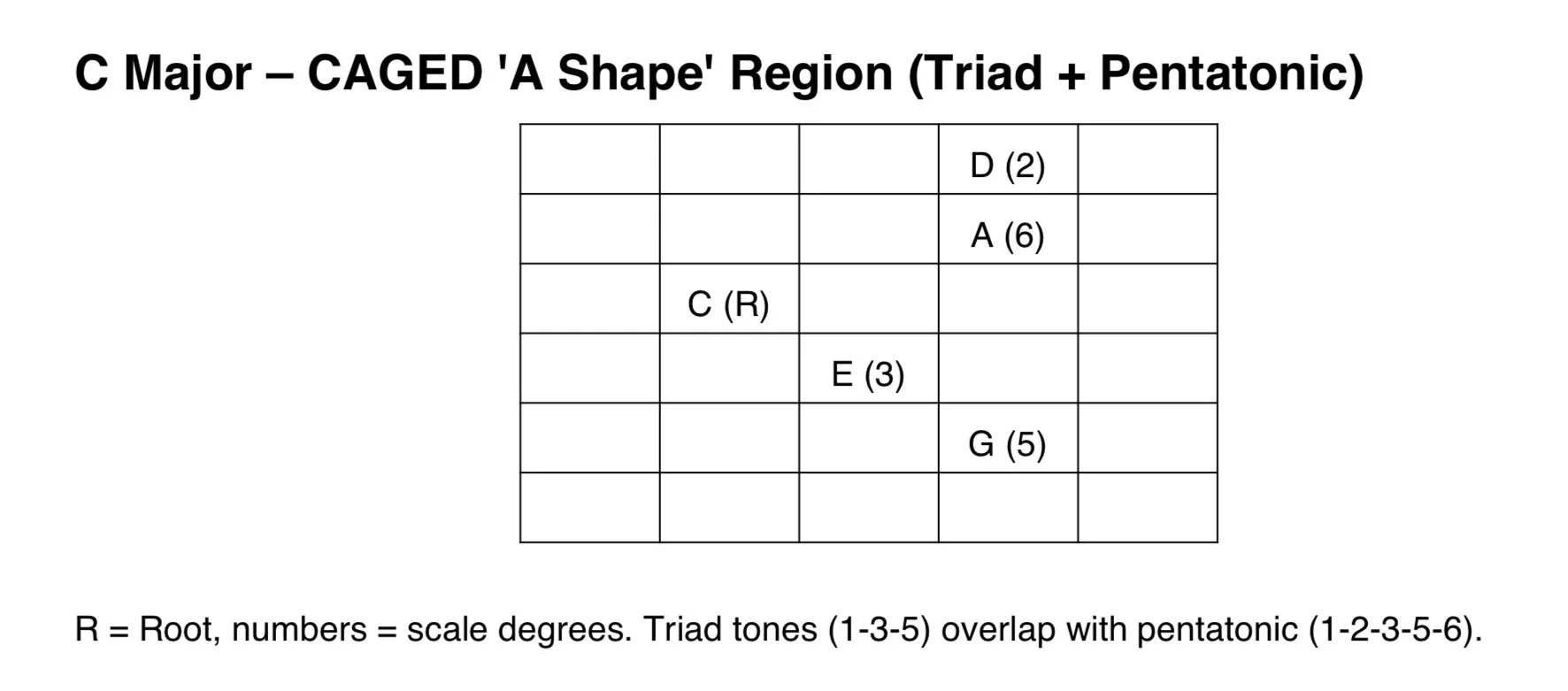
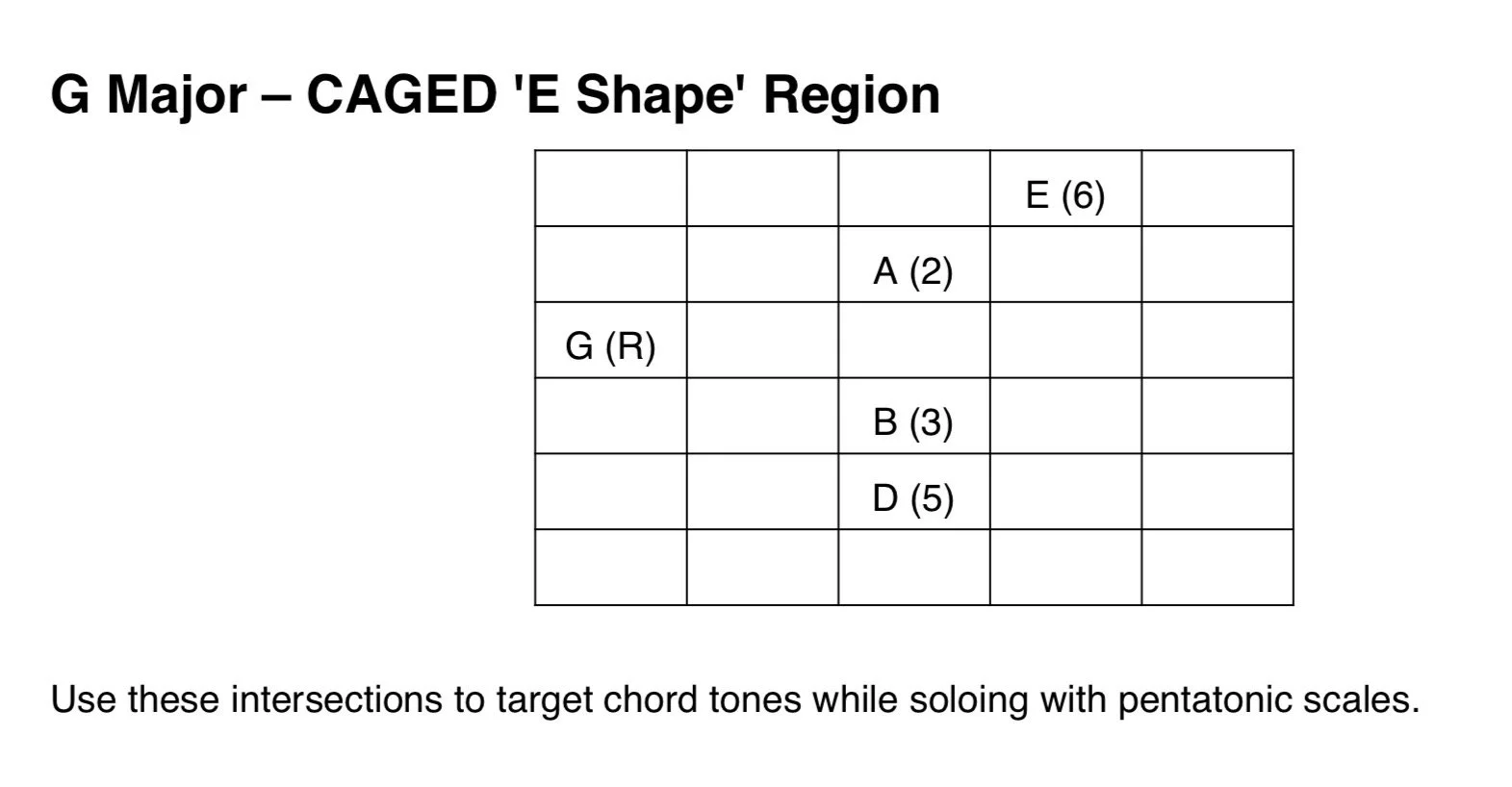
Guitar Fretboard Mapping: Triads (I-IV-V) & Pentatonic Overlap
This guide shows how triads from the major scale overlap with pentatonic shapes on the guitar