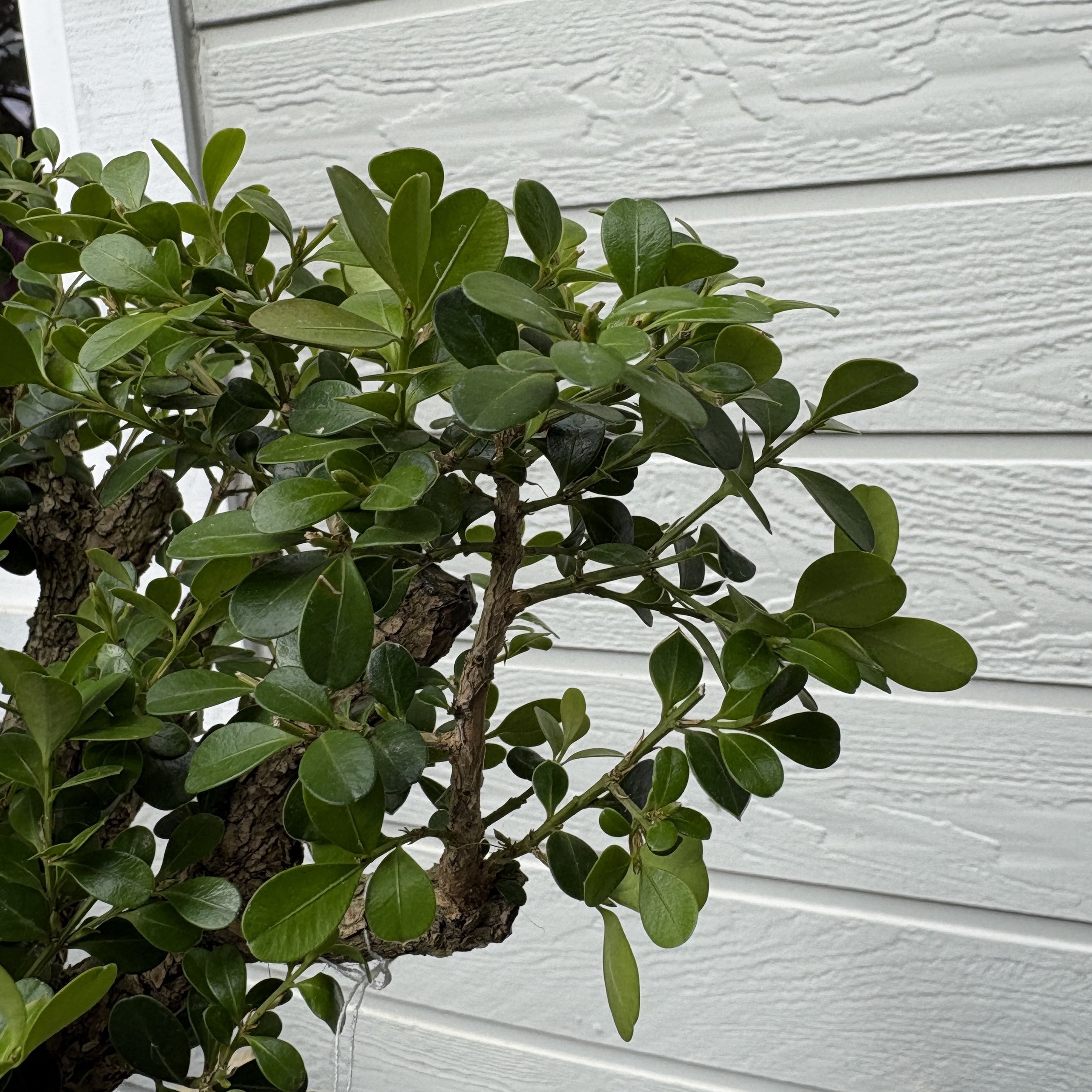
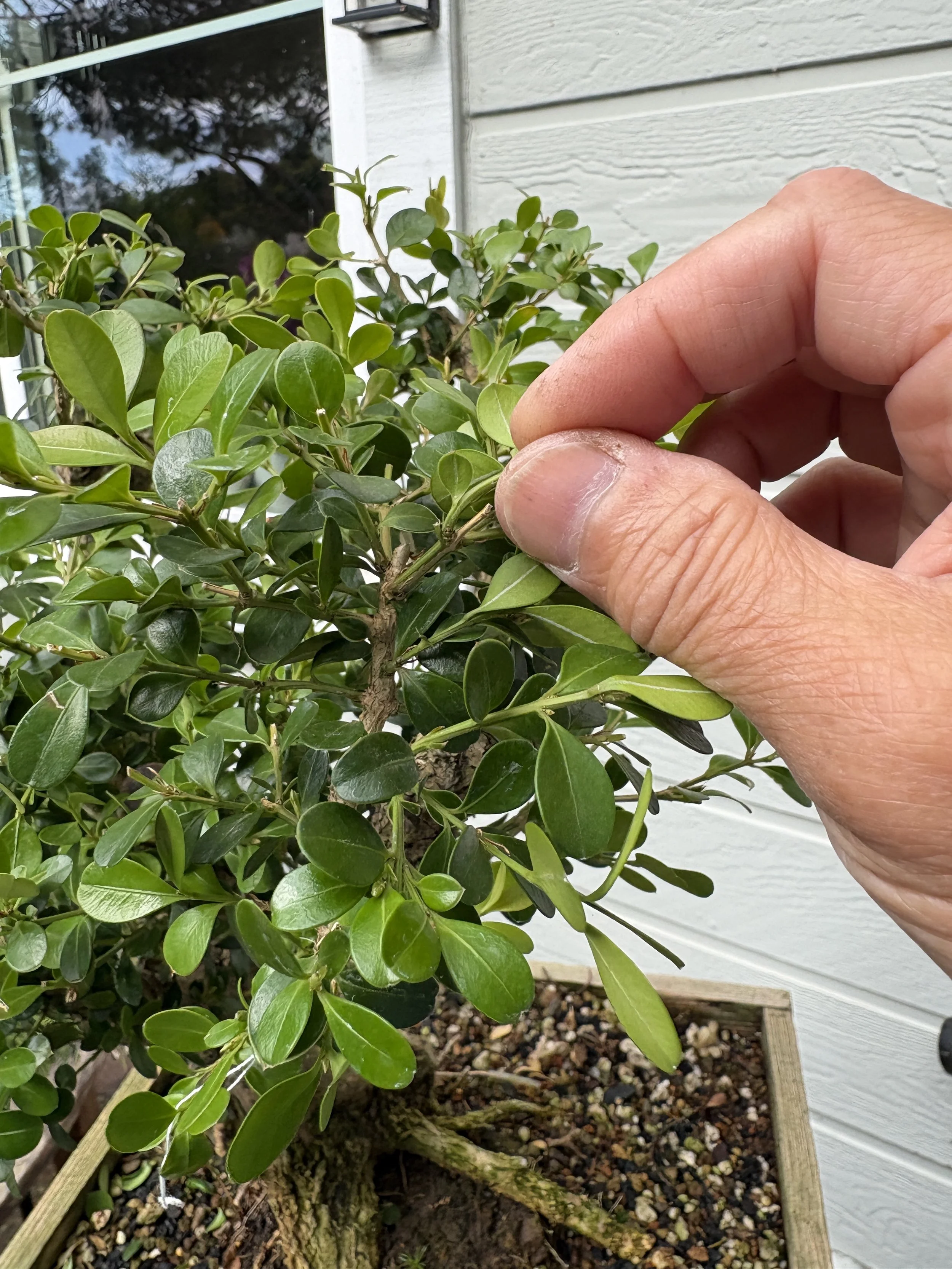
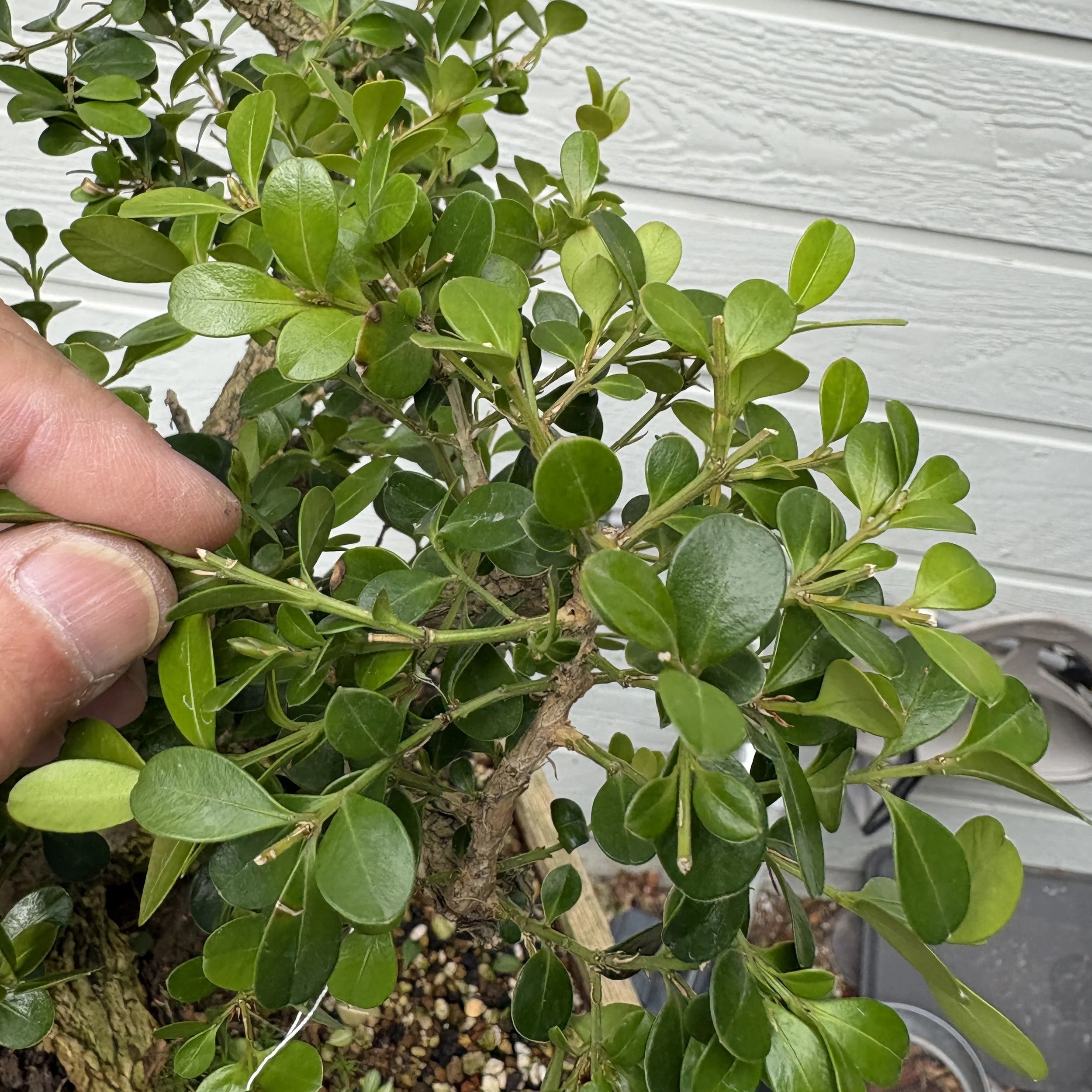
Boxwood Development — Val M
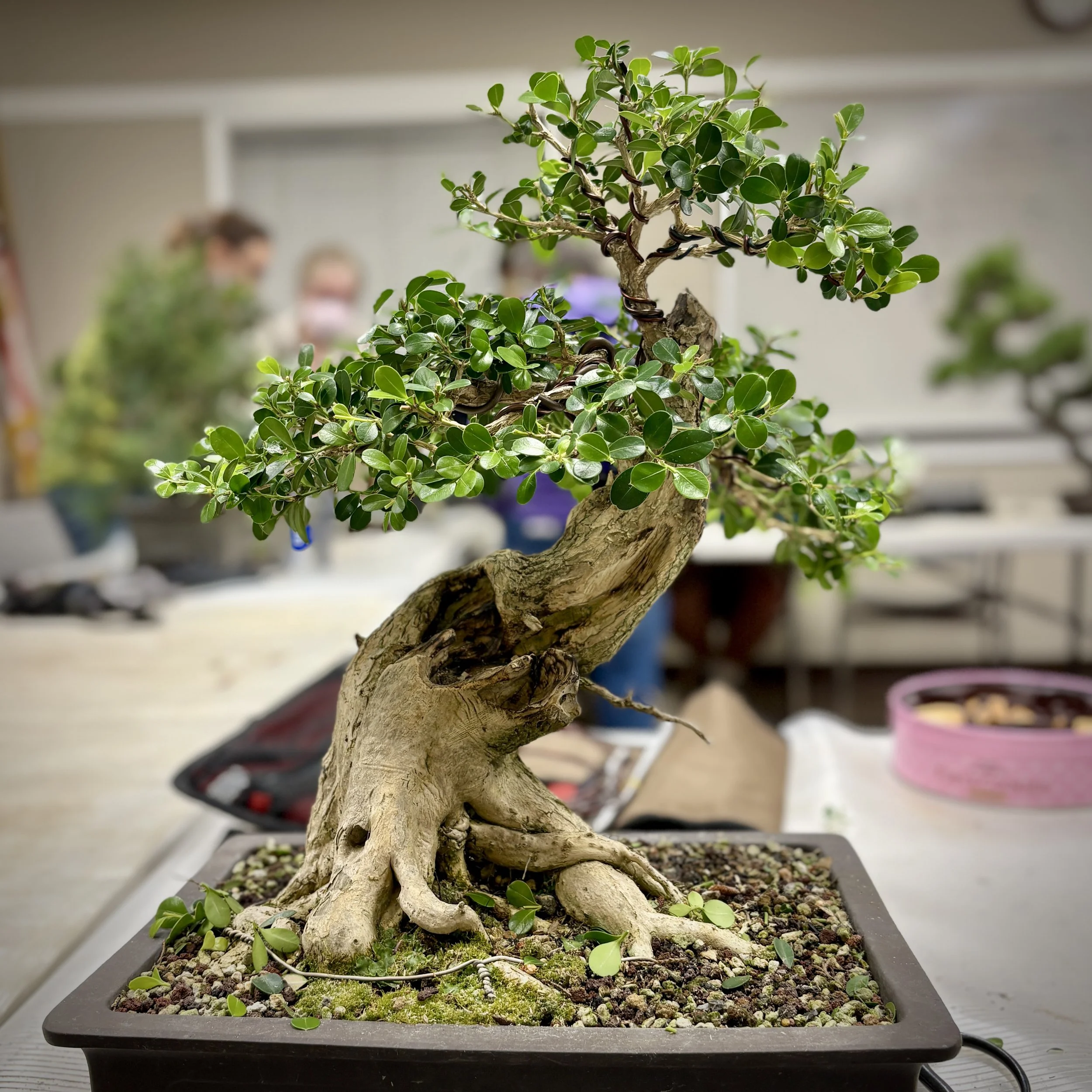
Boxwoods generally grow Slowly, so it’s best to start with a trunk close to the final size. My example was having collected a very old hedge boxwood that had a good size trunk, aged bark,some movement, and Amari. Some who develop Foxwoods may remove almost all of the original branches and grow them from Scratch. My boxwoods have a lot of thick branches, but the next owner can selectively ruin remove them. As long as the tree shows Health and vigor.
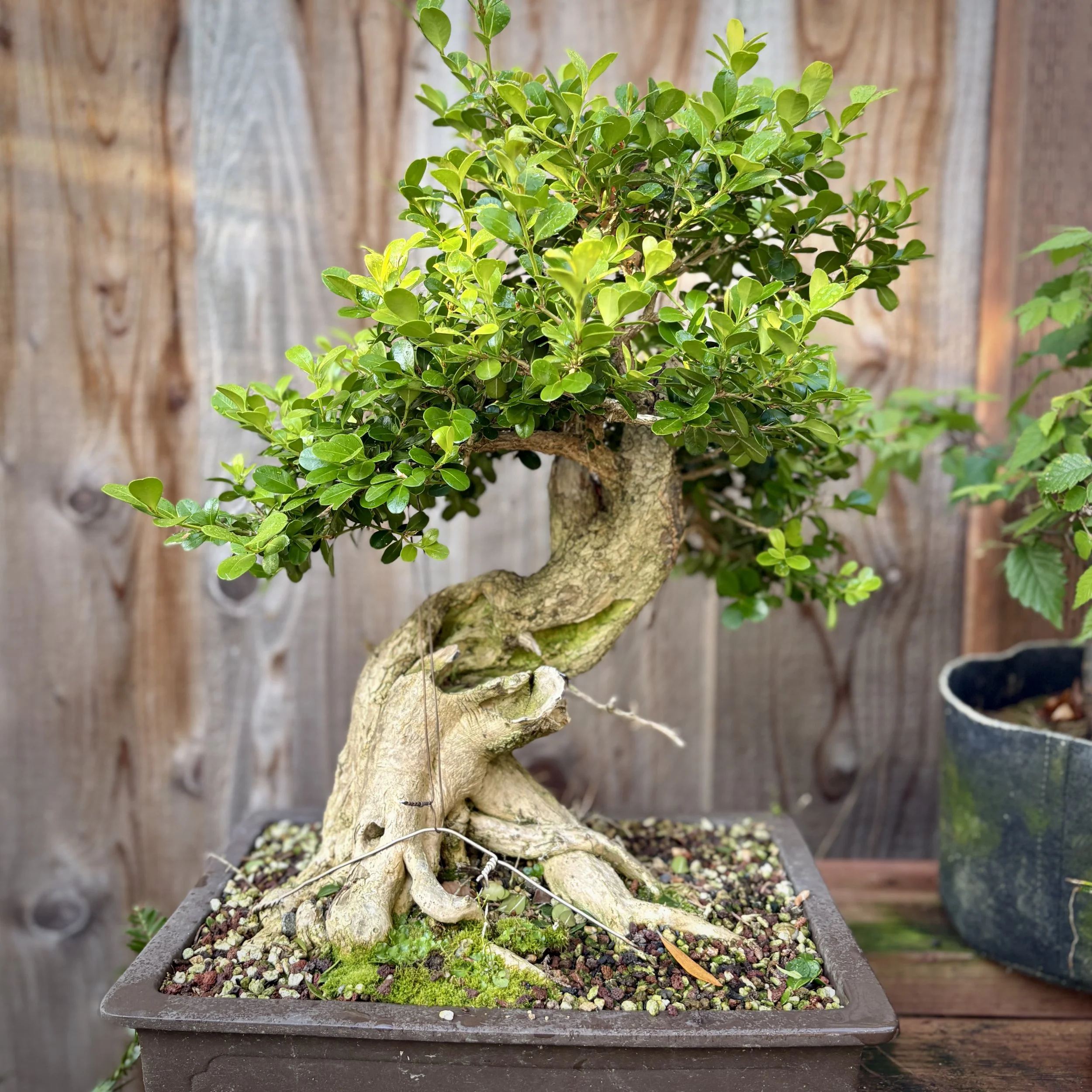
Start with developing branches before focusing on ramification. And a well placed branch will grow ramification and volume overtime. Pads can be styled very cleanly or more natural. Clean is best. One may create tight pads like a pine. When wiring a branch with the ends having a bifurcation, if you orient them horizontally, then it will be more like a maple; if you orient one above the other to create more volume, it may be like an oak.
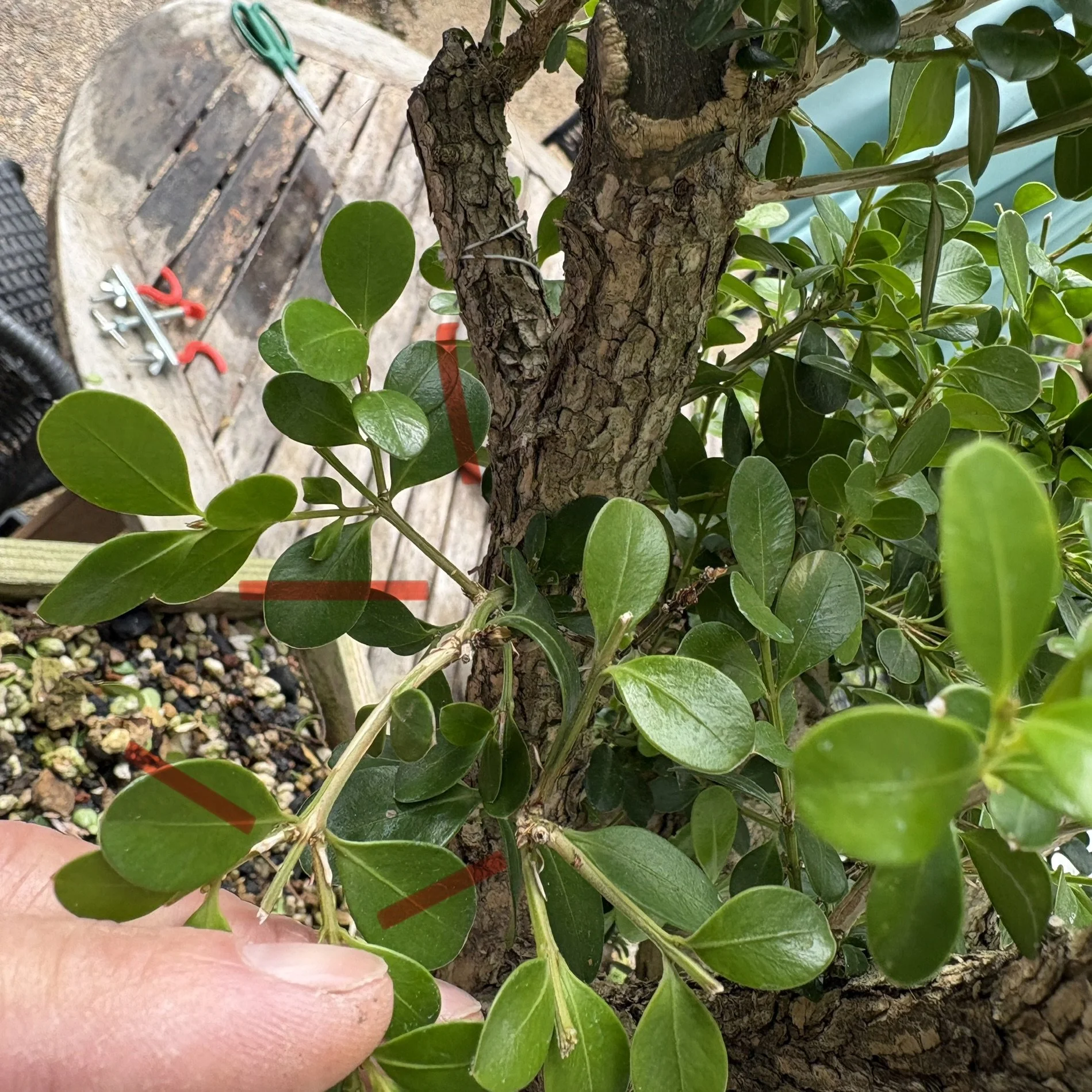
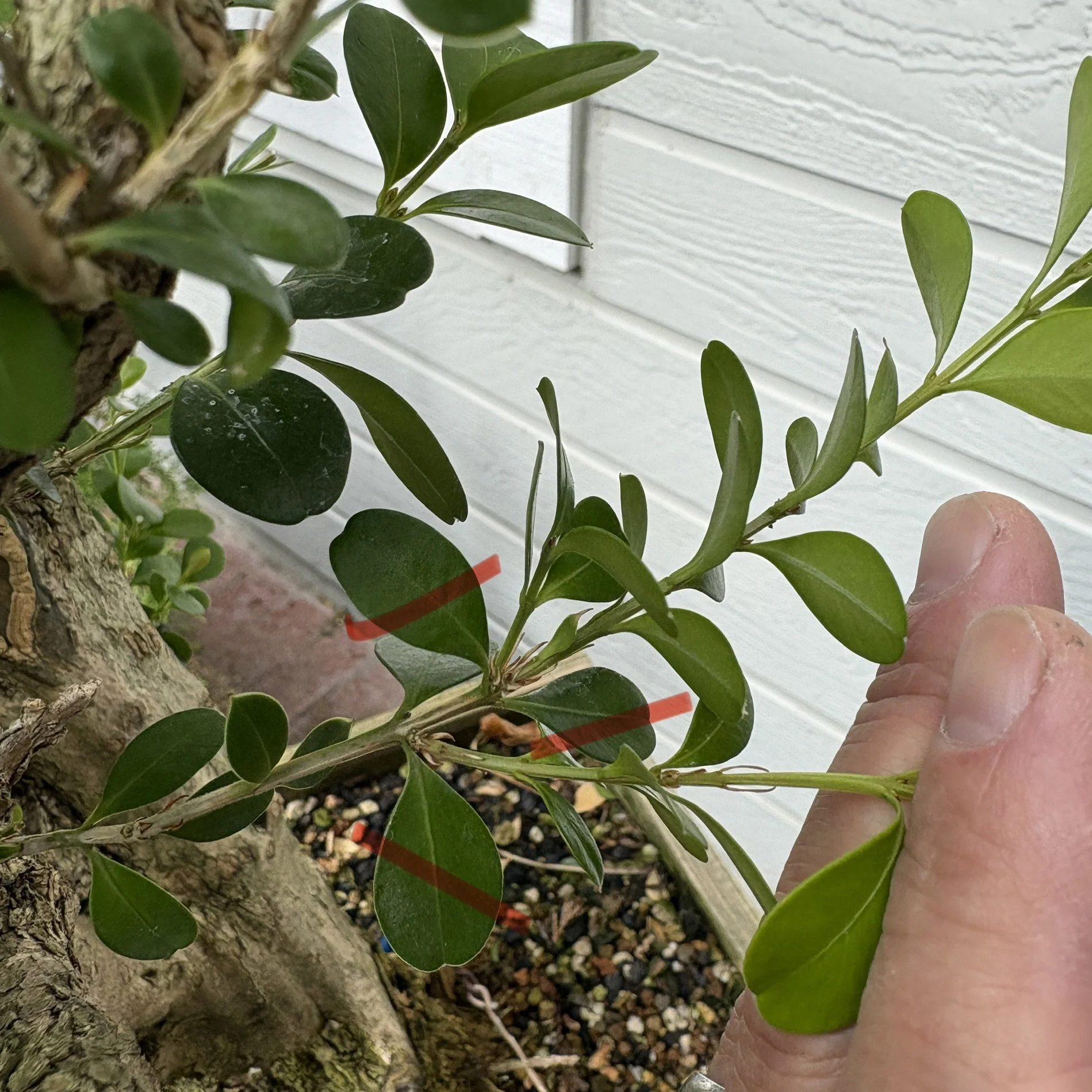
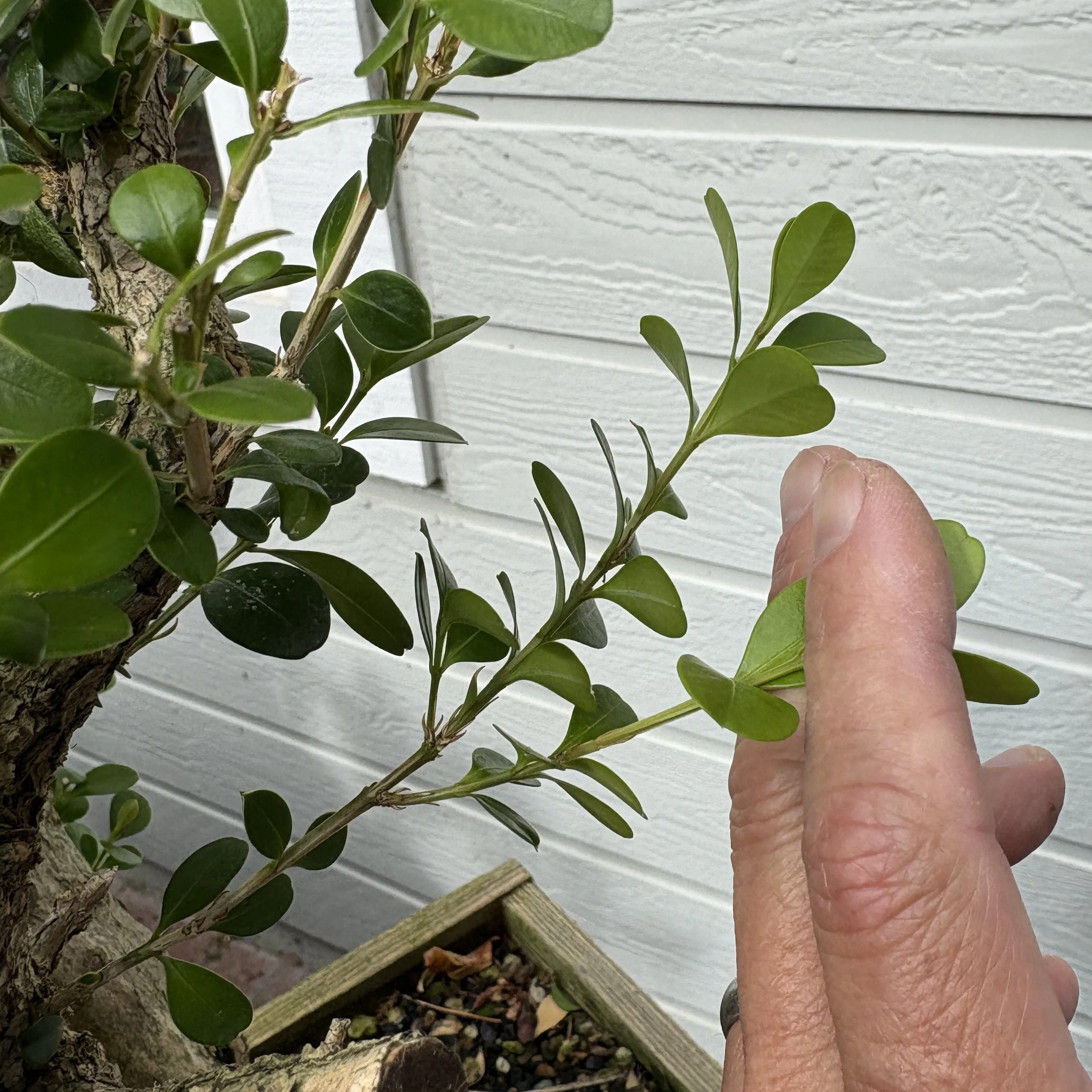
Cutting back or pruning is a common step. It may seem like reducing the branches in both width and length, but you are developing the best branch and growing out the rest. So follow the branch all the way to the trunk and make sure all the foliage and branches are trimmed appropriately or wired in the right position.
Development comes in phases, and early phases may look like you are compressing the tree closer to the trunk, same for wiring branches. It will look at first like a very tight tree, overtime new growth will fill out the silhouette
Correct that branches should try to avoid crossing the trunk, so partially moving a branch back to the left helps. And bring down some branches on the right as a pseudo-first branch.
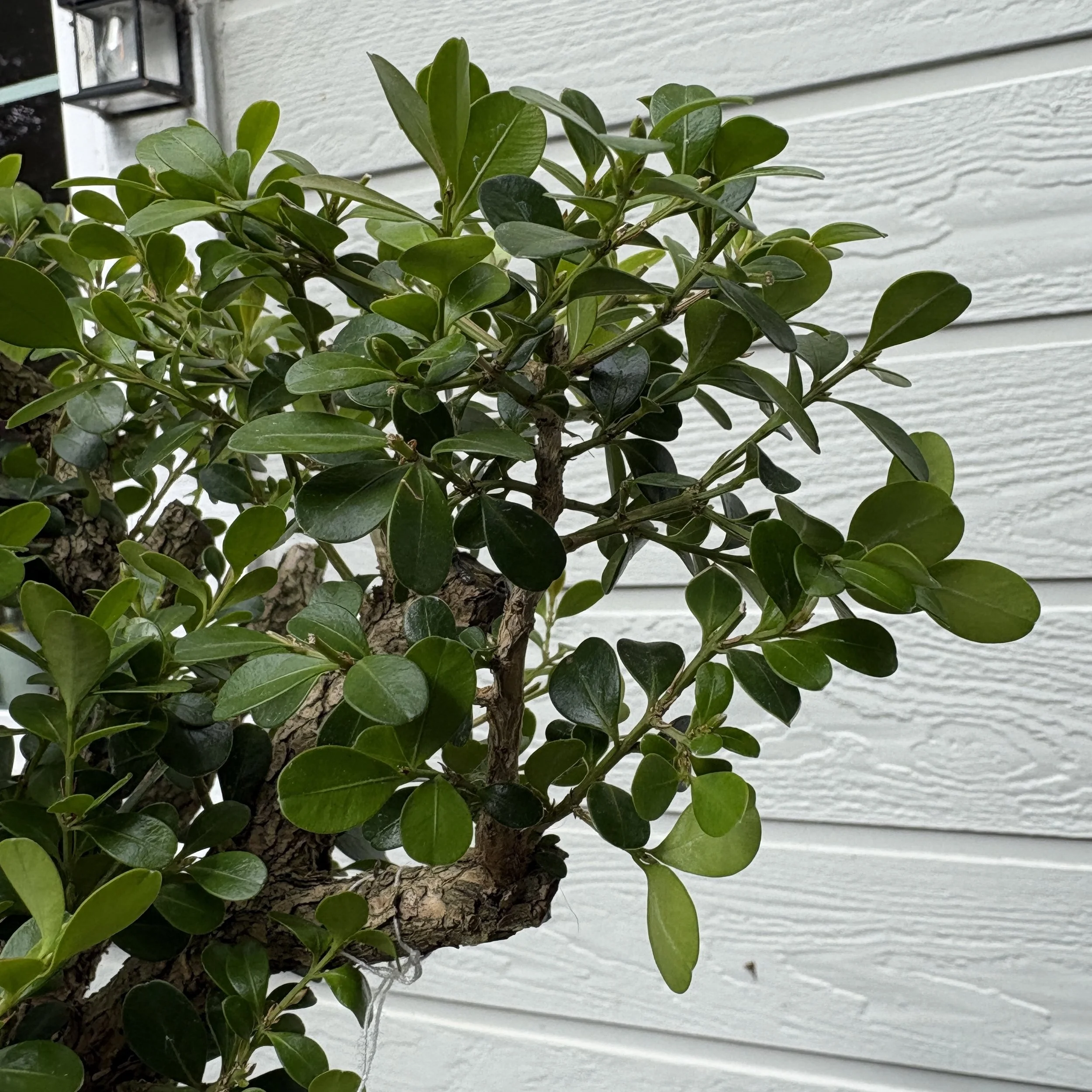
When developing a pad, you find the imaginary silhouette and you will sweep your scissor tips in an ark from left to right. Where a branch extends beyond the silhouette, you trim it to the next leaf. Look in between branches and examine them when straightened so that a long internal branch can be trimmed. There is no thinning in this process just shaping the silhouette. Rotate the tree and from different angles you are creating an overall dome shape. If there are some smaller branches that are too low or needed to fill a gap you can use wire to select selectively support your silhouette.
The back pad should be higher than the front.
Branches going around the trunk generally can be angled lower to show age, but at the crown of the Apex branches are generally going up. If there is a negative space between the downward growing branches and the utterly growing crown, that will be filled in overtime.
Ideally, roots should not cross-over. This one has octopus like character, but if it could be removed, consider that.
My method of removing leaves for a more tree like nature and not a bush.