Shohin Development - Adam Toth
ABAS Presentation—Adam Toth
https://youtu.be/H5P2vCHqfIc?feature=shared
Shohin should be no more than 8” above the pot
Shohin source material is best grown from scratch—hard to work from old stock
Best using trunk chops to regrow new branches and foliage (e.g. broom style)
Also air-layering deciduous for great bottom or top sections—in the size you desire
Note: you can make as many air layers on the same trunk or branch as long as there is foliage preserved between air-layers
From scratch—from seed or cuttings
Only interested in the trunk at th first few inches, the entire top & foliage is not going to be in the final tree. May retain the lowest foliage or graft onto the trunk.
Adam suggest growing in colanders (stacked) or terracotta pots—for fast growth, oxygenation, and watering., Only when you want to slow them down for refinement do we put them in a bonsai pot.
Smaller trees are more sensitive for watering
Generally, seek out material to buy that others have invested time IF the base is good and you have a plan on what to do with it.
Consider that you may not exist to see all your trees the finished state—share with others or sell.
Pines:
Desirable to have buds and branches low before building the trunk caliper
Decandling practice generates more buds and branches
Let sacrifice apex grow as tall as 6 ft talk—every year the sacrifice branch creates a whorl. Only keep the center bud and remove new candles that may shade out the lower branches.
Half-way of the main sacrifice branch, will create a new sacrifice to encourage growth but avoid a large scar and transition removal of the primary sacrifice
Growing in colanders and stacking colanders
Developing pine roots: every 3-5 years—if done too frequently it slows the tree down
Can graft white pine or other variety foliage onto a JBP, but Adam would not prefer to do that for his style.
Juniper
Important to set bend or twist early
Do not leave the wire in the trunk, but wire (2/3 deep) is okay
Shari line—don’t cut the Shari line, pull the Shari line. Chisel or gouge, then use tweezers to pull the bark off and follow the original bends. Early wiring is most important.
If you don’t add twists or bends early in the trunk development, the Shari will be straight or if you cut the Shari will look poor or artificial.
Canopy
Nice to have balanced angles on all sides of the canopy—and not uneven flat clouds—look from the top
Good to have irregular angles to break up the silhouette, just avoid flat
Fertilizing
Not a fan of Osmocoat, good if growing in the ground
Prefers Home Depot / big box—organic fertilizers in granular or pellet—three different types and mixes with a variety of ingredients with the same/similar numbers (e.g. 5-5-5). Feeds the mix once a month. Then liquid fertilizer alternating months. Adds ironite or iron mineral once every 3 months to make them green, as often absent.
Does not like powders as they are hydrophobic or clogs soil up.
Pairing Pots
Soft tree/pots have straight feet
Cloud feet usually paired with strong trunks
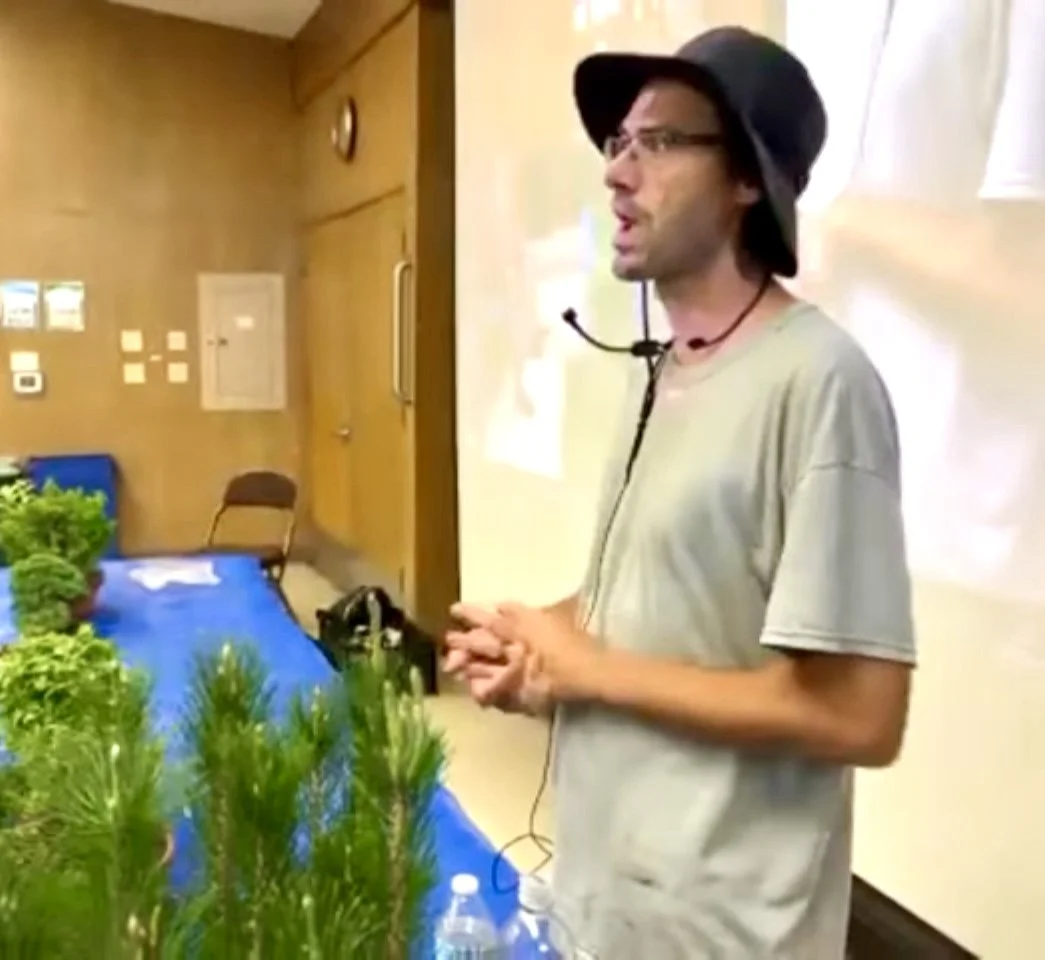
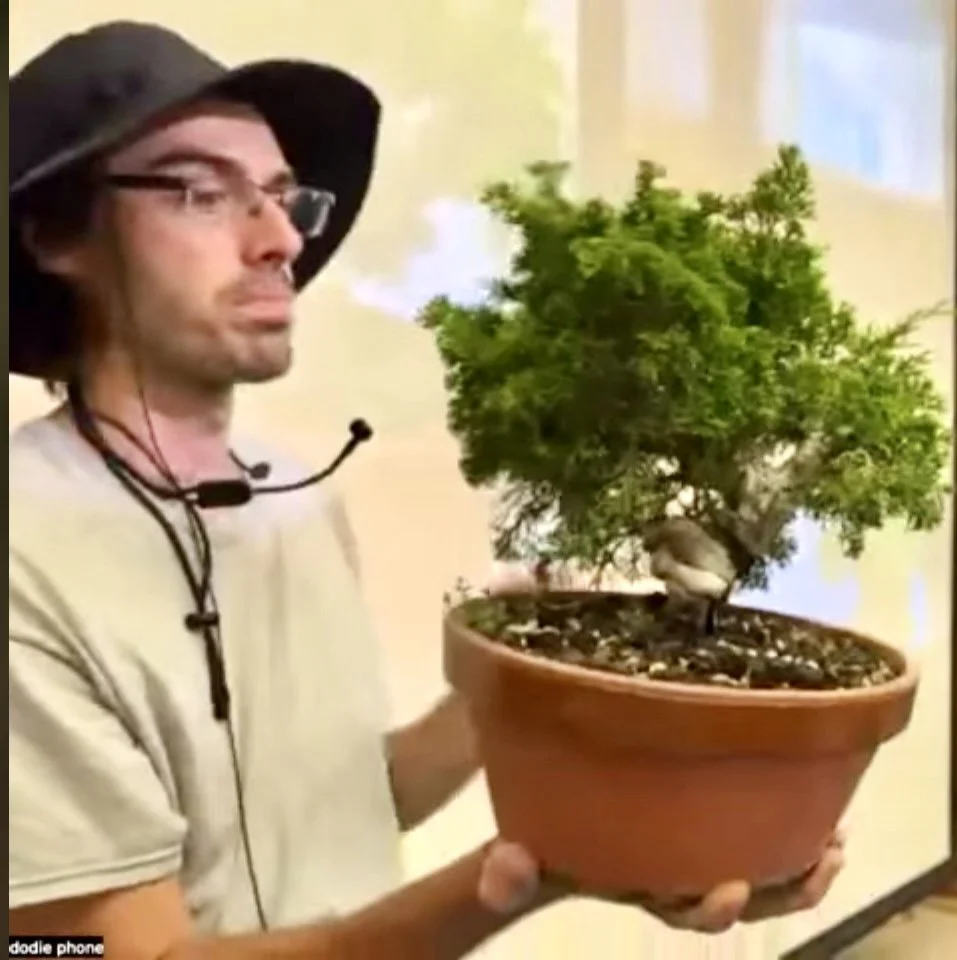
Additional notes from the Pacific Bonsai Expo 2024
Selecting Material—Adam Toth
Maples—cutting back (trunk chop) can be done to younger material and expect back budding with more confidence. The older the trunk and bark, less likely to respond the same way—so cut back in stages.
Bring it to best health before a chop. Repot, fertilize, full flush.
Best time to repot is when it is done growing—he suggests repotting at the later time and not early. Let it grow.
He cuts flat. Responds next step after new branches are known to choose from. From those selected new trunk
Broom style—cut flat, to avoid reverse taper he hollows out the top after branches are growing. He would cut one v notch to let water run out.